

16 Types Of Ground-Feeding Birds And How To Attract Them
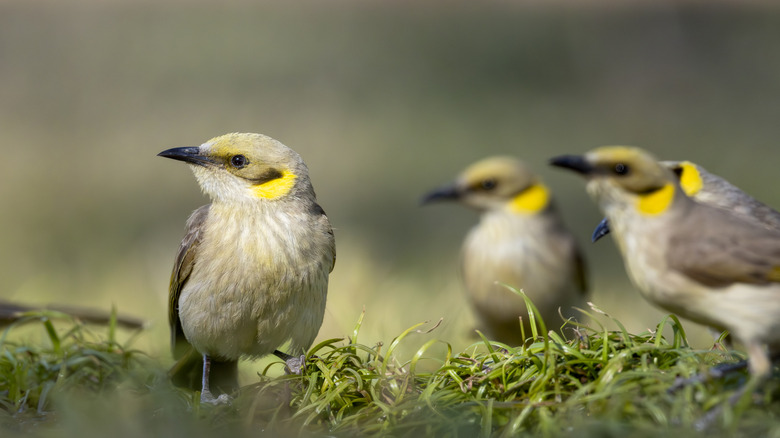
Birds are important to my garden practice as a permaculture specialist. They are brilliant pest controllers, and they're fascinating to watch, too. I love seeing how many species my garden can support each year (not counting my chickens, of course, who are permanent residents, but are technically ground-feeding birds). Some of the most interesting are the ground feeders. They're also some of the best for controlling pests, too. These birds search the lawn, leaf litter, and open earth for seeds, insects, and fallen fruit.
Building a wildlife-friendly yard is one of the easiest ways to encourage birds of any variety to visit your yard. But ground feeders need specific things, including layered cover, close to open foraging ground, no pesticides, and at least one reasonably sized wilder area where the birds can forage for insects and grubs. Here's how to attract 16 different kinds of ground-feeding birds.
Mourning doves forage on bare ground and need clear sightlines
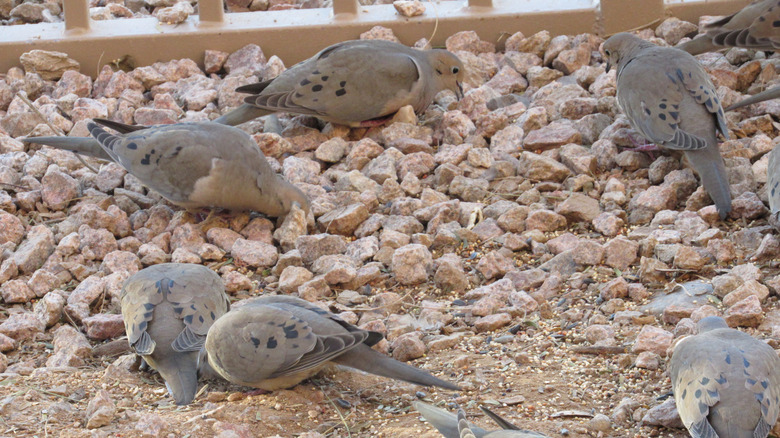
Mourning doves are ubiquitous in the quintessential American yard. It has a distinctive, soft, "mournful" coo and a gentle, bobbing walk. Unlike my chickens, mourning doves don't scratch, dig, or probe. They like to pick seeds directly off the surface of the ground. These lovely birds prefer bare earth or very short grass. Mourning doves can hold a whopping 17,000 seeds in their crop, and can gather this number in a single foraging session. These little birds might not be useful as pest controllers, but they do a brilliant job of gobbling up weed seeds by their thousands, consuming up to 20% of their bodyweight in seeds every day.
If you want to attract more mourning doves to your yard, keep at least one good-sized patch of grass short or, if you've got some bare soil, keep it clear of tall weeds and dense cover. You can also scatter white proso millet or cracked corn to encourage them to venture in. A low platform feeder with good, clear sightlines is a good option if you don't have suitable clear ground. Mourning doves also prefer a garden with a ground-level water source and dense shrubs or evergreens nearby for nesting and cover.
Dark-eyed juncos appear every winter and scratch for seed on the ground
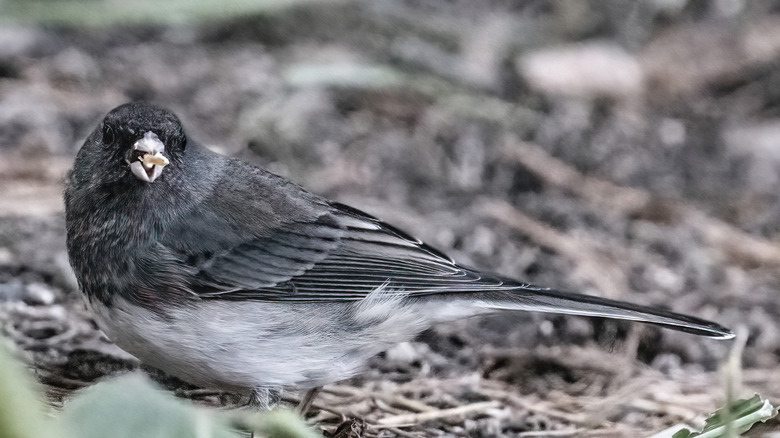
The dark-eyed junco is the classic snowbird. It's a small, gray-and-white sparrow that appears under hanging feeders as soon as temperatures drop. These little birds spend the warmer months breeding in Canada's boreal forests and northern mountains, visiting the lower 48 in large flocks each winter. Dark-eyed junco primarily feed on the ground, rummaging through leaf litter and across bare earth, eating weeds seeds and small insects.
It doesn't take much effort to attract juncos in the winter. Scatter while millet across the ground or on a low tray. They'll quickly find it. To make them feel safe and comfortable enough to hang around and forage, you need some dense, shrubby cover nearby. This gives them somewhere to quickly retreat if a hawk or other predator passes by. Even just a loosely stacked brush pile in the corner of your garden provides enough cover for little juncos. A safe water source will also help bring these birds to visit right through the winter.
American robins hunt earthworms by sight on open, pesticide-free lawns
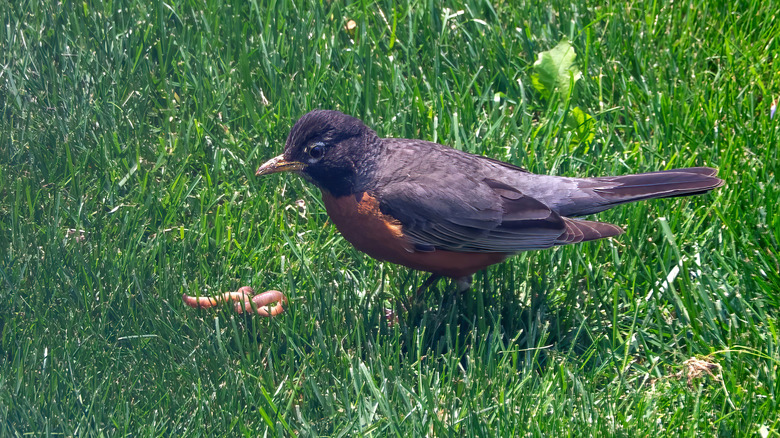
A member of the thrush family, the American robin holds a special place in many people's hearts as a harbinger of spring. It has a distinctive, cheerful song and a bright orange-red chest. You'll see this little bird everywhere, including in urban landscapes. I am very thankful for the robins that visit my yard, as they devour large quantities of invertebrate pests, including grubs and larvae that will damage my plants if allowed to thrive. You'll also see this bird determinedly tugging earthworms out of the soil in the early morning. They'll also eat berries and other fallen fruit.
The best thing you can do for robins is to stop using pesticides and herbicides on your lawn. These chemicals harm robins and the things they feeds on. I also recommend planting fruiting shrubs, like elder, holly, blueberry, and chokeberry to attract more robins to your yard. This provides ample food and hydration from summer and well into fall. Robins also appreciate a shallow bird bath to drink from and bathe in. And, if you're really keen on attracting them, soak mealworms in water, then scatter them on a short lawn or a low feeding station. This is especially beneficial in winter and early spring when other food sources are scarce
Eastern towhees kick through leaf litter and ignore most feeders
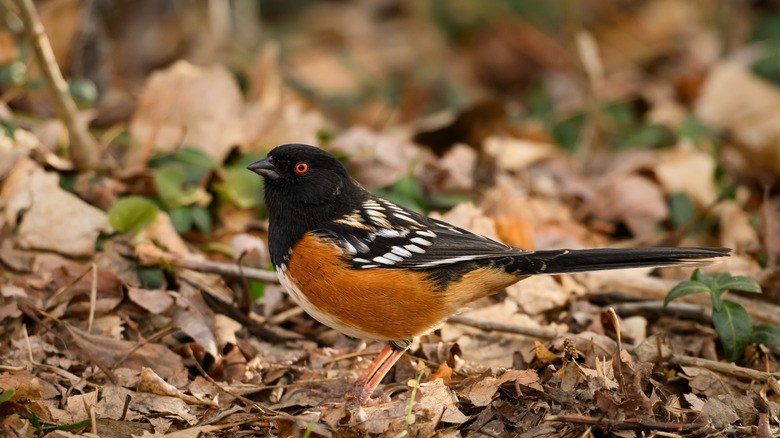
The eastern towhee is a member of the sparrow family. The females are brown and the males are black, and both have white undersides with burnt orange sides. Eastern towhees forage aggressively in deep leaf litter, with a funny, feisty little double-scratch kick raking motion. It has a very energetic food finding habit, and it flings leaves and debris all over the place while it works. This is a fun little bird to watch. Plus, they eat a ridiculous amount of insects, including pesky ants and invertebrates. They also eat a variety of seeds and beetles, so they're super-useful.
If you want the entertainment of watching eastern towhees, don't clear away too much leaf litter. They like deep leaf litter to rifle through in their hunt for tasty snacks, so leave as much leaf litter in your beds and borders as you can. And avoid the urge to over-tidy dense native shrubs with low-growing branches, as these make excellent habitat for these feisty birds.
Indigo buntings stop to feed on the ground during spring and fall migration
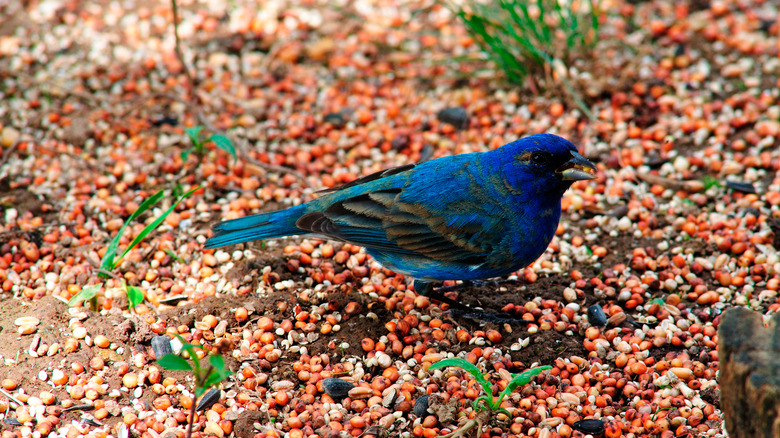
The male indigo bunting is a stunning creature, with his electric blue feathers. During their spring and fall migration, they'll stop in your garden to refuel and rest. Indigo buntings are one of the birds that love dandelions. In summer, they breed and rely heavily on insects, especially caterpillars and beetles, to feed themselves and their young.
In spring and fall, indigo buntings will linger in gardens that offer plenty of white millet on a low platform feeder or scattered on beds and lawns near adequate cover. In summer, you may even be able to encourage a breeding pair if you've got thicket-style cover. You can get this effect using a good mix of native shrubs, small trees, and ground covers, with different heights and textures. Leave plenty of leaf litter to accumulate under these plants, so that the buntings can find a ready supply of caterpillars, grubs, and beetles.
White-throated sparrows scratch under shrubs all winter in loose flocks
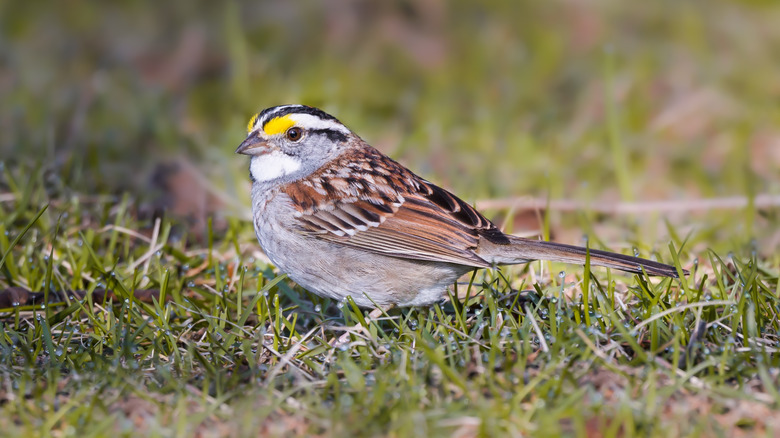
The white-throated sparrow is a sociable winter bird that arrives in large flocks, sometimes intermingling with juncos, song sparrows, and other ground feeders. As the name suggests, it has a white throat, but also a bright yellow spot between the eye and the bill. This industrious little bird rummages through leaf litter and low vegetation for millet, seeds, and fallen berries.
White-throated sparrows don't like open, exposed feeding areas, as it leaves them vulnerable. Instead, it likes to forage under shrubs and along sheltered woodland edges where it can flit away quickly if threatened. So, like many other birds on this list, give these sparrows plenty of cover options. If you want to use a low feeder, tuck it slightly under some shrub cover and scatter it with white millet. Brush piles also make excellent cover for white-throated sparrows, as it provides protection, a roosting site, and a foraging habitat all in one.
Song sparrows nest low and forage close to dense cover year-round
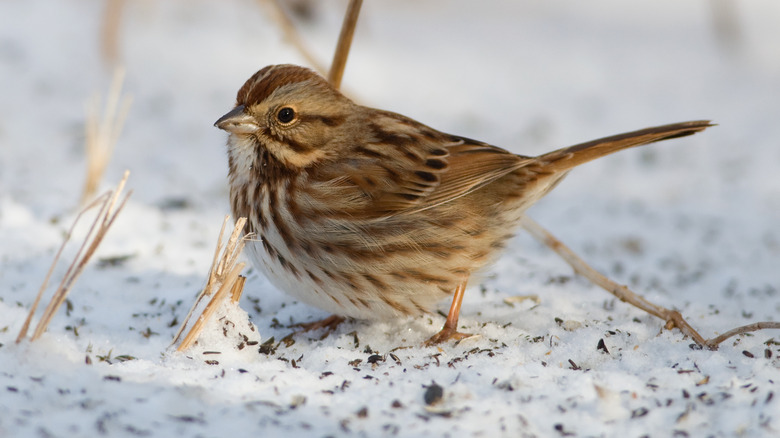
Song sparrows are widespread across the U.S., and are compact, with streaky gray, white, and russet brown feathers. Like white-throated sparrows, these close relatives forage near the ground and need plenty of dense vegetation for cover. They are pretty indiscriminate in terms of what they eat, raking leaf litter for seeds, insects, and whatever other small prey they can find. And, because they're so prolific and such voracious eaters, they're very useful weed and pest controllers.
A low tray feeder placed fairly close to cover is ideal for attracting song sparrows. Alternatively, scatter the feed right on the ground. For song sparrows, go with millet and sunflower chips. If you want resident sparrows, give them dense, shrubby, herbaceous vegetation. These little birds tend to nest close to the ground, often at the base of a shrub or deep in leafy ground-level plants.
Northern cardinals regularly drop to the ground for spilled seed
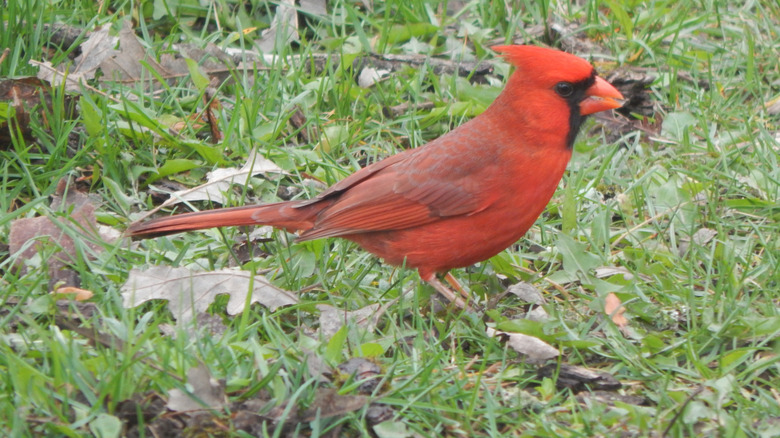
Northern cardinals like to feed on the ground, but not exclusively. However, while ground feeding isn't essential for them, you'll frequently see them dropping to the ground beneath feeders to peck at the loose, fallen seeds. Male cardinals have that stunning unmistakable bright red coloring, while the females are a warm brown with red tinges on their crests, wings, and tail. Both have surprisingly strong, seed-crushing beaks. Cardinals eat a huge amount of pests, including beetles, grasshoppers, and caterpillars as well as seeds.
Black oil sunflower seeds and safflower in a low tray feeder, or scattered on the ground below hanging feeders, is a good choice for luring cardinals to your yard. Cardinals need year-round cover for roosting, nesting, and protection, and are also attracted to seed- and berry-producing flora. Although they sit high up in a tree to sing, they actually nest comparatively low to the ground — sometimes as close as 3 feet. For the best chance of resident cardinals, you need a thicket-style area filled with evergreen shrubs like boxwood, hollies, and juniper, as well as deciduous berry bearers like blueberry, serviceberry, and elder. Annuals and perennials that produce lots of seed, like sunflowers and purple coneflowers are also a good choice to plant in your borders.
Painted buntings need millet, dense cover, and a caged feeder
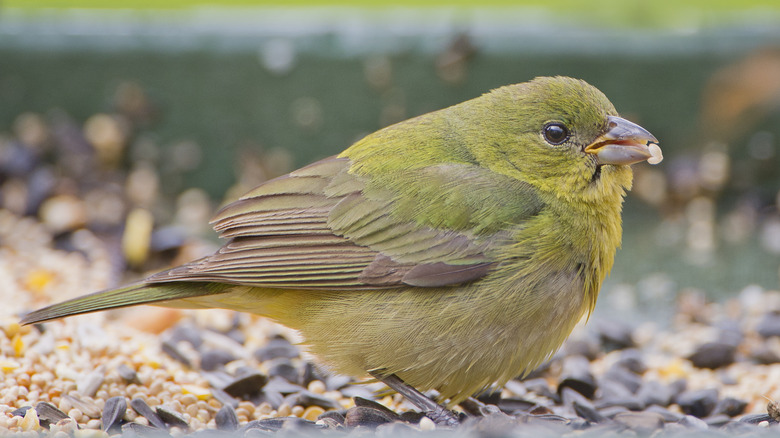
Painted buntings, particularly the males, are so beautiful, with their vivid blue head, bright red underside, and lime green back. Although the females aren't as showy, they have a lovely muted green coloring. These diminutive, but colorful, birds need plenty of cover to feel comfortable feeding. They gobble up weed seeds most of the year, and supplement their diet with insects for increased nutrients during breeding season, making them another great little ally in the garden.
For food sources, plant native, seed-bearing ornamental grasses, as these provide both food and nesting material. Goldenrod and purple coneflower are also great choices. To attract them with supplemental feed, go for white millet. Just be aware that these tiny birds are easily pushed out by larger, bolder species when open feeding, so it might be worth putting some millet in a low-hanging caged feeder close to the ground for smaller visitors, like buntings, to enjoy. They are sadly considered near threatened. You can help by providing a consistent supply of food, plenty of low cover for protection, and dense, slightly overgrown vines, bushes, and small trees for nesting.
Brown thrashers sweep through leaf litter for insects and rarely visit feeders
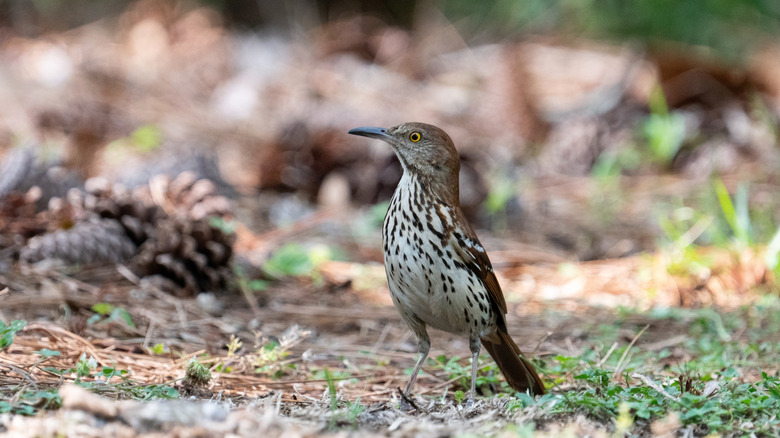
Brown thrashers are large, rust-colored birds that many people mistake for thrushes. These enthusiastic foragers are actually part of the mockingbird family and they have a vast repertoire of songs. The brown thrasher sweeps its long, curved bill back and forth through the leaf litter with vigor, looking for grubs, spiders, beetles, and other invertebrates. It consumes large numbers of these pests, so it's definitely a welcome addition to any garden, but especially in gardens where growers prefer not to use chemical interventions.
Thrashers don't want feeders, even nice, low trays filled with juicy mealworms. They like to work up an appetite hunting for their dinner. If you want thrashers to visit your garden, leave your leaf little in place. These birds need deep, undisturbed leaf litter to forage in. Plant elderberry, viburnum, and beautyberry close by, and you might just end up with thrashers breeding, entertaining you with their songs, and keeping all manner of insect pests at bay.
Hermit thrushes winter across much of the U.S. and rarely come to feeders
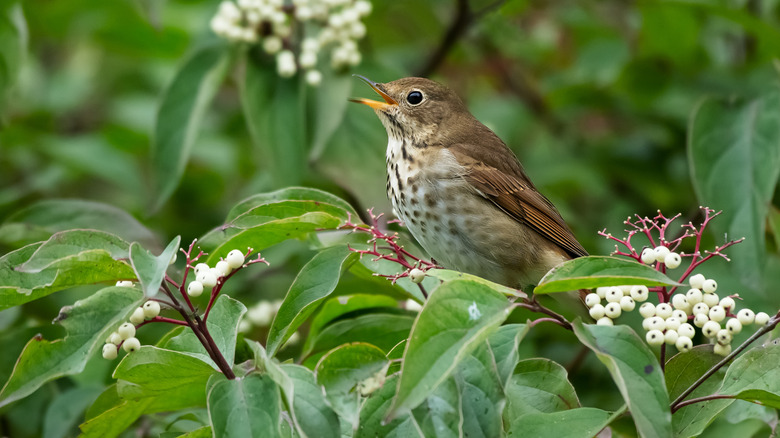
Hermit thrushes, unlike many of their relatives, overwinter pretty much anywhere in the U.S., instead of heading for warmer climates. These timid brown thrushes primarily eat berries and insects. They're voracious feeders and will eat pretty much any insect they can find, along with the occasional small salamander. So these birds don't really visit hanging feeders. Instead, they methodically rummage through leaf litter looking for insects or visit elderberry and serviceberry bushes for ripe berries.
If you want to attract hermit thrushes, you need to leave the leaf litter undisturbed, as with many other birds on this list. Plant plenty of native fruiting shrubs, like raspberries and pokeberries, and add a ground-level water feature. I have a wildlife pond with very shallow edges, plenty of pebbles, and a little ramp, just in case a wild thing falls in and needs help getting out. You can also supplement natural food sources by scattering suet, mealworms, and dried berries.
California quail move in coveys and need ground-level water and a pesticide-free habitat
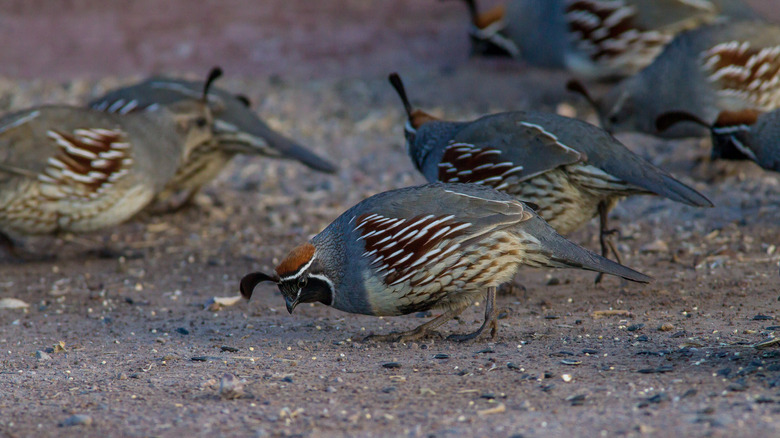
California quail are not your typical songbird. They are game birds with a distinctive comma-shaped plume that droops forward from their crown. They are also true ground nesters. Quail move in coveys, or large groups that can number over 20 birds. These foragers are methodical feeders, searching across open ground for seeds and plant material. But quail can't discern the difference between "quail food" and "human food." I'm conflicted with quail, because they are useful in terms of just how many insects even a small covey can devour. And they'll eat anything from ants and caterpillars to grasshoppers and roaches, so they are excellent pest controllers. And they'll eat loads of weed seeds and plant matter and clean up fallen fruit. But they'll also devour my young vegetable plants.
If you want visiting quail, you need thick hedgerows or mixed height thickets with plenty of low-growing bushes to give cover, as they are prey birds and easily spooked. Again, a ground-level water source, like my wildlife pond, is essential. And you can supplement wild foraging by scattering millet, cracked corn, and dried insects like meal worms or grasshoppers near cover.
Northern bobwhites are in sharp decline and need a hedgerow habitat to survive
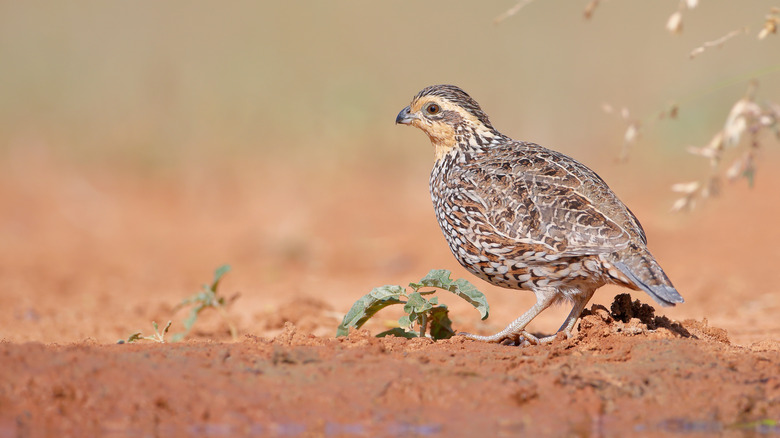
Northern bobwhites are another type of quail. Their population is in a terribly steep decline, with numbers falling by 81% between 1966 and 2019, primarily due to habitat loss and pesticide use. Like the Californian quail, bobwhites move in coveys of between three and 20 birds. They can put on short bursts of low flight, but spend the vast majority of their time on the ground in the undergrowth. Even though they can be destructive in the vegetable garden, this species needs help, and I'd encourage anyone with the ability to provide support for this in-trouble species.
Bobwhites need the right habitat more than supplemental food, because they are very good at feeding themselves. Coveys of foraging bobwhites scratch through low growing vegetation in search of food. Native hedgerows, stands of native grasses, and brush piles are all important for cover, nesting habitat, and foraging opportunities. And, critically, please don't use pesticides or herbicides. For improving habitat and supporting wildlife, especially vulnerable species, I cannot emphasize just how important restricting this kind of chemical use really is.
Wild turkeys forage for mast and insects, but should never be fed directly
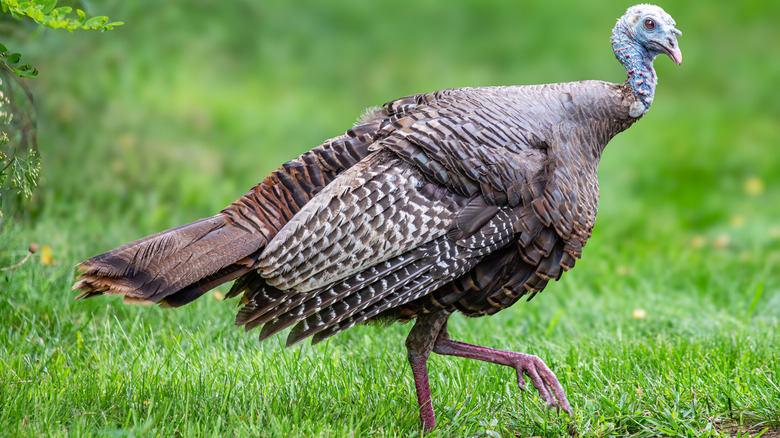
Wild turkeys have become an increasingly common site in rural and semi-rural gardens. It's genuinely mesmerizing to watch a small flock of these impressive, but chaotic, birds forage across a large yard hunting for acorns, seeds, insects, and berries. They are smart and socially complex creatures that only need passive habitat support.
Please do not feed wild turkeys, however tempting it may be. They are not under threat and don't need supplemental feed. In fact, feeding them causes conflict with humans because you take away their natural wariness and encourage dependence. So, don't offer food. Instead, focus on creating a turkey-friendly habitat, with native oaks and berry shrubs for mast, with open areas with plenty of leaf litter for foraging below.
Eastern meadowlarks need open native grassland, not a backyard feeder
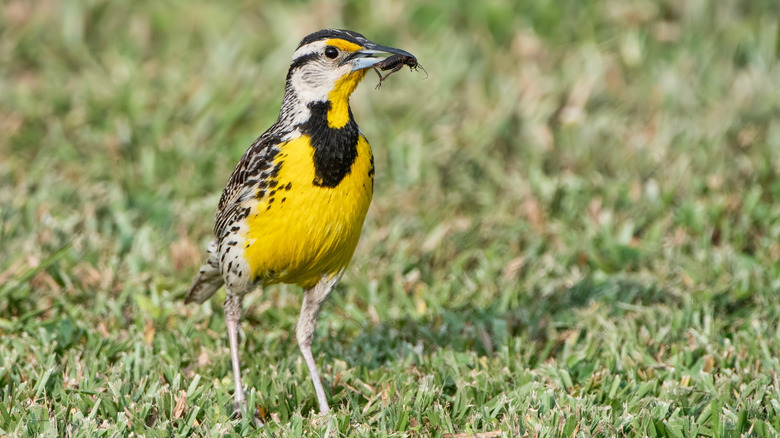
The eastern meadowlark, with its brilliant yellow chest with bold black chevron is a truly striking bird. But it's another species that's in trouble, with populations declining by 75% in the last 50 years. These ground feeders eat all manner of insects, seeds, and berries. You'll rarely find them in typical suburban yards, because they need open grassland to thrive. But you can still attract them if you have a large rural or semi-rural yard.
If you're lucky enough to have a large rural-ish property and want to help with eastern meadowlark support, the best thing you can do is leave large areas of native grasses unmowed. You essentially want to create a meadow environment with no pesticide or herbicide use. Creating healthy grassland habitat is the very best thing you can do.
Horned larks need bare, open ground and rarely suit conventional gardens
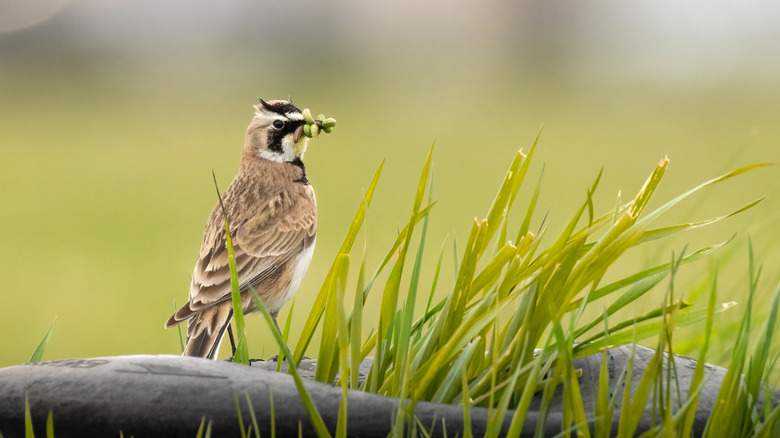
The horned lark is North America's only native lark. It doesn't have actual horns, but the males have small protrusions of black feathers above their eyes that look a little like horns. The horned lark walks and runs instead of hops, and prefers open, bare ground. This fast-moving bird eats seeds and small invertebrates. Conventional yards don't really fit the bill for these birds, as they need mostly bare ground, lots of open space, and long sight lines in all directions to feel confident enough to feed.
To support the horned lark, you need an open, bare, or gravelled space, or property margins with very little vegetative cover. If you have somewhere like that on your property, leave it alone. Don't tidy it. Leave scrubby, sparse margins undisturbed, and don't apply pesticide. Too much interference or "helpful" management will drive these little birds away.