

Avoid Growing Fiddle Leaf Figs Unless You're Ready For These 14 Downsides
We may receive a commission on purchases made from links.
Looking for a large plant to anchor your decor? The fiddle leaf fig (Ficus lyrata) makes a big impact in a room, commanding attention with its tall stature (once it matures) and deep green lyre-shaped leaves, which grow up to 18 inches long and 12 inches wide. Native to West and Central Africa, this tropical tree is winter-hardy in USDA zones 10 and 11, but you're more likely to see it indoors, grown as an impressive houseplant with a long, thin trunk and those signature leathery leaves. But despite the plant's ability to serve as a sculptural feature in your home, there are some drawbacks that you'll want to consider before committing to the fiddle leaf fig.
While some people choose this houseplant for its size, others don't realize just how big it can get and don't have the room for it. The fiddle leaf fig is also a picky plant — it needs its water, light, humidity, and temperature just so to thrive. And when it doesn't get its way, the plant can pout by dropping its leaves, slowing its growth, or letting its leaves turn yellow or brown. It's a must to learn how to properly take care of a fiddle leaf fig plant, and you also need the time and dedication to stick to that care plan. We've compiled the biggest red flags the fiddle leaf fig gives off, so you can decide for yourself if you're ready for this type of plant-caregiver relationship.
It's not a beginner-friendly plant

We've already covered that the fiddle leaf fig is finicky, and that's why you probably don't want to jump right into plant parenthood with this species. If you're completely dedicated to learning all of the little care requirements, you could see success, but the fiddle leaf fig isn't usually considered a beginner plant. You might find yourself frustrated if you start noticing issues like drooping leaves or spots on the leaves, which happen when the ideal growing conditions aren't met. In fact, it's one of the high-maintenance houseplants everyone is ditching for easier alternatives, so even some experienced plant parents have had enough. If you start with easier plants, you'll gain confidence in your green thumb before working up to the more challenging options.
If you're looking for something a little more easygoing than fiddle leaf fig, opt for one of the easiest houseplants anyone can keep alive. Sticking with the same family, Ficus Audrey, a cultivar of the Bengal fig (Ficus benghalensis), is an easier plant to manage and holds onto its leaves better than the fiddle leaf fig. The rubber plant (Ficus elastica) is another beginner-friendly option that also boasts large, thick leaves, although they're oval instead of fiddle-shaped.
It likes to stay in one spot
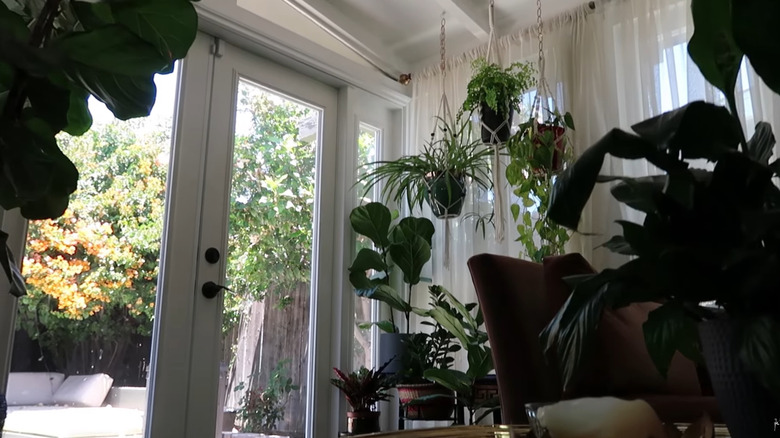
Finding the ideal spot for a fiddle leaf fig is challenging — it needs the right amount of sunlight, humidity, and heat without drafts or fluctuations. Once you find that sweet spot, though, don't even think about moving the plant. Fiddle leaf figs are particularly sensitive to being relocated. Moving them often causes them to drop leaves, so this might not be the plant for you if you like to rearrange your home frequently.
If you do need to relocate your plant, make sure the new environment is similar to the current one, with the right temperature, humidity, and sunlight levels to give the fiddle leaf what it needs. Gradual moves can also decrease the shock that can affect the plant's growth. Try to limit moves to situations where the fiddle leaf fig isn't thriving in its current spot and needs better conditions. You might also relocate it for the summer outdoors, but you'll want to make the move gradual to allow the plant to get used to the outdoor conditions.
Watering needs to be very precise
Don't water a fiddle leaf too much, or the leaves might become yellow. But also, don't want too long to water, or it might start displaying brown spots on its leaves. The leaves might drop or curl with incorrect watering. You can also spot overwatering on new leaves if they have small brown or red spots on them. While underwatering can also cause issues, it's often better to let the plant get drier than it should rather than to overwater and risk root rot.
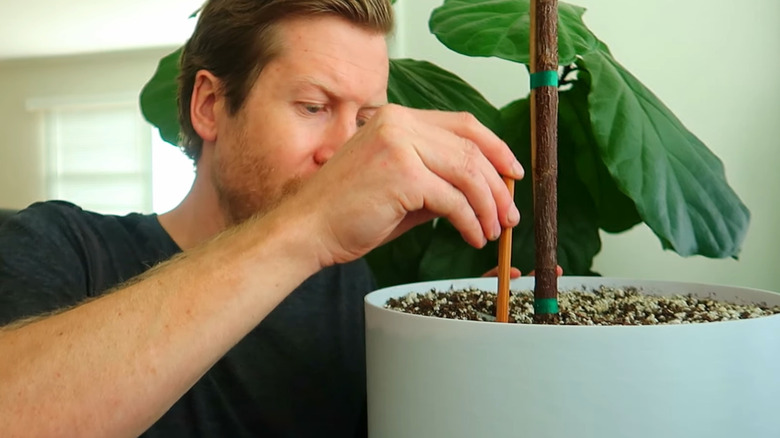
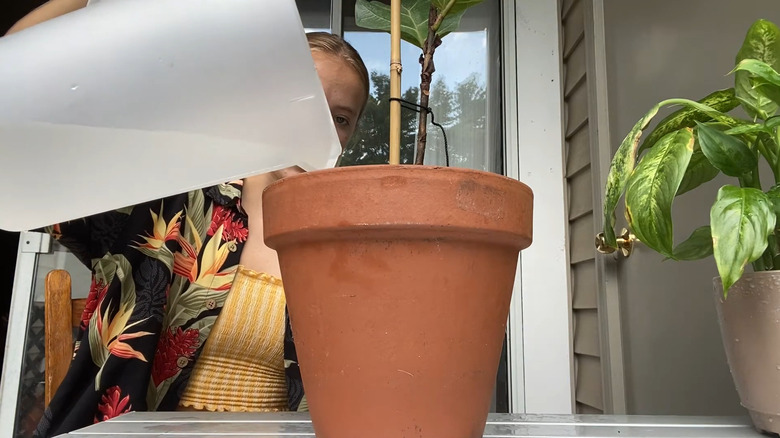
How often should you water an indoor fiddle leaf fig to keep it thriving? A set schedule isn't ideal — instead, monitor the soil and water whenever the top two inches are dry. Sticking a wooden chopstick in the soil for a few minutes helps you check — note where the dampness starts on the chopstick. Or, use a moisture gauge, like this Growit Plant Moisture Meter. You might also need to water if you notice droopiness, along with pale, curled, or brown leaves. When you irrigate, water the fiddle leave until water starts to come out the holes (assuming the pot has excellent drainage), and then wait until the soil dries out to two inches. The watering frequency may decrease in the winter, when the light is less intense and the plant isn't growing as much.
It needs bright, indirect sunlight
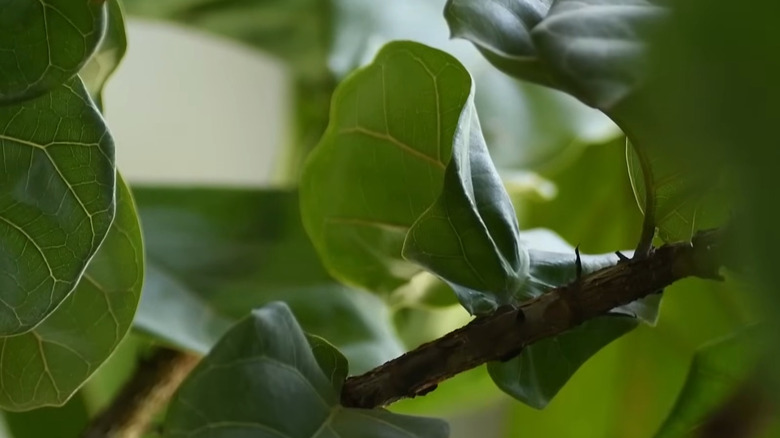
Fiddle leaf figs love a bright room, as long as the sunlight doesn't hit directly on their leaves, and will grow well with a healthy appearance when those sunlight needs are met. It's especially important to shield the leaves from direct afternoon sun. It's equally important to avoid dimly lit areas where the fiddle leaf can't get the indirect light it needs. Without proper sunlight, a fiddle leaf fig will often fail to grow well, appearing spindly or leggy with poor overall health.
The ideal spot is the brightest room you have, assuming there's a good spot for the fiddle leaf fig where it's not in the direct light. Morning light is best, so consider a room on the east side of your home. Start by locating a good window that receives a lot of sunlight, and check for a spot near where the sun hits. If you don't have any bright rooms or good windows that will provide the bright, indirect sunlight needed, it might be best to skip the fiddle leaf completely in favor of a plant that thrives in lower light conditions.
It prefers a warm, humid climate
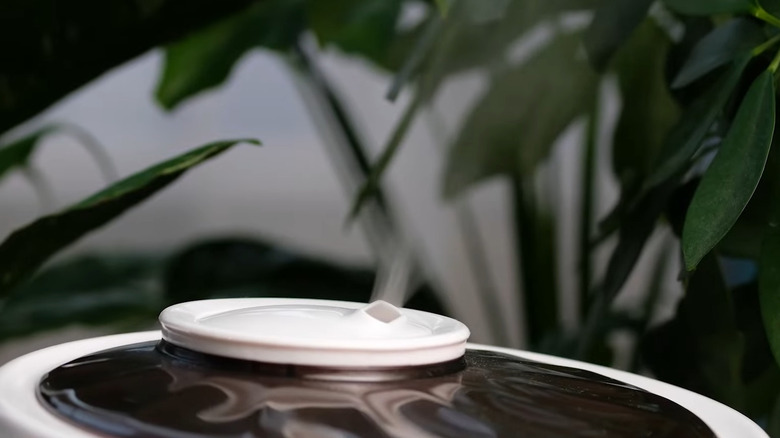
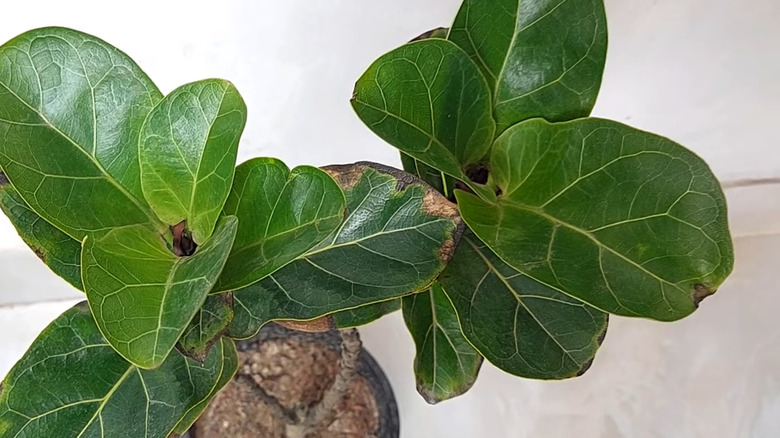
Because the fiddle leaf is native to humid rainforests, the houseplant version also needs lots of moisture and warm temperatures. It has higher humidity needs than other houseplants — too little humidity could cause drooping leaves or slowed plant growth. The edges of the leaves might also turn brown and dry out. Ideally, you need a space that's consistently between 65 and 75 degrees Fahrenheit. That can be tricky, though, because drafts from nearby doors could blast your fig with cold air, and that fluctuation is shocking to the plant. You also want to avoid heating sources, even though they'll keep the plant warm, because those areas are often drier.
A humidity level around 50% is ideal, but that's on the high side of the optimal 30% to 50% humidity recommended for home comfort. There are several ways to increase humidity for plants, including using a humidifier and placing several plants close together. This raises humidity in that area without having to increase the moisture levels in your entire home. If you live in a warm, humid climate, you can temporarily relocate your fiddle leaf fig outdoors in the summer in a spot with indirect light.
Consistency in the environment is key
Changes to the environment will shock a fiddle leaf fig easily. That's why consistency in the light levels, watering, temperature, humidity, and all other environmental conditions is so essential. You'll need a reliable, protected spot for your fig, where it will constantly get what it needs. You also have to be diligent about monitoring moisture levels and keeping watering consistent. If you travel frequently and lower your thermostat to save energy while you're gone, your fiddle leaf fig might drop lots of leaves while you're away. If you take lots of extended trips, changes in the watering routine might also affect the plant.
Consistency is especially important to keep your fiddle leaf fig happy and healthy all winter. During that time, the days are shorter, which means the plant might not receive as much sunlight. Fiddle leaf figs will respond to grow lights if they need some extra winter light. The air also tends to be drier in the winter, so supplementing with a humidifier to maintain consistency might be necessary.
Pests can be a problem
Fiddle leaf figs can attract common pests that affect houseplants, including thrips, aphids, scale, spider mites, and mealybugs. While the pests might not necessarily kill the plant, they can disfigure the leaves. Tiny spots or holes on the leaves are often a clue that you have insects messing with your fig. You can often spot pests on the plant, especially if the infestation is bad, but a magnifying glass might be necessary to see tiny bugs.
Dealing with most fiddle leaf fig pests is relatively safe and easy with an application of neem oil. Just make sure you hit all of the leaves, including the undersides, to reach all of the inspects. You might need to repeat the neem oil application after two weeks if there are still signs of an infestation. Since indoor pests can easily travel from one houseplant to another, it's a good idea to check them all and isolate infested plants to stop the spread.
Growth can be uneven
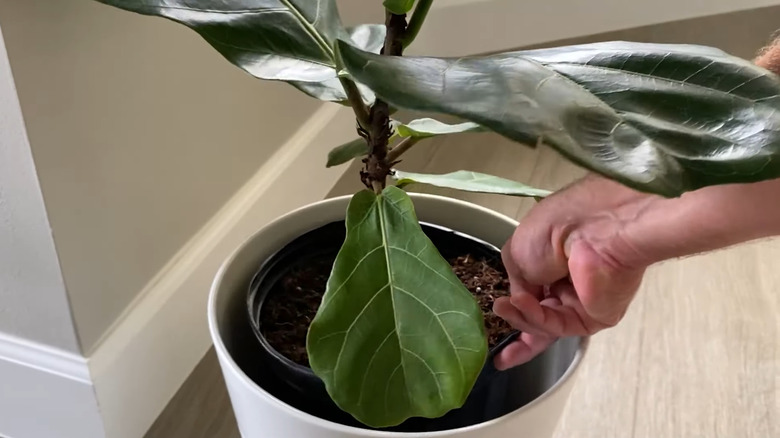
Your fiddle leaf fig could grow unevenly, depending on its location in the room in relation to the sunlight. Since plants tend to grow toward the light source, your fiddle leaf might start to look lop-sided if you never rotate your plant. You could also notice that the trunk or stems bend toward the light source. Even if the entire area of the plant is situated in bright indirect light, the back side still receives less than the side closest to the window, so you could see a growth imbalance.
A good way to remember to turn your plant is to tie to to watering — turn it 90 degrees (or a quarter turn) with each watering. Or, if you notice your plant leaning toward a certain direction, rotate it to give the other side a turn in the light. Also, check where the indirect light hits the plant, ensuring that all the leaves, from the top to the bottom, receive the light. This can become more challenging as the plant grows taller.
It grows large and may crowd your space
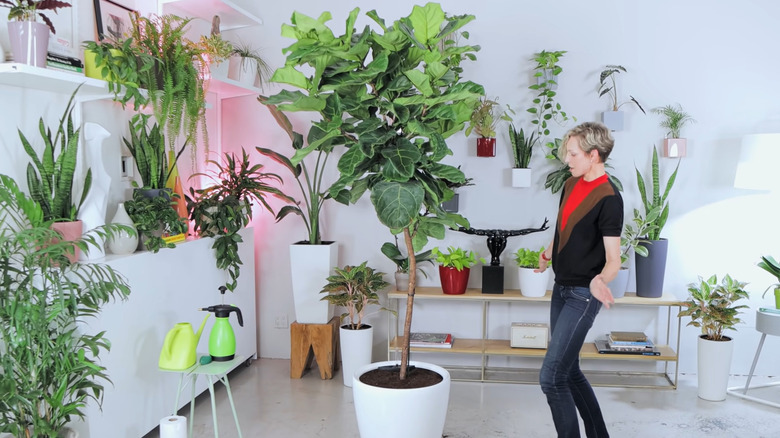
If you image a cute, compact plant that's only a few feet tall when you envision houseplants, the fiddle leaf fig won't fit neatly into your plans. It can grow up to 10 feet tall indoors. The growth is largely upright, with the leaves focused at the top and slim lower trunk, but that height can be a problem if you have low ceilings or just want a small touch of greenery in your home. This might be surprising when you pick up a small 12-inch fiddle leaf. The growth rate is roughly 12 to 18 inches per year, so it could grow several feet tall in just a few years.
For some people, the height is a dealbreaker. While you can prune a fiddle leaf fig to control its size, that's an added chore for an already demanding plant. On the other hand, giant plants are trending, and fiddle leaf fig is the most popular one to add to your home. So you might not have an issue with the height of this houseplant. Make sure you have the space before committing to a fiddle leaf.
You'll need to repot it regularly
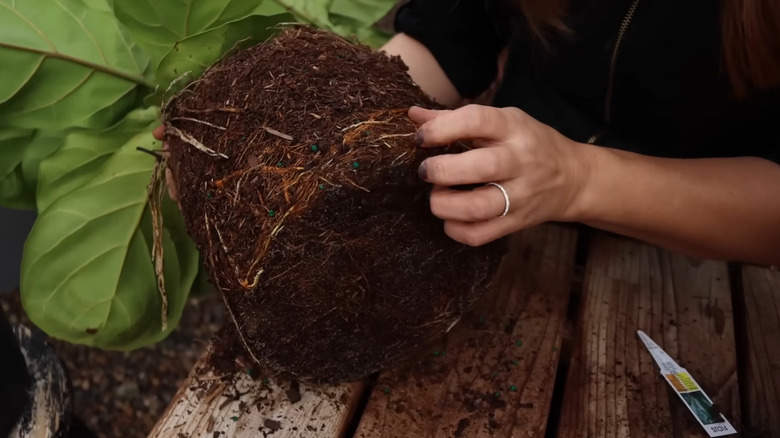
You may need to replant your fiddle leaf fig every one to two years, which makes sense when you remember the plant grows 12 to 18 inches in a year. That might not seem like very often, but the job will get more challenging as the plant grows — imagine wrangling a 10-foot fig tree out of its old pot and into a new one, making sure to repot it in a straight, upright position, while also preventing damage to the roots.
Make sure you're following tips for easily repotting your favorite plants before you tackle a fiddle leaf fig. The tropical tree likes to be a little rootbound and tight in the pot, so you don't want to go too large with the pot — only increase the size by about two inches. The small increases in the pot size to keep the plant happy also mean you might need to repot more often than usual.
It's quick to drop its leaves
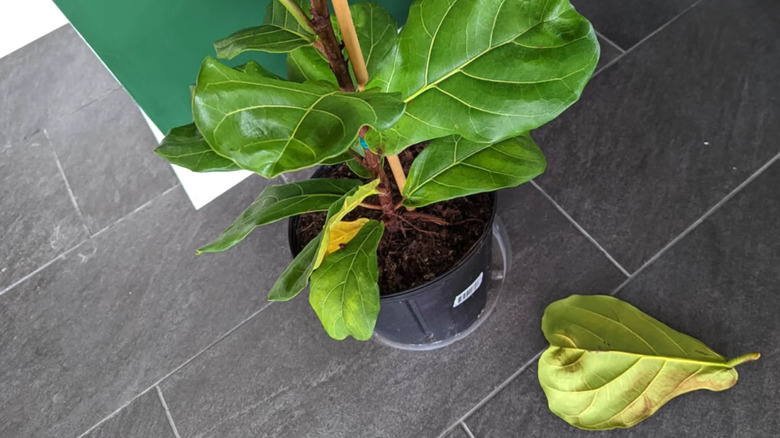
Dropping its leaves seems to be the fiddle leaf fig's go-to response for almost any situation, including too much or too little water, incorrect temperatures, incorrect light, and changes in humidity levels. Root rot and other issues with the roots can also cause leaves to fall off. It can be normal for the lower leaves to drop occasionally as they get older, but it's not normal for lots of leaves to fall at once. However, even if it's dropping leaves due to a growth issue, it usually doesn't mean the plant is dying — most of the issues can be reversed to stop the leaf drop.
The frequency of leaf drops in this fig is one of the reasons it's not great for beginners — seeing a bunch of leaves fall off your precious plant can be overwhelming. So, if you're not prepared to see the shed happen, consider another plant. Once you're a fiddle leaf fig owner, it's important to keep the conditions ideal and consistent. And if the leaves start to drop, figure out the cause quickly, so you can correct that issue.
It's toxic

If you have pets, you're probably used to Googling whether or not various species are pet friendly. Sadly, the fiddle leaf fig is among the houseplants you should never grow in a home with pets. It's toxic to both cats and dogs. Even humans experience toxicity symptoms if the plant is ingested, so it's not ideal if you have young kids, either. You might be able to raise the plant up high enough to keep it out of the reach of kids and pets for a while, but that becomes more challenging as it grows several feet tall.
Even though the plant is only considered mildly toxic, it still creates unpleasant side effects, so make sure it's not accessible to any vulnerable people or pets. Let's assume there are no people or animals in the home who will try to munch on the plant. Irritation is still possible, due to the milky sap that comes from the plant when it's cut. It's always a good idea to wear gardening gloves when pruning the plant to avoid skin irritation.
The large leaves collect dust easily
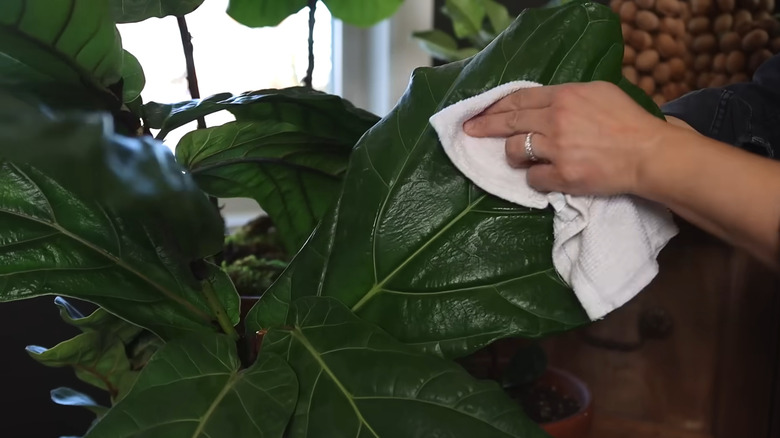
The large leaves that make the fiddle leaf so attractive also collect lots of dust, which adds the chore of dusting regularly to your list. Regular cleaning helps keep the leaves looking glossy and fresh. It's not just about aesthetics — a thick layer of dust can disrupt photosynthesis with results similar to the plant lacking light. Skipping the dusting could make the leaves droop. The problem with cleaning your plant is that it's a time-consuming task that you need to do quite frequently to keep your plant looking green and healthy. And all of the dust and drips of dirty water often make a mess. Plus, when the plant grows taller than you, you'll need a ladder to reach the upper leaves. If you're not up for the time commitment, skip the fiddle leaf fig.
Dust the plant at least as often as you water it — the best option is wipe them gently with a soft cloth, misting the leaves gently with water if needed. Or, use a lightly damp cloth to wipe the leaves. If it has been a while since you've dust the plant, you might need to go over the leaves more than once. To minimize the mess, put a drop cloth down on the floor under the plant to catch the dust and drips.
Some designers say it's an outdated houseplant
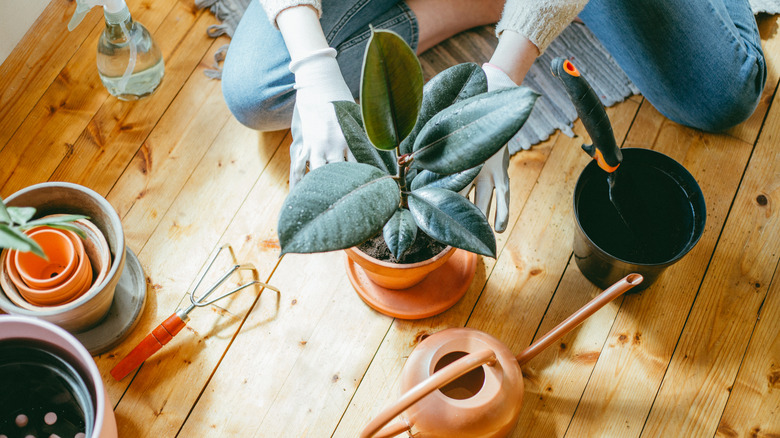
From glossy magazine pages to posts on home decor blogger's sites, fiddle leaf figs frequently appear in picture-perfect vignettes, showing off an ideal home. That's likely because they look good in photos. And since consumers see the fig in so many professional shoots, they assume it's a good plant to grow. Or, maybe you grew up with fiddle leaf figs around your home, so it just seems like the thing to do. But according to some people, the fiddle leaf fig is the outdated house plant that's still in everyone's home. They became popular in the 1970s, and a lot of the other popular decor from that era fell out of fashion long ago.
But, really, it comes down to your preferences. You can modernize a fiddle leaf fig by choosing a sleek, decorative pot that fits your style and complements the plant's upward growth. Since the leaves are smooth and glossy, balance it out with natural textures in your decor. As long as you love your fiddle leaf fig, it really doesn't matter what designers say!