

The Valuable, One-Of-A-Kind Pottery Style Waiting For You At The Thrift Store
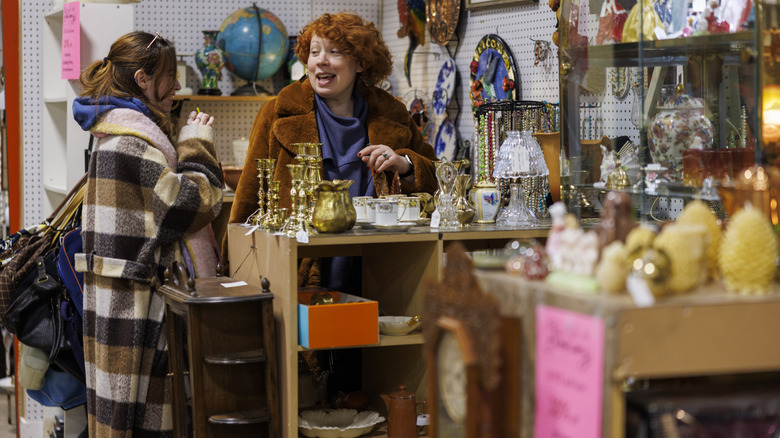
While thrifting can be a lot of fun and you can find lots of useful things that you can repurpose, sometimes, you might want to be aware of the many vintage pottery brands to look out for that might just be valuable. Whether you're a collector and love the thrill of finding a unique piece that can usually have a high price tag, or you're a seasoned reseller who loves finding bargains that you can flip for a profit, it might pay to familiarize yourself with a valuable, one-of-a-kind pottery style known as Imari Ware, several of which are currently listed for hundreds of dollars on eBay.
This style of porcelain was first produced in Japan around the seventeenth century. It's named after a shipping port in Arita on Kyushu island. This port was used by the Dutch East India Company to export pottery to Europe. Pottery stone was collected from the region and ground into a powder to produce the clay that the porcelain ware is made from. Once the forms were molded and fired, the decorative glazes were added. The intricate designs were painted on by hand using fine brushes, and the pieces were once again fired before the overglaze painting was completed.
What makes Imari Ware distinctive?
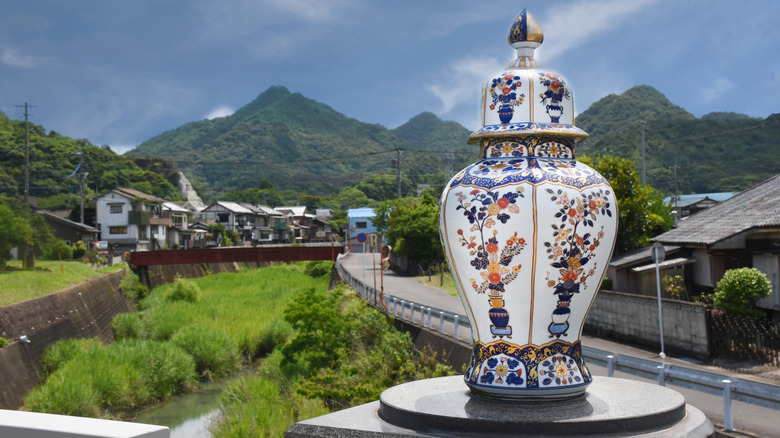
Imari Ware is a fairly distinctive style of pottery. It usually features a blue underglaze with overglazes of green, red, and gold enamels. The colors are somewhat muted rather than overly bright. While this style originated in Japan, other countries, like China and those in Europe, started copying the style, as well. It can be seen in many different one-of-a-kind items such as plates, bowls, and even teapots. These are vintage decor pieces you should never leave behind if you spot them at your local thrift store.
You'll find a few of the older pieces displayed in museums such as the University of Michigan Museum of Art and Cornell University. Many of the hand-painted designs feature landscapes, animals, flowers, and birds with a touch of fantasy. Once you familiarize yourself with this style of pottery, you'll find it fairly easy to spot when you're out thrifting. As mentioned, online marketplaces such as eBay have an entire section dedicated to this style that you might want to check out to see the vast range of prices these pieces can fetch, depending on their age. Interestingly, there are still artisans in Japan today who make pottery in the traditional Imari style. Once you've collected a piece or two of Imari Ware, you might want to find out some styling secrets to make these vintage pieces stand out in your home.