

How To Attract Chickadees To Your Bird Feeder With The Right Food
We may receive a commission on purchases made from links.
Spring is in the air, and with that, a chorus of birds, especially if you live in the Northeast. While some birds are flying back north from a sunny winter break in the South, the chickadee is an adorable backyard bird to look for in the winter, since they don't migrate. Regardless of whether you only put out food in the months when food is scarce, or you do it year-round just to enjoy their company, there are specific steps that you can take with your bird feeder to specifically attract chickadees.
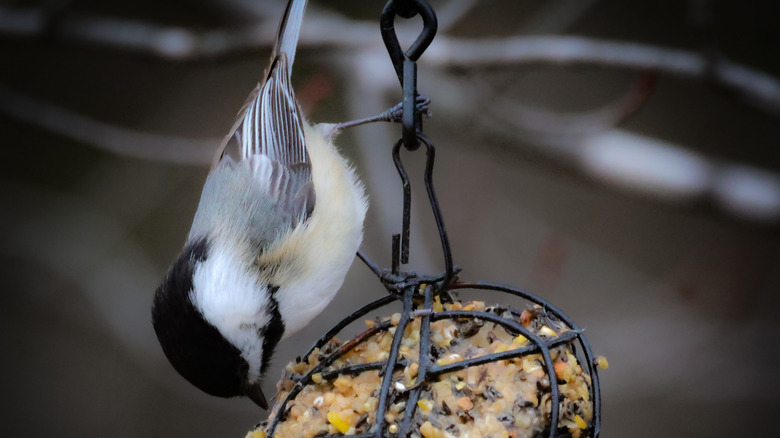
The right food blend is going to be crucial to your success. Chickadees, even though they are small in size, need calorie-dense foods to sustain their energy and keep their bodies warm in the winter. It's best to feed them a mix of foods to keep them coming back. Start with black oil sunflower seeds, since this is their absolute favorite. These seeds have thinner shells and higher oil content than other sunflower seeds, making it easier for small beaks to crack into them. Next, since chickadees love peanuts but struggle with whole shells, mix in some peanut hearts or crushed peanut chips to make feeding easier. You should also add high-quality suet (especially blends containing insects or peanut butter) to give them the concentrated fat they need to maintain their body temperature.
How to maximize your bird feeder for chickadees
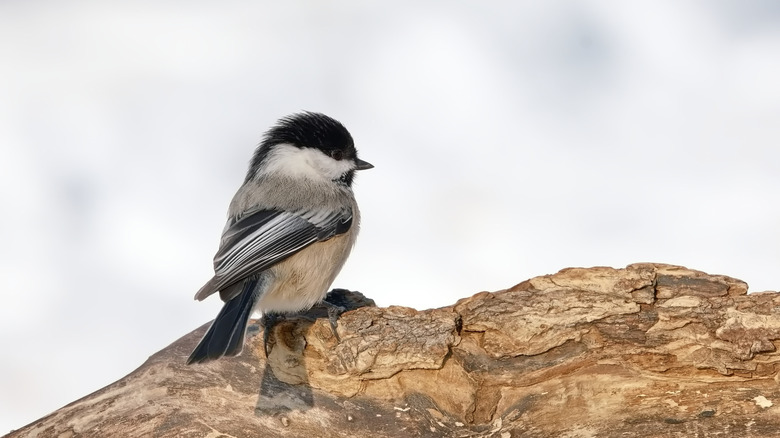
Knowing the right food blend is a large part of the battle — there are chickadee-specific preferences to consider, especially since it's a type of bird you want in your yard. Where you put the feeder is just as important as what is inside it. First, you'll need to place your feeder within 10 to 12 feet of a brush pile, evergreen tree, or thick shrub. This convenient cover allows the bird to take a seed and fly nearby to crack it open, so it's not exposed to potential predators. In the same vein, be sure to hang the feeder about 5 to 6 feet off the ground — this is high enough to discourage some ground predators but low enough for easy refilling. If you have the available space, you can even place the feeder near a nesting box, since the chickadee is one backyard bird that loves birdhouses.
Even though placing your bird feeder near your home, like by a kitchen window, is convenient, it's actually potentially dangerous for chickadees. To prevent window strikes, place feeders either within 3 feet of a window (so they can't build up enough speed to hurt themselves) or more than 10 feet away so that they have space to maneuver. If you want to see a chickadee up close without causing any harm, consider purchasing the Birdfy Bird Feeder with Camera, which captures every visit in high definition.