

How To Water An Indoor Cactus In Spring To Help Kickstart The Growing Season
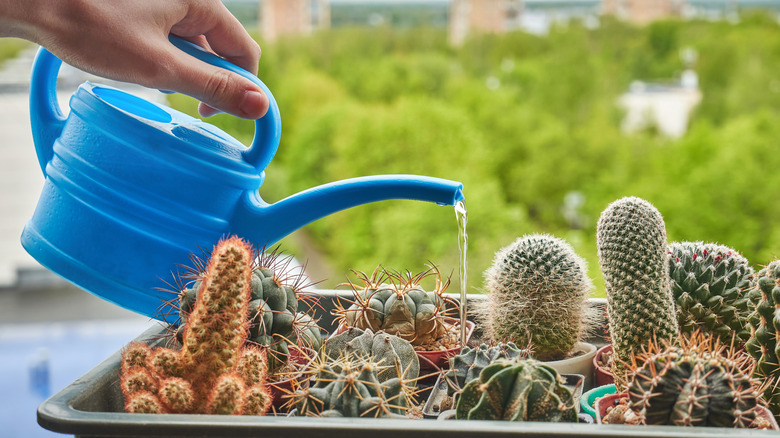
Cacti are popular and resilient indoor plants — there are many unique cacti perfect for your indoor space that can add character to any room while still being easy enough to maintain that even beginners can succeed. These desert dwellers thrive in the warmer months and rest in the winter, requiring very little water. As spring arrives and daylight increases, indoor cacti begin to wake up from their winter sleep. Transitioning them properly is key to encouraging new growth without causing root rot or stunting their development. While it might seem tempting to give your indoor cactus a large drink of water right as spring hits its stride, it's most helpful to develop a gradual approach in which you slowly reintroduce moisture and nutrients.
It's best to start with a light watering rather than a deep soak when transitioning your cactus from winter to spring. This gently hydrates the plant and signals the roots to begin absorbing nutrients again. Once you see signs of new growth — bright green tips or tiny new spines — transition to a more thorough watering routine. This includes watering your cactus enough so that water runs out of the drainage holes, then waiting until the soil is absolutely all the way dry to the bottom of the pot before watering again. This usually takes one to two weeks and is the way to guarantee proper root hydration and avoid oversaturation, as standing water can lead to decay. Remember that it's best to water your cactus in the morning. This allows any accidental splashes on the body of the plant to evaporate in the sun and gives the roots the entire day to drink while the metabolism is highest.
Other spring tips for indoor cacti
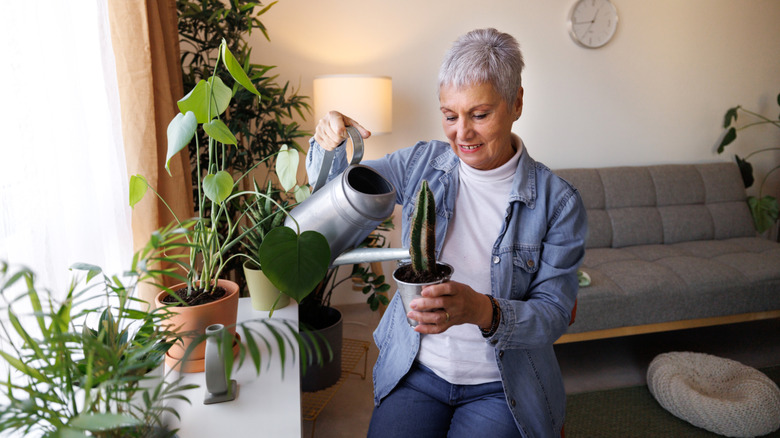
Knowing the correct way to water your cactus for spring is only part of the equation. It's equally important to keep it warm and bright. Otherwise, your watering efforts towards some of the best indoor plants that will thrive in a small space could go to waste. Outside of watering, you'll need to check the soil temperature regularly. Cacti respond more to warmth than just light. If your home is still a bit chilly or the cactus is near a drafty window, the soil will stay damp for too long, causing potential root damage. Before increasing the frequency of your watering schedule, you'll need to make sure the cactus is in a warm enough spot — usually above 65 degrees.
Spring is the ideal time to introduce a balanced fertilizer to help encourage healthy blooms. You'll need to dilute this cactus food to half-strength and apply it when you first start to see new growth, then around two more times throughout the spring and summer to support the energy needed for the growing season. Additionally, make sure you turn the pot 90 degrees every week so it grows straight towards the light — while this is one of the best indoor plants for every room in your house, be mindful of where the sunlight hits the most.