

Why A 60's Inspired Conversation Pit Might Be The Perfect Addition To Your Backyard
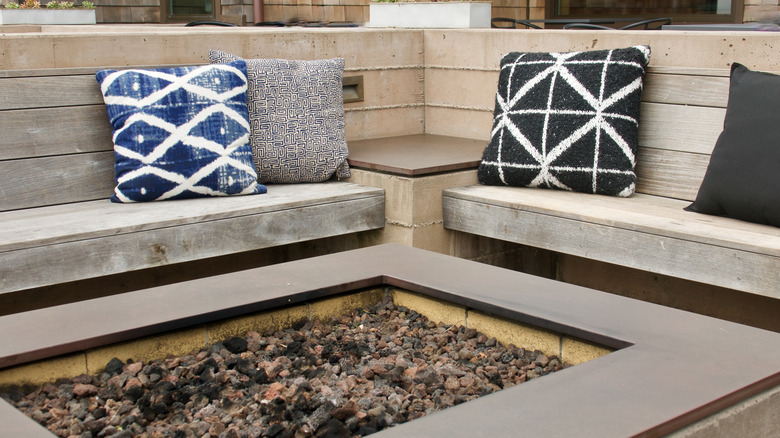
The mid-century trend of the sunken living room has found its way outside, trading the dusty shag carpet for open air and grass. Building a conversation pit below the grade of your lawn (usually between 1 to 2 feet deep) can change the vibe of a backyard get-together by breaking away from a standard patio or deck layout. When you step down into the seating area, the surrounding walls create a sense of privacy that setting up a few camp chairs just can't match. This setup makes the backyard feel less open and more structured, giving you a dedicated corner that feels separate from the rest of the property. You essentially get a quiet, comfortable space to retreat to without ever having to leave your home.
Sitting in a recessed space makes a backyard feel more like an extension of the house rather than one flat area of grass. The conversation pit acts as a focal point for the entire yard since the seating is built-in and permanent. Whether you choose a circular or square layout, the design naturally pulls people toward the center and makes it the best spot for sharing a drink or hanging out by a fire. By looking into trendy ideas for designing your perfect patio, you can find ways to create a secluded spot that feels comfortable and private without the need for a fence or a roof.
Building an outdoor conversation pit requires a smart plan for drainage
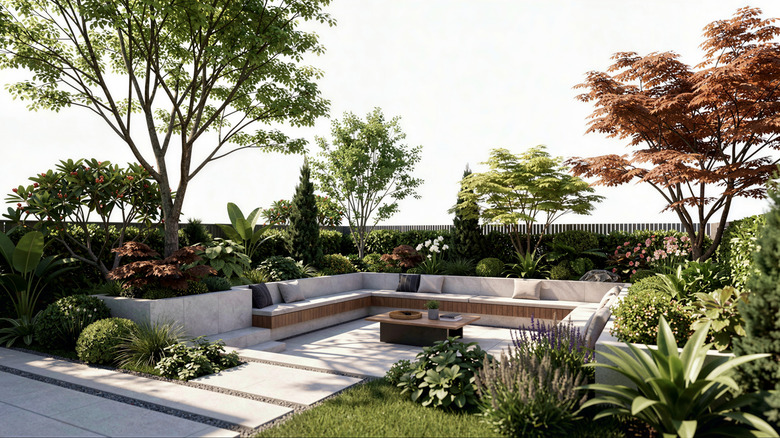
Digging a hole for a seating area is only part of the plan — you also have to make sure it doesn't fill up with water every time it rains. Without proper drainage, your new sunken seating area may remain damp for days. Most successful builds start with a base of compacted gravel between 5 and 10 inches deep to help water drain naturally into the ground. If you have soil that holds onto moisture, you can prevent overflow in your yard with useful drainage solutions like a French drain or a small sump pump to move water away from the area. This type of planning is what keeps the space dry and prevents any masonry from shifting over time.
The walls of a conversation pit act as retaining walls and must be strong enough to withstand the surrounding soil pressure. Using poured concrete or heavy stone blocks provides the right amount of weight and durability to keep the pit from collapsing. You can also finish it off with smooth tiles or wood planks to match the exterior of your home. Many homeowners build benches directly into the walls, which saves space and keeps the floor clear for a fire pit or a table. Adding a stone or brick center makes sure that any fire feature is safe and far away from anything flammable, making it a go-to spot for gatherings year-round.
Adding a conversation pit increases your property value
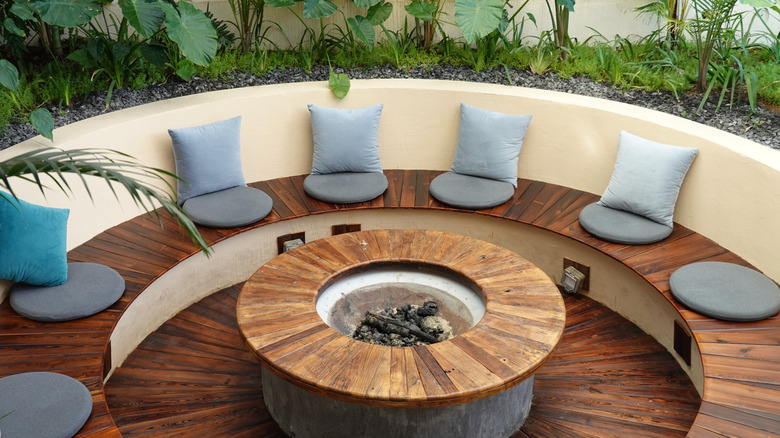
Putting a permanent, high-end feature like this in your yard can make your home much more attractive to potential buyers. People are often looking for unique outdoor spaces that go beyond the basic wooden deck or concrete slab, which is why conversation pits are often among the best landscaping projects to boost home value. A well-designed outdoor conversation pit works like an extra room, increasing the usable square footage of your property without the high cost of a home addition. Since outdoor living is a draw for many people, having a dedicated conversation pit in the backyard can be a major selling point.
Another benefit is that everyone sits at the same level facing inward, which naturally encourages conversation. It creates a cozy atmosphere that's perfect for families who want to spend more time outside. Since the seating is permanent, you never have to worry about rearranging the furniture or chasing chairs across the lawn after a storm.