

14 Specialty Zinnia Types To Grow For A Garden Full Of Beautiful Blooms
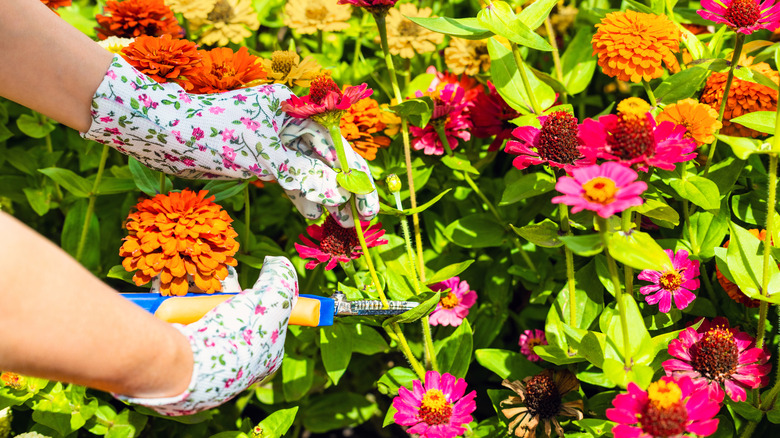
It's hard to go wrong with zinnias. They are easy to grow from seed, native to North and South America, long-lasting, come in bright and varied colors, make excellent cut flowers, and are pollinator favorites — what's not to love! There's certainly no shame in growing the standard, garden variety zinnias; they will be a star in any garden. But if you're looking for an interesting twist on the classic, with different color patterns, petal shapes, and heights, there are dozens of hybrids and cultivars created by breeders to capture your eye, delight pollinators, and perhaps turn your neighbors green with envy.
Despite the wide variety available, your garden center is likely to carry only a small selection of zinnias as seedlings, so you're more likely to have to purchase them in seed packets and grow them yourself. Fortunately, growing and caring for zinnias is easy. You can start seeds indoors four to six weeks before the last expected frost date, or sow them directly into the garden once the danger of frost has passed. Zinnias are annual flowers that are grow well in full sun in nearly any soil type and pH level, as long as it is moist and well-draining. One of the few disease concerns with zinnias is powdery mildew, so space your plants to allow for good air circulation, then watch them grow. In general, plant them in borders, flower beds, meadows, or containers. Water them regularly until they get established.
'Andes Jewel'
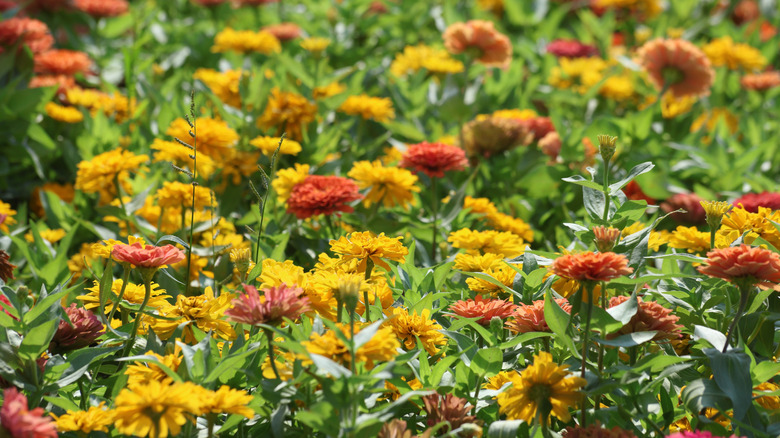
'Andes Jewel' is a cultivar of Peruvian zinnia (Zinnia peruviana), which is a shorter cultivar, growing only 18 to 20 inches tall. Peruvian zinnias grow and bloom quickly, forming a clump of flowers in mere weeks. As the name suggests, Peruvian zinnias can be found growing in their native habitat from the southwestern United States all the way down to Argentina, and they can withstand the extremes of heat and cold. Also being drought-tolerant, 'Andes Jewel' zinnias are a great choice if you've joined the xeriscaping trend. Watering too frequently can cause their short tap roots to rot.
'Aztec Burgundy Bicolor'
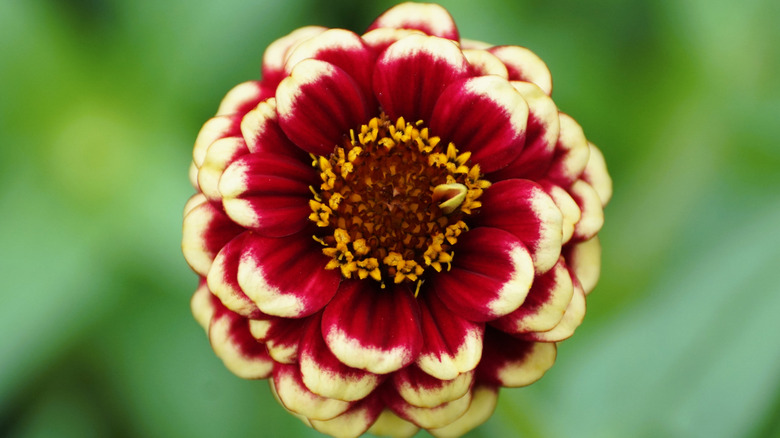
'Aztec Burgundy Bicolor' is a Mexican zinnia (Zinnia haageana) cultivar, growing up to 10 inches tall. It needs a more loamy, rather than sandy, soil that's rich in organic matter. It's a good variety to choose if you're worried about powdery mildew, which can spread to many vegetable plants, as Mexican zinnias are more resistant to the disease than many other zinnia varieties. They are also a heavy bloomer and form a carpet of beautiful flowers.
'Benary's Giant'
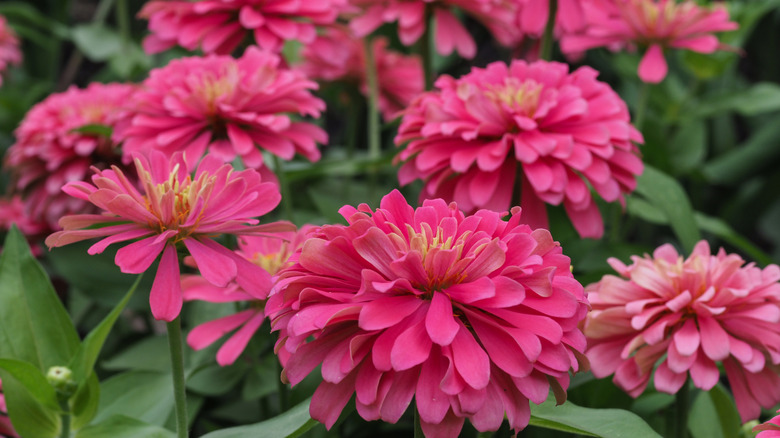
If you want classic tall zinnias growing in your garden, choose 'Benary's Giants'. They're a cultivar of common zinnia (Zinnia elegans) that can grow up to 3 to 4 feet tall. Their large, bright blooms make excellent cut flowers. Common zinnias are more susceptible to powdery mildew and other diseases, especially if they're tightly packed together, in shady areas, or in moist conditions, which is why you should water varieties of this species at their base rather than overhead. 'Benary's Giants' prefer loamy soil that is well-draining and rich in organic matter.
'Pette Land White'
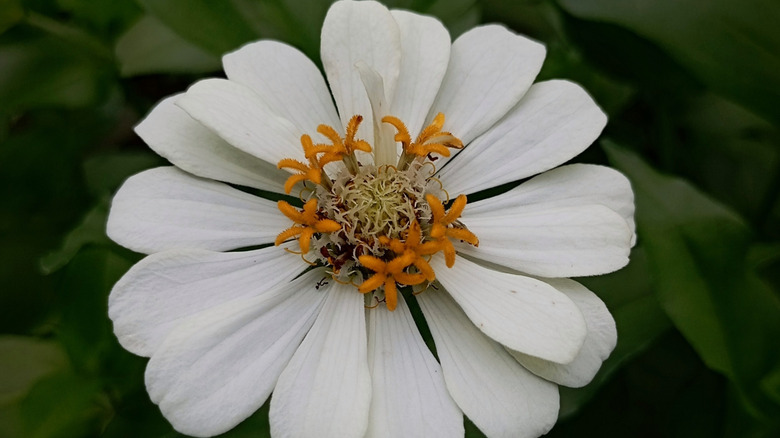
'Pette Land White' is a white variety of creeping zinnia (Zinnia angustifolia). Also called narrow leaf zinnias, creeping zinnias are low-growing, usually reaching heights of only 8 to 16 inches. Creeping zinnias are known to have excellent resistance to fungal diseases, including powdery mildew, so choose a creeping variety like 'Pette Land White' if you want to grow zinnias near your veggie garden. Creeping zinnias are also drought-tolerant, so plant them in well-draining soil on the dry side, and don't over-water them.
'Profusion' series
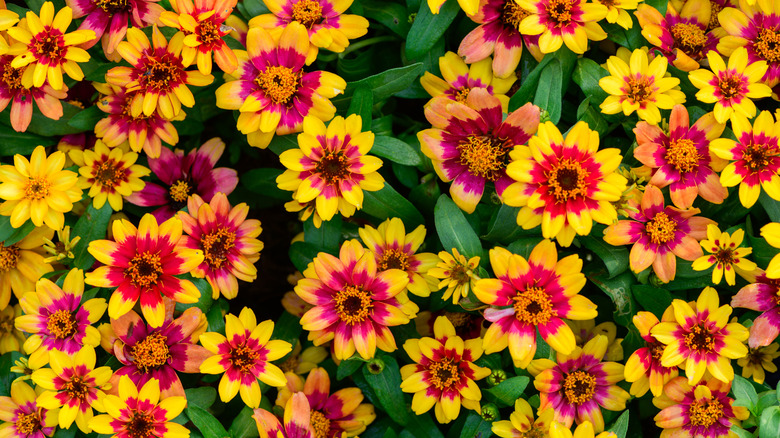
If you want the larger flowers of common zinnias but also the disease resistance of creeping zinnias, try 'Profusion' zinnias, which are a hybrid of both species. 'Profusion' zinnias are also tolerant of both heat and humidity, so they are excellent choice if you live in the South. And if you're in drier areas of the Southwest, 'Profusion' is drought-tolerant as well. 'Profusion' hybrids come in a wide variety of colors, from white to orange to cherry red and many shades in between. 'Profusion' hybrids usually grow from 12 to 24 inches tall.
'Old Mexico'
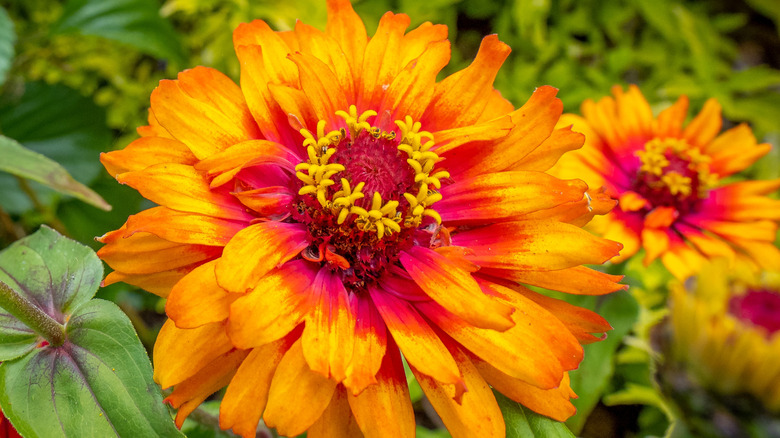
'Old Mexico' is (surprise!) a Mexican zinnia that forms a dense mound of low-growing flowers, reaching 12 to 18 inches tall. The 'Old Mexico' variety benefits from starting indoors so that you get the most out of their long bloom time from early summer to the first frost. Like other Mexican zinnias, it prefers loamy, rich, and well-draining soil. 'Old Mexico' has long been a garden favorite, winning the Royal Historical Society's Award of Garden Merit and the 1962 All American Selection.
'Royal Purple'
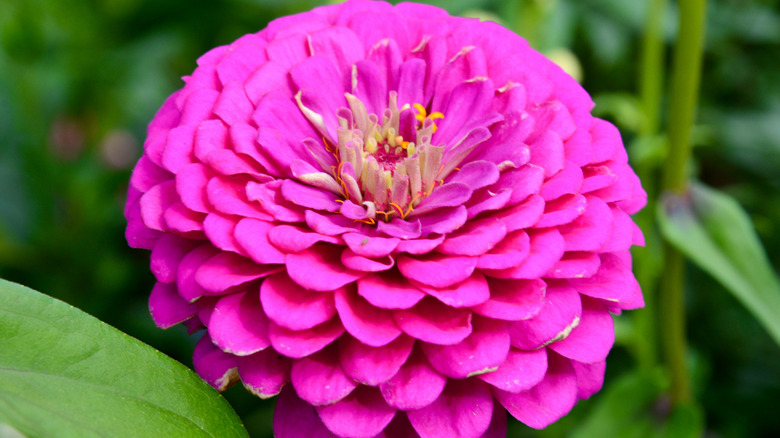
'Royal Purple' is another tall common zinnia cultivar, growing 30 to 36 inches in height and producing large, strikingly bright purple blooms. Along with bees, butterflies such as American painted ladies and eastern tiger swallowtails and hummingbirds will all be common sights on these flowers. Like with other common zinnias, maintain good air circulation around these plants to help prevent powdery mildew. This heirloom show-stopper has been around since the 1920s and — for good reason — was an All-American Selection winner in 1942.
'Dreamland'
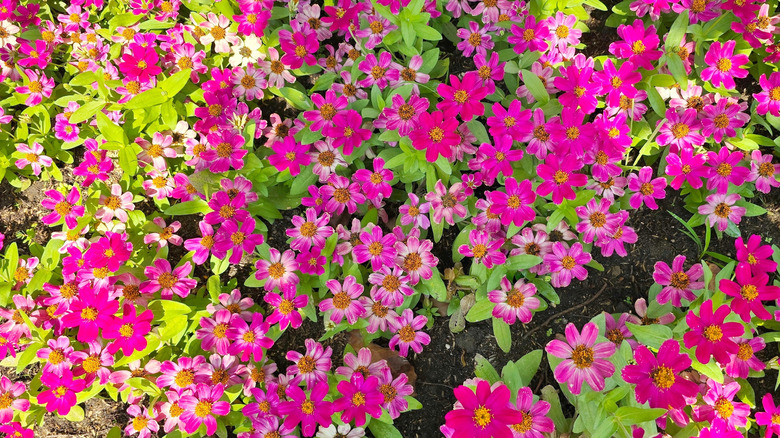
Unlike most common zinnia cultivars, 'Dreamland' is compact, growing only 10 to 12 inches tall while still producing the large (4-inch) flowers for which Zinnia elegans is celebrated. This hybrid has tough, waxy petals that hold up well in storms and stay fresh for over a week in a vase after cutting. It comes in a variety of colors, and, being lower-growing, comes into bloom earlier in summer yet lasts to the end of the season. It's also more disease-resistant than the common zinnia is usually known for.
'Candy Cane'
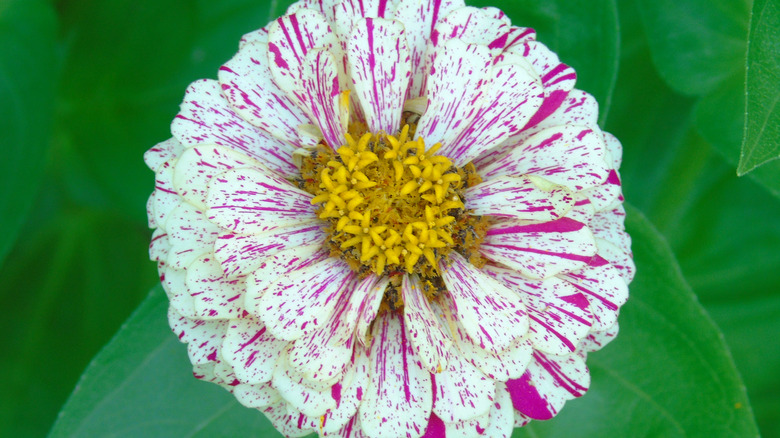
With their burst of red, pink, white, and light yellow petals, 'Candy Cane' zinnias are a bicolor cultivar of Zinnia elegans that can add some playfulness to your garden. They only grow 12 to 14 inches high, but like other shorter zinnias, they are quicker to reach maturity, blooming in around 55 days. Zinnias in general produce an abundance of seeds. Let pollinators do their thing by crossing the pollen of different varieties, then collect the seeds for replanting the following year and see what new varieties you've grown.
'Aztec Sunset'
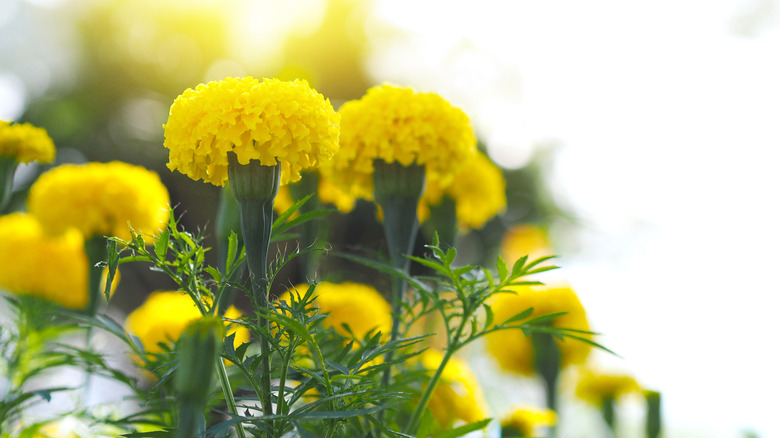
'Aztec Sunset' is another Mexican zinnia cultivar, more than twice as tall as the 'Aztec Burgundy Bicolor'. Being taller, it forms a bush-like cluster of flowers on stems that easily make beautiful cut flowers. But don't cut too many blooms if you want to attract pollinators. 'Aztec Sunset' produces lots of nectar and pollen. Plant a mix of this cultivar and you'll have a colorful array of bicolor reds, yellows, pinks, rusts, merlots, and golds.
'Oklahoma' series
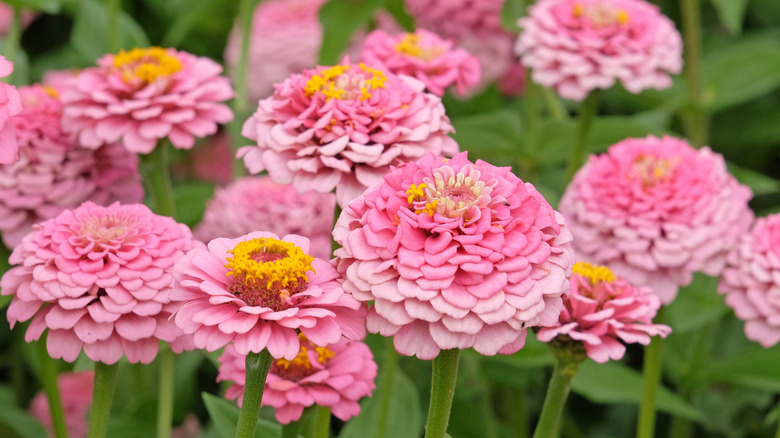
'Oklahoma' is a series of cultivars of the common zinnia that can grow 30 to 36 inches tall. The series includes 'Oklahoma Pink', 'Oklahoma Scarlet', and other cultivars in other colors. Grow them together for a stunning mix of flowers that are 2 inches wide. Relatively disease-free, 'Oklahoma' germinates easily and grows vigorously, making it a good starter zinnia for first-time growers. It also has sturdy and abundant stems, making it a great cut flower that will also hold up well in the garden without staking.
'Persian Carpet'
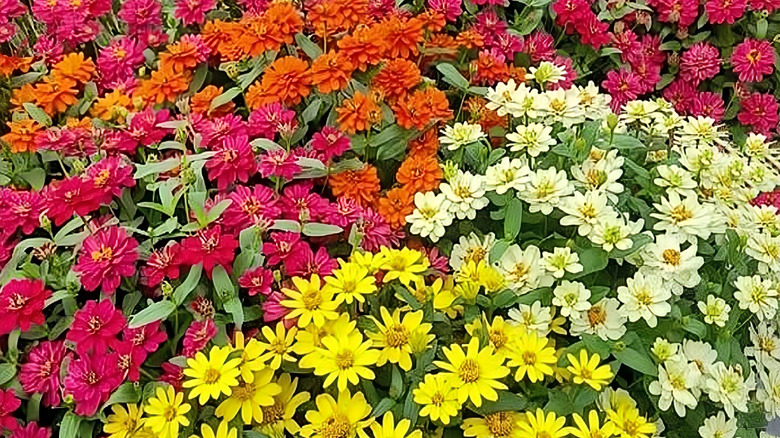
'Persian Carpet' is a narrow leaf, or creeping, zinnia. What 'Persian Carpet' loses in height by growing low to the ground it makes up for in breadth: One study in the European Journal of Biotechnology and Bioscience found that it produced the largest number of branches and leaves among all varieties of zinnias, and 'Persian Carpet' can fill a garden bed with a dense mix of yellow, red, and orange flowers. Creeping zinnias do best in evenly moist, well-draining soil rich in organic material.
'Pop Art'
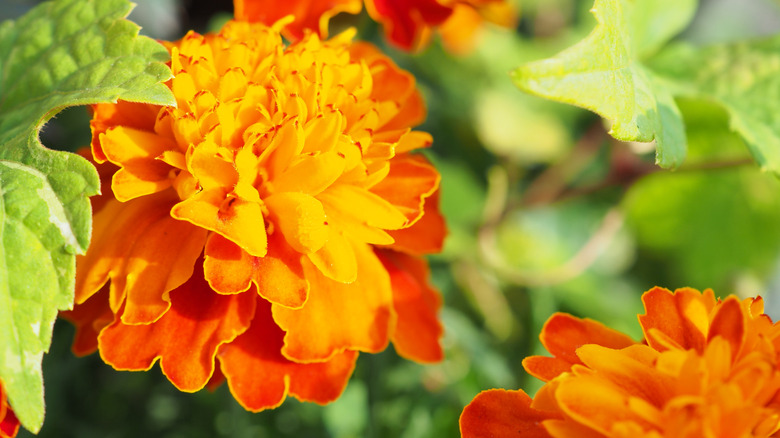
'Pop Art' is a common zinnia cultivar with large yellow blossoms speckled with red. It grows from 2 to 3 feet tall, making it an excellent cut flower. Deadhead the plants for maximum blooms so that you profit from the "cut and come again" feature of common zinnias. The 'Pop Art' cultivar also comes in a 'Golden & Red' version, featuring an elegant light yellow and magenta burst of petals along with a light greenish center.
'Thumbelina'
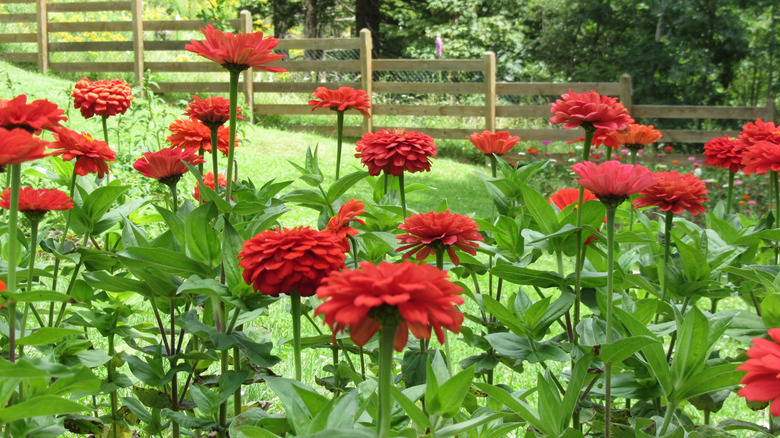
As you might guess, 'Thumbelina' is a very compact variety of common zinnia, growing only 4 to 6 inches tall. The flowers are smaller than taller common zinnias (2 inches wide, instead of up to 6), but take the same multi-petaled form, and can come in a wide range of colors, from yellow to crimson red, lavender, orange, pink, and purple. 'Thumbelina' can form a dense cluster, making it an excellent ground cover.