

8 Common Types Of Wasp Nests And How To Identify Them
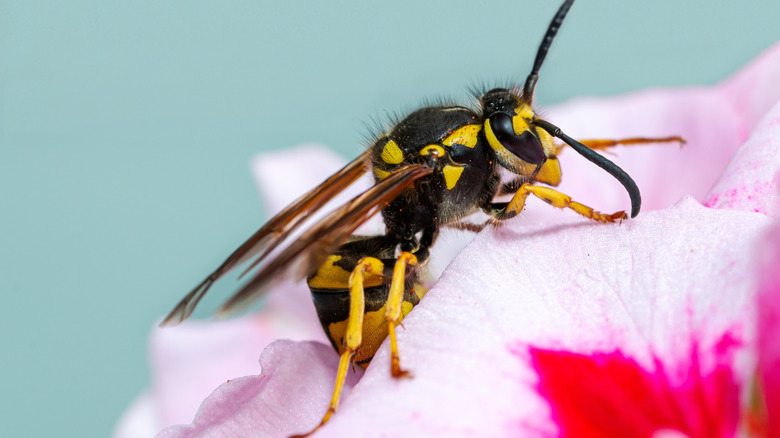
Finding a wasp nest nestled under the eaves of your house is more than a nuisance. An encounter with certain species of these prolific winged insects can result in a painful sting. It could be worse if a swarm is triggered or you or a family member is allergic to wasp venom. Many wasps are at their most aggressive when protecting a nest. Eliminating the nest and preventing wasps from building nests near your home in the first place starts with identifying the kind of nest — and the species of wasp — you are dealing with. It could be a geometric paper wasp nest, a papery yellowjacket nest, or the dirt and spit nests of a mud dauber or potter wasp. Not every wasp is harmful. In fact, many are beneficial to your garden and the wider ecology.
In addition to the risk of getting stung (which is actually fairly low), wasps can cause property damage when building their nests. It's not widespread, but they can damage nearby wood, especially if the nest isn't removed promptly. Although most types of wasps build nests to protect the queen — a feature of social species — and their larvae, different species build uniquely styled nests in places they prefer. A large nest attached to a pole on your patio pavilion might be easy to see, but others constructed in more natural environments may blend into their surroundings. If you see more wasps than usual on your property, check the sneaky spots where wasps could be building nests around your home. This could be under outdoor furniture, in flower beds, inside empty plant pots, and in wall cracks.
Paper wasp nests
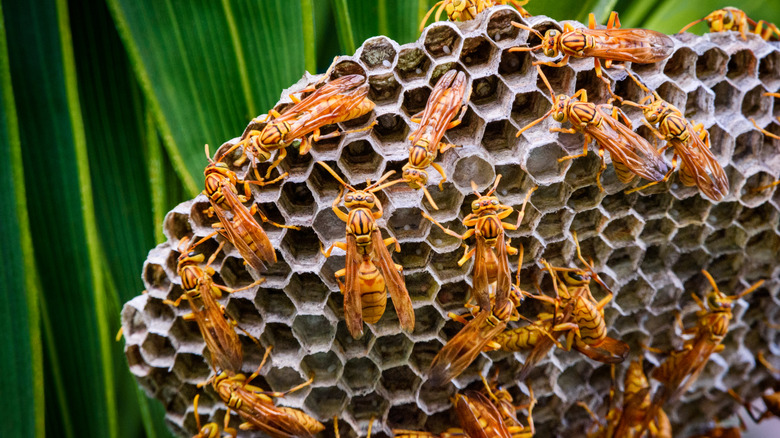
These wasp nests have a texture that resembles gray paper, which is where the insects that build them get their name. They are umbrella-like in shape, suspended from a structure using a thin pole. To make the structure, paper wasps chew wood fibers that they mix into a paste with saliva before spitting it out. The nests have an open, honeycomb-like structure with hexagonal cells. Paper wasp nests can usually be found under the eaves of your house or in the attic.
Underground yellowjacket nests
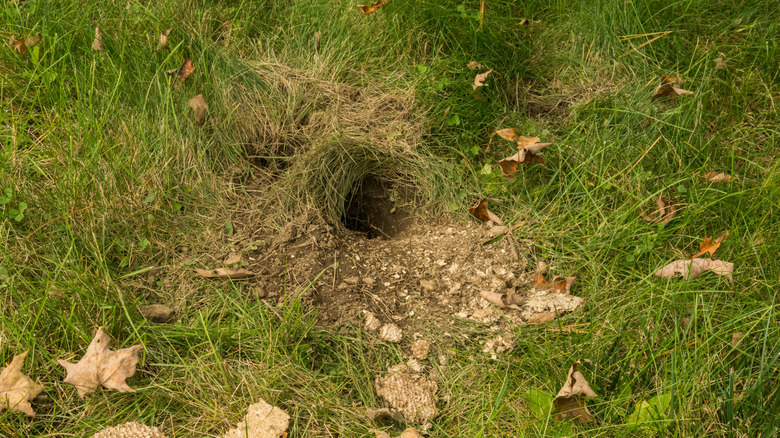
If you've ever been stung by something while mowing or simply walking on the lawn, you may have stepped on a yellowjacket nest. That's because most yellowjacket species build underground nests. These wasp nests are difficult to locate because they're small and well-hidden — they're quite literally buried underground. You can identify them only by spotting a small hole in a garden bed, your lawn, or a pathway, which is the entrance. In fact, yellowjackets usually commandeer abandoned mammals' burrows to start their nests — though sometimes they choose the underside of rocks or gaps in house walls.
Aboveground yellowjacket nests
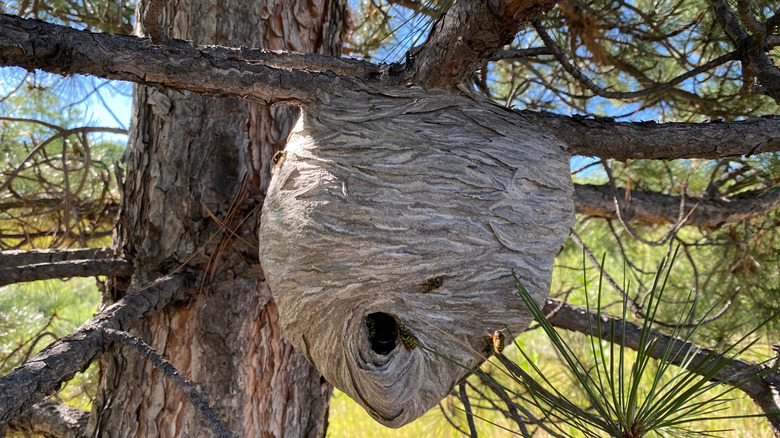
Unlike their subterranean cousins, aerial yellowjackets opt for aboveground nests made of wood fibers mixed with saliva. Similarly to paper wasp nests, these nests look like they're made from many thin layers of craft paper. They're typically oval to round, sometimes reaching the size of a basketball, with a nickel-sized entrance hole near the bottom. Aerial yellowjacket nests are often found under eaves or attached to the branches of trees and shrubs. They can also be found in tree stumps, hollow logs, and recycling bins. Yellowjackets are aggressive, especially if you get too close to their nests.
Digger wasp nest
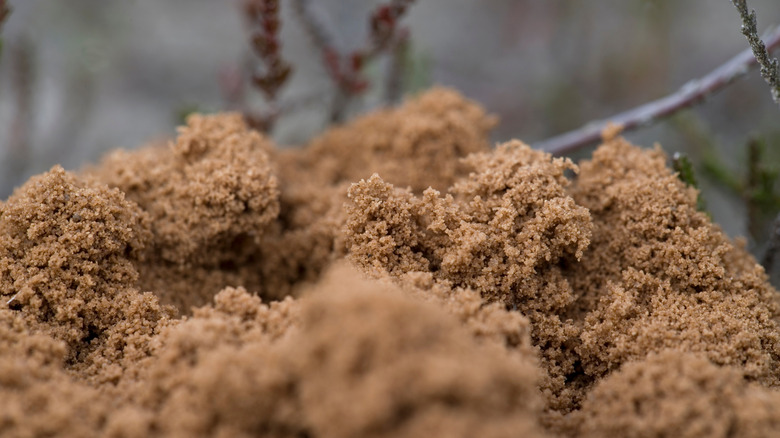
Digger wasps, also known as blue-winged wasps or scoliid wasps, build their nests in the ground. They can be beneficial because they eat grubs and bugs that can be harmful to lawns, such as crickets and katydids. Although they are beneficial for pest control, the males can be aggressive. Their nests look like little mounds of dirt piled up next to the entrance holes. Unlike other ground nesting wasps, digger wasps build nests with multiple underground chambers similar to ant colonies.
European hornet nest
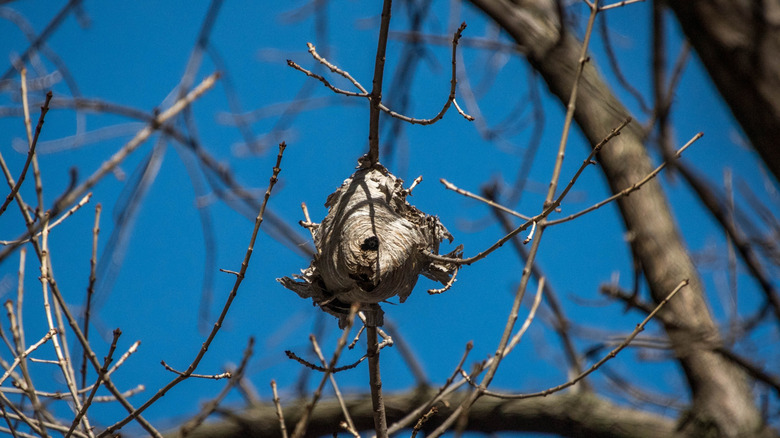
European hornets are one of the largest wasp species in the world. Their nests are brown or tan in color and have a ragged, mottled, paper-like appearance. Like the wasps themselves, the nests are large, holding anywhere between 200 and 1,000 workers. European hornet nests are often found in dark, enclosed places like hollow trees, wall voids, and occasionally attics. They particularly like rotting wood.
Mud dauber nest
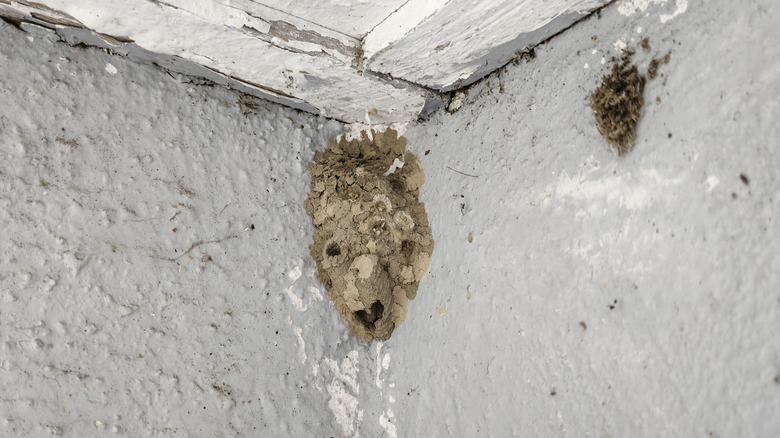
Mud daubers are solitary wasps that create tube-shaped nests out of, as their name implies, dirt. The nests, which are often grouped together, look like little clumps of mud stuck to the side of a structure. They are usually light brown in color. Although mud daubers are not as aggressive as some other wasp species, they can sting, making removing their nests worthwhile if safety is a concern. Mud daubers build their nests on the ceilings and exterior walls of outbuildings, such as sheds or garages.
Cicada killer wasp nest
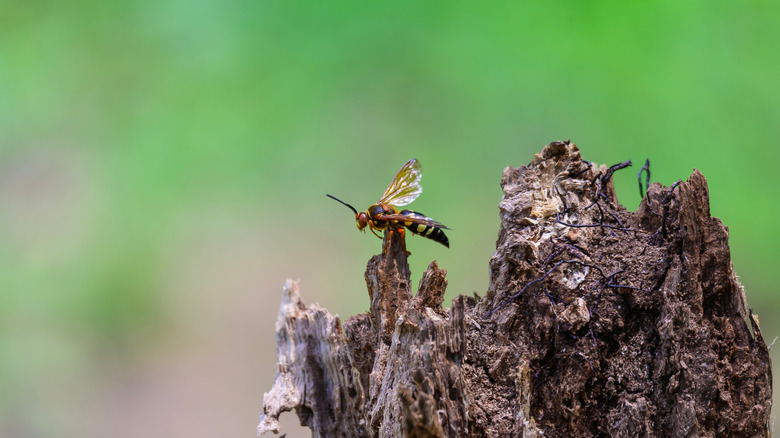
Cicada killer wasps get their name from the favorite food source: cicadas. These large wasps build their nests by burrowing underground. They generally burrow into loose or sandy soil to create simple nests. From the outside, the nests look like a mound of dirt with a small hole marking the entrance. While you may get stung if you accidentally step on the nest, these wasps are not as aggressive as other species.
Potter wasp nest
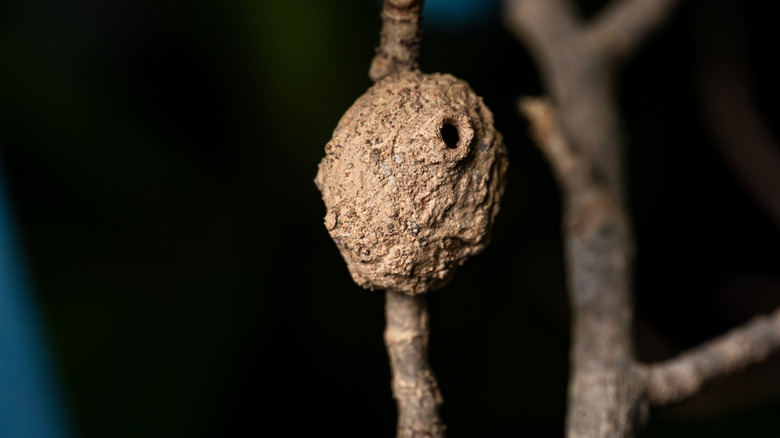
Potter wasps get their name from the shape of their nests, which resemble small clay pots or vases. The little bulbous nests are just big enough to hold a single egg. They build them on the sturdy stems of bushes or other plants. This species is small and not aggressive, so you're not likely to get stung (but yes, they can sting). In fact, among the wasps you might find in your yard, potter wasps are ones you'll want to keep around. They play a vital role in pest control because they feed caterpillars to their larvae.