

Why Designers Are Giving Up Open Concept Floor Plans - And What's Next
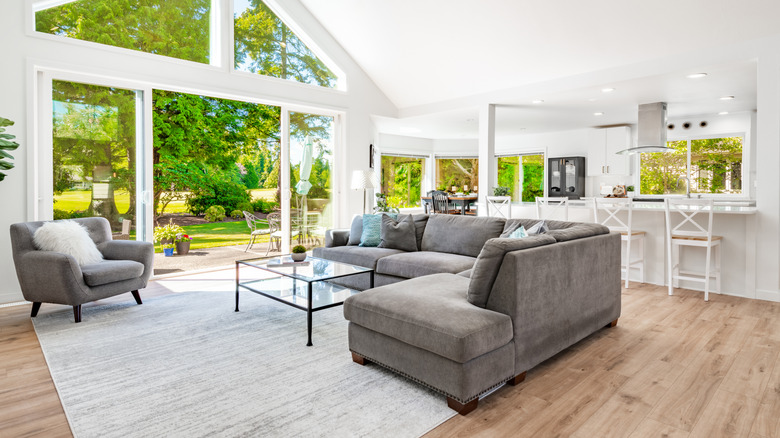
For decades, open concept floor plans have defined modern home living. By combining the kitchen, living area, and dining room into one continuous, sprawling expanse, designers could open up and brighten the area — a valuable feat in small homes. HGTV stars like Joanna and Chip Gaines found them perfect for entertaining guests, while parents preferred them to maintain supervision without interrupting their routine tasks. Lately, though, it seems like some designers are keen to retire open-concept floor plans for good.
Some of the biggest disadvantages of the home design trend popularized by HGTV are that they're difficult to design, offer little storage space, and may even waste square footage. Moreover, noise, cooking smells and grease, dust, as well as clutter spill into other areas. This leaves the home looking messy, which can be visually overstimulating and embarrassing when you have friends over. With lifestyle preferences evolving and influencing every design choice, open floor plans are unsuited to those seeking privacy or a cozy nook to let loose. To address these drawbacks, designers and homeowners today are fusing open and closed floor plans and creating a broken floor or semi-open plan, which feels more flexible, intentional, and responsive to current preferences. Below, we outline the reasons open floor plans are going out of style and what's replacing them.
It is difficult to zone the area for multifarious functionality
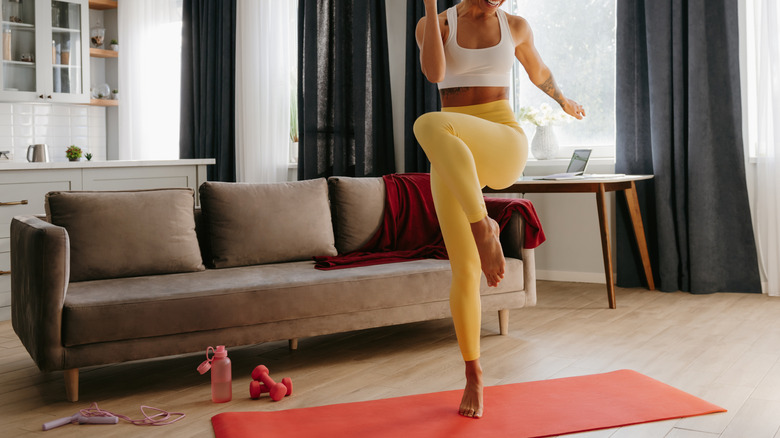
Open sight lines feel liberating at first because there are no walls to block your view. But the space must still be functional, intentional, and in tune with your lifestyle, without hampering the overall flow. This requires zoning (assigning a specific purpose), such as a gaming room, gym, or play area, to a certain area. This helps maintain a multi-functional yet cohesive design. Unfortunately, many struggle to clearly demarcate the zones in an undivided layout.
To define areas in an open concept, you must be savvy and creative with interior design. This means thinking hard about furniture styles and rug placements to delineate the space without creating dead space or blocking the circulation paths. If that wasn't challenging enough, you must also plan for lighting, say, dimmers in the entertaining area, but brighter lights when working. All in all, it can be a struggle to carve out defined, purposeful "rooms" in an open space if you don't have the necessary skills. This creates lots of confusion about which areas foster productivity and the lines past which it's safer to unwind, thus reducing functionality.
Noise carries over easily
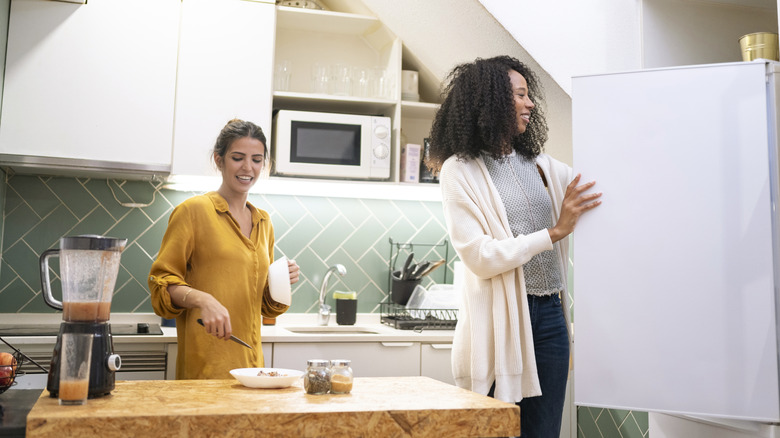
Open concept plans are loud. Walls, partitions, and doors absorb, redirect, or buffer sound. But since they're largely missing in such layouts, noise travels everywhere, permeating into every corner of the space, and forcing you to put up with racing F1 car sounds when all you want to do is cook in peace. It only gets louder when everyone is home, with people struggling to hear over cooking noises, TV sounds, notification tones, and Zoom calls. Such noise pollution makes it difficult to concentrate or relax, and may even necessitate furnishing the place with soundproofing materials for some respite.
The growing prominence of remote and hybrid work in the pandemic's aftermath further makes open layouts untenable. A WEF study found that noise amplified negative mood in open-plan offices by 25%. While not wholly transferable to a home situation, there's no denying a noisy space affects mental health and diminishes productivity. It can also create emotional discord when people desire different entertainment, with one wanting to play video games while the other wants to cozy up with a book in utter silence.
Mess is always on full display
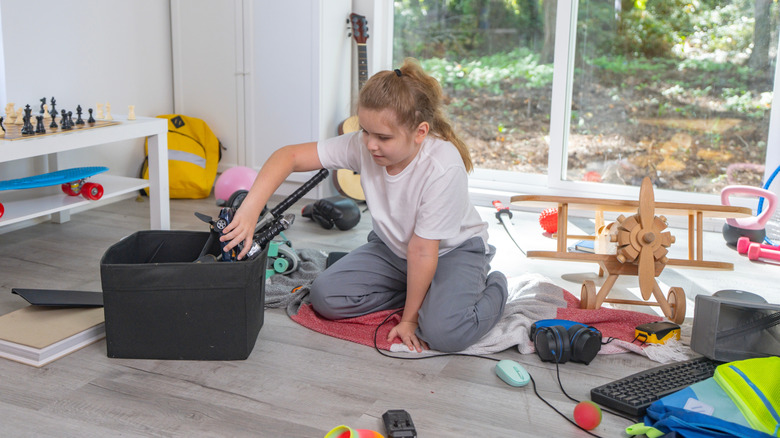
Unless you're highly organized, open floor plans can come across as messy and chaotic. Ideally, every item should have its ordained home. But when boundaries are unclear or nonexistent, it doesn't take too long for stuffed toys, mail, and stationery items to spill over into the family area. This makes for tricky situations when friends come over unannounced, and you scramble around to hide this clutter. Busy households especially struggle to keep open floors tidy.
When the mess is on constant display, it can be visually overstimulating and may worsen anxiety levels. Even when all you want to do is disconnect and be left alone with your thoughts, the open sight lines ensure there's no escaping the chaos and clutter. For instance, you'll be constantly reminded to unpack the haphazardly placed grocery bags on the counter. Similarly, if you don't clean as you cook, you must contend with a sink full of dirty pans and grease splatters while taking your meal. This explains why designers today are installing dirty kitchens, which function as a secondary space, masking the main kitchen's mess.
Undivided homes can feel impersonal and lacking in character
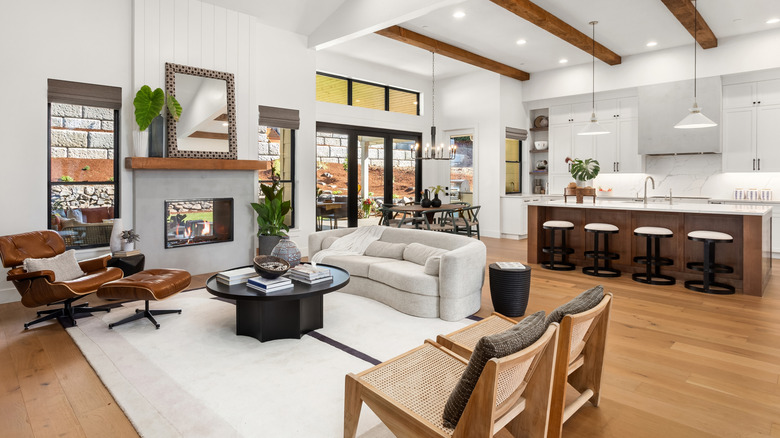
Homes have a unique story, and walled rooms bring out their character. Crown moldings, wall colors, and finishes help set the mood and clarify each room's role. But when a single room functions as a gathering space, a breakfast nook, a food prep area, and an entertainment zone, it can do none of those things particularly well. All features melt into each other, and emotional cues that define the space as warm, restorative, or productive disappear.
Such flatlining of details shaves off much of the home's personality, turning it into a beautiful spectacle lacking substance. Large spaces suffer the most since the supposed airiness takes on an impersonal, cold, almost warehouse- or auditorium-like quality. And you don't have much opportunity to include personal touches. Plus, with most layouts containing high ceilings and sharp, polished finishes, the acoustics are amply worse, with voices echoing and reverberating throughout the space.
Smells linger and spread throughout the area

Cooking smells are wonderful for working up an appetite and letting guests know they're in for a delightful treat. But they're unwelcome when the plates have been licked clean of all sauce and stacked in the sink. Unfortunately, with no door to hold them back, cooking smells linger in open layouts for a long time, becoming a source of constant headaches. This is especially noticeable in homes without powerful ventilation.
What's worse, if the smell is strong enough (think fish curry), it can permeate the entire area and settle into the upholstery and furnishings. Masking them later or removing them altogether is a tall ask. Besides, ventilating an open kitchen is far more arduous than an enclosed space, as the extraction hood has to work so much harder, making the whole process highly inefficient. If you love experimenting with bold, spicy dishes, open floor plans are likely a dealbreaker, unless you don't mind living in a space resembling a steakhouse.
Creating semi-private spaces is difficult in open plans
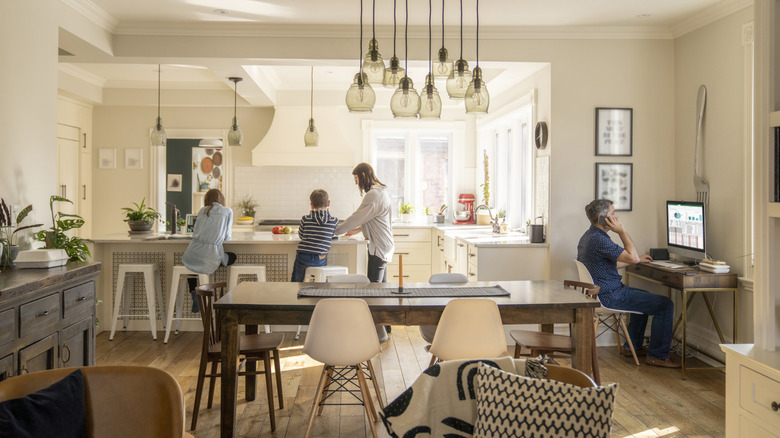
Open layouts, with their undivided square footage and no physical barriers in sight, foster togetherness and social interaction. But they also impede the ability to enjoy semi-private spaces, like offices, family rooms, and playrooms, that are usually tucked away from the main living areas. Without delineated zones for relaxation, family time, and retreat, you'll be forced to partake in your family's activities, without wanting to.
With children moving back in with their parents for extra savings, homes are turning into multi-generational households. So, you might have people working remotely and looking for a quiet space to focus without getting distracted by the constant kitchen noise, which can be a major source of friction. Similarly, kids may require a private space to play pretend or watch movies without having to announce to the entire household their likes. Even simple things like attending to a phone call or having friends over without everyone eavesdropping or joining in on the conversation become difficult in an open space. Such a lack of privacy can harm mental health, as you're constantly conscious of your choices and lack the opportunity to truly switch off and sit with your thoughts.
Open layouts don't offer cozy nooks
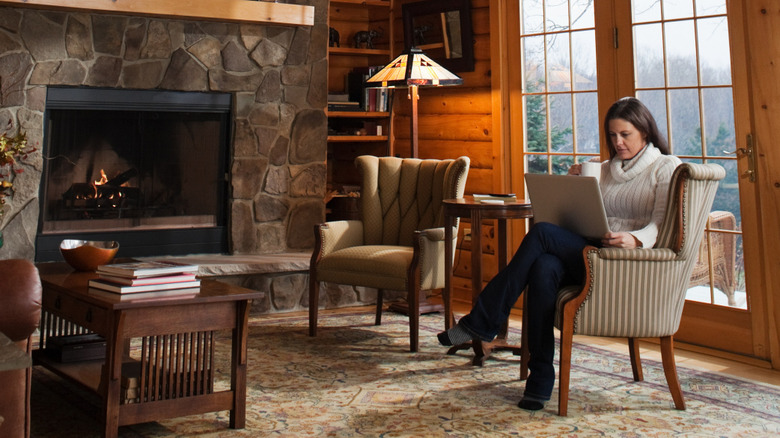
Open layouts add airiness and flow to an area, which goes against the fundamental concept of a cozy nook. Such intimate pockets require architectural details, like a lowered ceiling or a defined corner, to signal that you can settle in here and unplug. But without any enclosures to retreat behind or feel tucked in, the place doesn't feel inviting enough to relax and unplug. This forces homeowners to be "always on," getting no reprieve from distractions and performative living even when inside the house.
And this is in sharp contrast to the latest demands. To elaborate, people are nowadays seeking spots that create a cozy, retreat-like atmosphere inside their home, like built-in alcoves, window seats, dedicated lounge areas, and digital-free spaces. In fact, Zillow's data finds a massive surge in "reading nooks" in 2025's home listings, in addition to wellness features like a meditation zone. Sadly, open plans can't cope with these changing preferences. Plus, with bigger room sizes becoming the norm, creating cozy pockets for relaxing is infinitely harder without hard segmentation.
Lifestyle preferences are evolving
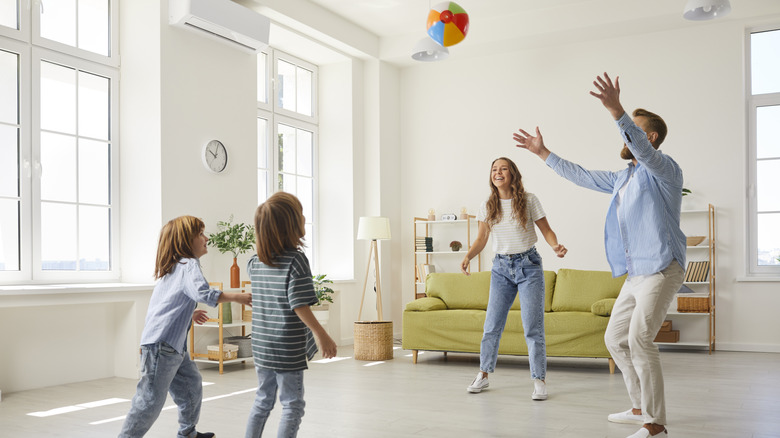
Another major downside of open-concept homes is that they do not respond to evolving lifestyle preferences. They were originally designed with the idea that homeowners leave the house for work and return for relaxation and entertainment. But the pandemic has since caused a shift in lifestyles. With homeowners increasingly working remotely, a home has to now function both as a professional office and a sanctuary, which isn't easily done in these layouts.
Moreover, to future-proof against such events, many homeowners are looking to add entertainment and recreation zones within their houses. Analog rooms, libraries, home gyms, and hobby rooms are on the rise. Zillow also notes a change in lifestyle, with people swapping out passive activities like billiards for active sports, such as pickleball and golf simulators. Such features are difficult to incorporate into a large, open chamber. For this reason, designers find that open plans are losing their charm for some clients who would rather have specifically designed zones than furniture creating an illusion of "zoning."
Open plans limit design choices
Another reason why designers are giving up on open floor plans is the lack of design flexibility. Since the entire space reads as a connected visual field, it has to follow a cohesive scheme, meaning use colors on a similar spectrum or ensure they're coordinated and imbibe a similar vibe, atmosphere, and aesthetic. Otherwise, your house will appear disjointed. To illustrate, a minimalist kitchen next to a moody dining area makes for an unpleasant color clash.
Unlike closed layouts, you don't have much leeway with the design or the option to experiment with different textures, materials, and vibes in open plans. Design-forward homeowners can't really go bold on some walls, jump on the latest trends, or include surprise elements for a design break when updating their interiors, at least not without meticulous planning. Besides, without clear lines of separation, it can be hard to ascertain where the color and pattern stop. And you may still risk overwhelming the space. So, the only option is to stick to safe, neutral colors and give up the idea of creating your unique vignettes. Moreover, it's hard to meet the diverse taste preferences of everyone in the household in an open layout, which deprives them of the opportunity to experience the space as they would truly like.
Limited storage and décor options

Walls aren't just solid masses that segment spaces; they serve various practical purposes, too. For example, they hold shelves and storage cabinets, provide the back for your TV unit and bookcases, house electrical outlets, and double as your home's art gallery. They even help anchor furniture. Not to mention, they also offer architectural appeal if you've designed and covered them tastefully. But because an open layout eschews them for airiness, you lose out on all of these benefits, apart from creating visual clutter that you must constantly make efforts to hide.
Poorly designed open layouts can saddle you with lifelong difficulties when it's time to install new electrical fixtures or move around your furniture. Without vertical storage, you have no way to put up your curated art collection or knickknacks from travels, which are the easiest ways to bring your unique touch to a home. Furnishings have little support to ground themselves and float precariously in an expansive space, struggling to coalesce aesthetically. Considering one can never have enough storage, losing out on a logical "home" for shelves is a huge price for some brightness.
Planning lighting is a headache in open layouts
Open floor plans make it difficult to get lighting right. Even though it's a single space, it still aims to fulfill multiple purposes, and they each have their own light requirements. For instance, kitchens require bright task lighting, while the dining area is often shadowed in warmer accents. Depending on how often you entertain guests or use the area for personal tasks, you may also require dimmers, floor lamps, or reading lights to create the right ambience. Plus, you don't want to create a jumble of cords, or they'll become a tripping hazard (and an eyesore).
Without physical partitions in place, it becomes difficult to prevent the lights from bleeding into each other. And having an intimate dinner with kitchen spotlights blaring white just 3 feet away is far from optimal. Besides, if you have opened the floor to wash the area in natural light, it can be difficult to strike a balance with artificial lighting. This is especially true when you have no dividers or walls to redirect or reflect the light, which may also lead to awkward shadows. No wonder designers are moving back to creating actual physical zones rather than putting up with an open space.
It is more expensive and time-intensive to cool or warm open floors
Open floor plans are highly energy-intensive. A blast of cold air when you open the front door is all it takes to offset the room heating, forcing your HVAC system to pump harder to restore previous temperatures. It works conversely during summer. Even where drafts aren't a deciding factor, open floor plans can still become the reason for higher energy bills. That's because the lack of zoning forces you to heat or cool the entire room, even if you've taken up residence in a lone corner. High ceilings make it even worse. Besides, unlike enclosed rooms, you can't just shut the door to keep the energy where it's most needed.
With homeowners increasingly opting for energy-efficient appliances (many are making a switch to heat pumps) and actively pursuing sustainable lifestyles, it's no surprise that open floor plans are losing favor, and designers are following their lead. Plus, with energy prices following an upward trajectory, it's one financial drain you can do without if you're in the market for a new home.
They're unsuited to period and historic homes
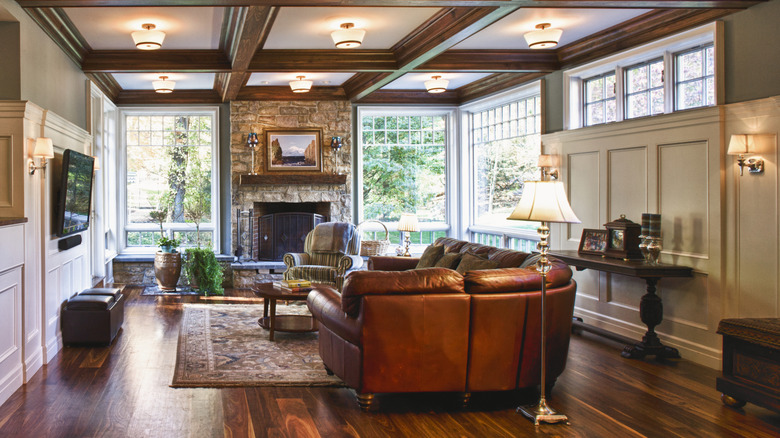
When flippers and homeowners blow through walls in older properties for a more modern design, it diminishes their charm, compromises their structural integrity, and erases their soul. In those days, guests were hosted in a formal construct. So a separate dining parlor with a kitchen or scullery tucked away from prying eyes was the norm. For this reason, many preservation-minded designers are now advocating for leaving the room divisions intact instead of an open layout.
Taking out the walls erases era-defining architectural details like ornate trims, moldings, and archways, with the remaining features looking more at odds with each other than intentional elements. Besides, the rooms were drawn to size and scale, and would start looking awkward when some of their walls are missing.
They present a greater fire risk
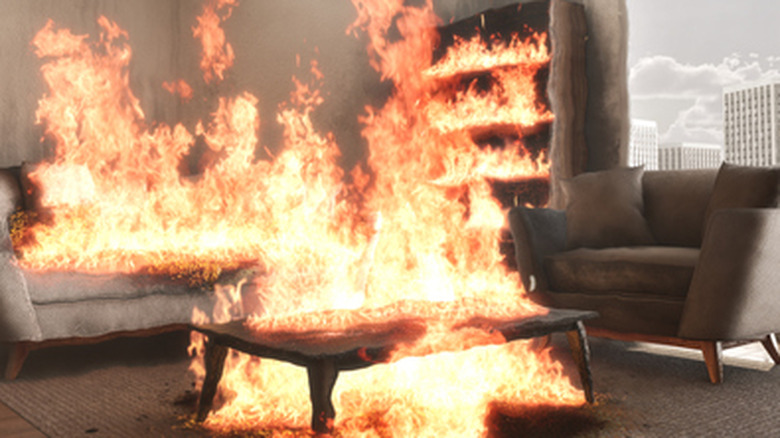
Last, but perhaps the most somber and compelling reason of all to move away from open plans is safety. They are inherently more dangerous than closed layouts in the event of a house fire.
According to Underwriters Laboratories, escape times have fallen from over 30 minutes decades ago to less than 5 minutes today. That's in part to do with open plans. When homes were compartmentalized, walls, doors, and partitions could contain or slow down the fiery progress. But with homes becoming open, fire can spread easily and quickly through the space. Besides, it's also typically harder to plan an escape in such a layout. The use of synthetic materials in furnishings and building structures further magnifies the problem because they serve as additional fuel sources and even release toxic fumes. Apart from the residents, this is also dangerous for firefighters who find it harder to get it under control.
What's next: Broken floor or semi-open plans are replacing open layouts
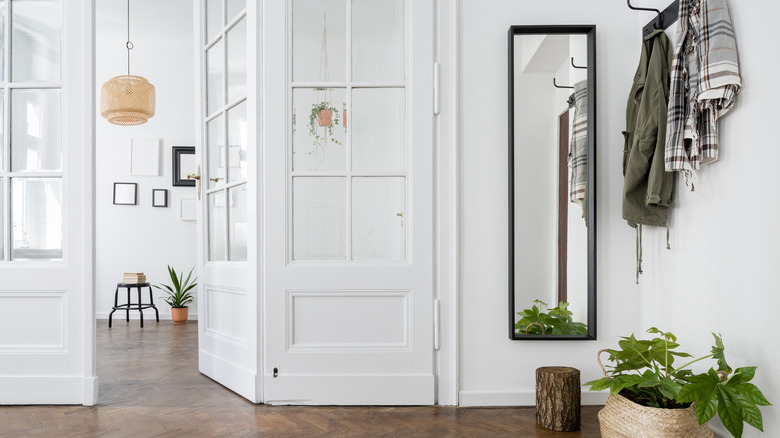
As homeowners are still squeamish about switching over to closed layouts but are unhappy about the lack of privacy and design limitations of open plans, designers are trying to strike a middle ground through broken floor layouts. Sometimes also called semi-open plans, they aim to elevate open floor plans by retaining their airiness yet dividing the area subtly into specific zones. Apart from responding better to current lifestyle choices and garnering a greater buyer pool, such plans also cut down on noise and visual clutter.
To incorporate a broken floor plan, designers use physical barriers, which can be movable or built-in. So, homeowners intent on selling or renting their property in the future make use of folding screens, drapes, floor lamps, or furniture sets to establish enclosed spaces. However, they retain the option to move them around when they want a more communal space. Others are making more permanent changes, adding partition walls, pony walls, archways, French doors, columns, pocket doors, or built-in shelves to weave in a sense of room without indulging in an extensive renovation. Some are also using glass to get the look of a broken floor plan and knit a separate pocket without sacrificing light or design. Restorative, glazed glass partitions even work in period homes. Where homeowners are unwilling to put up walls or barriers, designers are playing around with flooring, creating split-level designs that help divide the space.