

Rethink Planting This Popular Annual Flower - It May Be More Trouble Than It's Worth

Tropical milkweed (Asclepias curassavica) is a popular tender perennial that is typically grown as an annual across the country. Its bright orange and red blooms are cheery to look at, and it is an incredibly low-maintenance flower to add a pop of color to your yard. However, you might want to avoid adding tropical milkweed to your garden as it may have an impact on native wildlife, especially if you live in warmer areas. This is because ecologists are concerned that the long blooming season of tropical milkweed can confuse the native monarch butterfly.
Monarch caterpillars only have one source of food, which is milkweed. In the U.S., there are loads of species of native milkweed that support monarchs during their summer breeding season. In the fall, when the native milkweed plants die back, monarch butterflies know that it is time to migrate and fly south. However, as tropical milkweed has a longer blooming season, the migration of monarch butterflies may be impacted as they stay in the location where the flowers are still blooming. This can then impact their population. Furthermore, there is concern over a parasite that lives in tropical milkweed and causes deformities and a lower lifespan in monarchs. This parasite usually occurs in warmer locations (up to USDA Hardiness Zone 9b), where the plant stays evergreen and does not get killed by the winter frost.
However, it must be said that not every scientist agrees that tropical milkweed is bad for monarch butterflies, and further research is needed to fully understand how this milkweed mistake impacts monarch butterfly visitors. Some experts argue that there is not enough tropical milkweed in the U.S. to actually impact the population and migration of monarch butterflies. Still, it may not be worth the risk.
What to plant instead of tropical milkweed
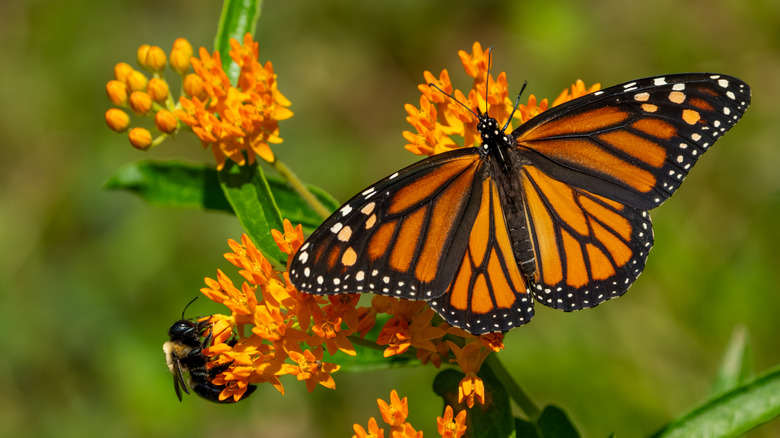
If you want to attract monarch butterflies to your garden, you can still plant milkweed. However, it might be best to keep it safe and plant native milkweed species. With more than 70 native milkweed species in the U.S., there are loads to pick from, and many are available in nursery stores. It is helpful to have a look into the milkweed species that are native to your area. For example, if you live in California, you may wish to add California milkweed (Asclepias californica) to your yard. For gardens in the central or eastern U.S., green milkweed (Asclepias viridis) may be a good choice.
Although most native milkweed plants are attractive to monarch butterflies, a study published in Frontiers in Ecology and Evolution found that common milkweed (Asclepias syriaca) and swamp milkweed (Asclepias incarnata) tend to have more eggs laid on them. This suggests that these butterflies may prefer these milkweed species, so you might want to plant them if they are native to your area. By picking native varieties of milkweed butterflies absolutely love and allowing the plants to establish themselves in your garden, you can create a wildlife haven that works with the cycles and routines of our beloved insects and not against them.