

The Common Type Of Birdbath You Should Actually Avoid
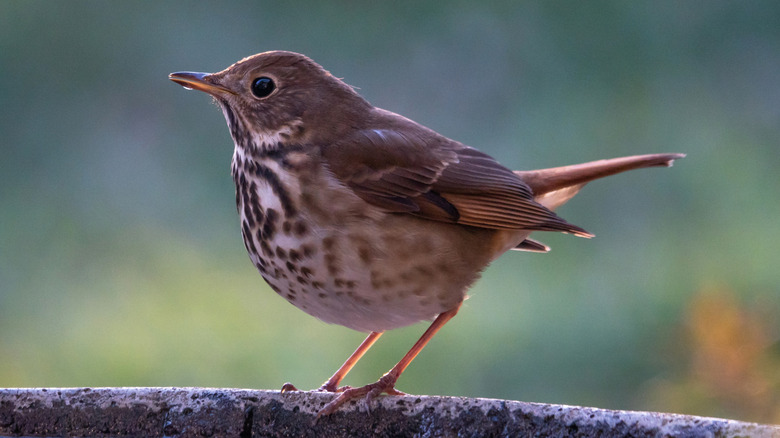
Seeing songbirds return to your neighborhood in large numbers is one of the surest signs that spring is nearly here. To properly welcome back these feathered friends, you're probably using smart tips to keep your birdbath beautiful and preparing your bird feeders. Or, if you don't have a birdbath yet, you might be on the lookout for one that will fit your budget without detracting from the look of your landscaping.
One popular material for birdbaths is concrete or cement, but this isn't necessarily the best material for birds. There are several reasons why you may want to avoid using concrete for a birdbath. The primary problem is that they often have bowls that are too deep, which makes it challenging for smaller birds to access the water safely. Concrete birdbaths also are prone to cracking in areas with dramatic freeze-thaw cycles because of their porosity. They're typically quite heavy, making them difficult to move to different locations as needed. Plus, the porous concrete can be hard to clean, especially if the concrete is unsealed, requiring more maintenance than other birdbath materials.
Primary drawbacks of concrete birdbaths
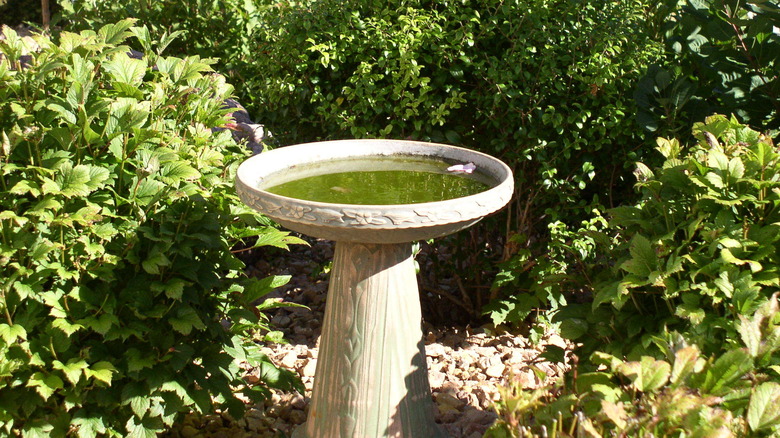
Some birders prefer deep concrete bowls because they don't have to refill them as often, but stagnant or dirty water isn't healthy for birds. If you're finding that birds want nothing to do with your birdbath, this could be the problem. The water should be 2 inches deep at most, and the bowl should gradually and gently slope from the edges to the center.
Unsealed concrete birdbaths are naturally porous, and as such, they frequently experience contamination from algae and moss. The rough surface encourages faster algae spread, particularly when compared with other common birdbath materials. To combat these problems, you need to refill the bowl with fresh water every day or it can become a health risk for birds and other animals. If you have a concrete birdbath, you'll also have to clean it weekly. If you see any algae beginning to grow, clean the bath immediately to prevent the problem from worsening. To easily clean your birdbath with one cheap ingredient, mix one part vinegar to nine parts water, apply it to the bowl, and scrub it with a hard-bristled brush. That's a lot of time spent on maintenance.
If you purchased a concrete birdbath, you may want to move it around your yard — to take advantage of sunlight patterns throughout the year in an effort to prevent algae growth or simply for aesthetics. However, concrete baths typically weigh somewhere between 50 and 200 pounds. The weight can be a benefit — it ensures your garden feature stays upright during stormy weather — but it also makes moving it difficult.
Options for avoiding problems with concrete birdbaths
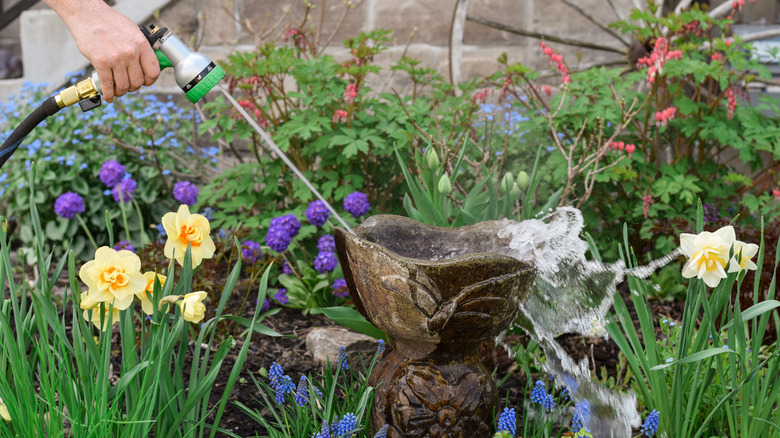
To avoid the problems with concrete, purchase a birdbath made from a different material. Reinforced plastic, metal, or resin birdbaths are better options. If you want to avoid needing to clean the material as often because of algae buildup, switch to a more algae-resistant material for the birdbath, such as copper. For the shallowest designs that are best for smaller birds, consider a hanging or ground-based design.
If you simply cannot (or don't want to) get rid of your concrete birdbath, you can take a few steps to continue using it. Placing small stones or a flat rock in the bowl can reduce the problems that a deep bowl causes by reducing the risk of drowning for the birds. Move it indoors during winter to avoid the freeze-thaw cycle, as the material may develop small cracks after it freezes. You could install an electronic water heater, to prevent the water from freezing, too. However, if you choose to use a heater, the water will evaporate faster, meaning you'll have to fill it more often. To keep your concrete design, just understand that you'll need to clean the bath and refresh the water at least a few times a week.