

The Crucial Lawn Care Step That Starts In March For Healthy Grass All Season Long

Everyone has that one neighbor who always seems to have the perfect, most lush green lawn each summer that makes the whole block envious. But that doesn't just happen by accident. If you want a yard that rivals theirs, it starts with one crucial step you can do in March: the first light mowing. It's such a smart way to improve your lawn without spending a dime and get it ready to thrive all season long.
The trick is making sure that it's just a short trim. We're not revving the engine of our lawn mowers and charging full speed across the yard like a bull in a china shop. Mowing too much or cutting too low can result in what's called scalping. Deep cuts can expose soil to the sunlight, causing weeds to grow. It can also leave the crown of the grass vulnerable to unexpected freezes that might occur before summer arrives.
Instead, we're just easing the grass back to life after a long, cold winter. Using a nice high blade setting on the lawn mower gives the lawn a gentle trim and cuts back that top layer of old leaves and dead plant stems that might have blown in from the garden over the winter season. Giving it that initial mow will strengthen its roots and encourage new growth for a healthier, thicker lawn.
How to give your grass its first mow of the spring
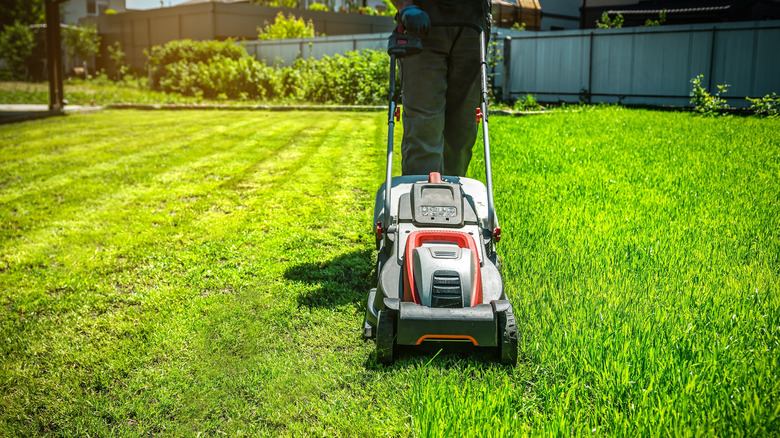
A good lawn mower is one of the essential lawn tools for healthy green grass. But before you run to the garage to dust it off, be sure to avoid the mistakes everyone makes when mowing the lawn by ensuring the grass is ready to be cut in the first place. You'll know it's safe to begin mowing when the grass is dry, it has grown to at least 4.5 inches high, and the ground is not muddy or soggy. We know springtime can make you anxious to get out in the yard, but waiting for these conditions before mowing will help ensure you're not doing more harm than good when it comes to getting a jump on that gorgeous green summer grass.
When you've confirmed the lawn is safe to mow, it's time to prepare the equipment. If the lawn mower has been sitting in a shed or garage all winter, you'll want to sharpen the blades and make sure they're free from any rust that might have accumulated since its last use. A nice sharp blade can prevent things like browning of the grass and disease. Raise the blade to its highest setting so you're just trimming a bit off top and not cutting more than ⅓ of the grass height. Once you give the lawn a once-over with the mower, you can leave the short clippings to sink down into the remaining grass as fertilizer.