

13 Types Of Potting Mixes And How To Choose The Right One For Your Plants
We may receive a commission on purchases made from links.
If only container gardening could be as simple as throwing some dirt from the backyard into a random pot and sticking a seedling into it! It would certainly save a bit of time and effort. The bad news is that "any old dirt" tends to come with the triple threats of weed seeds, diseases, and unpredictable textures.
The good news? It's not hard to find the best type of soil or mix to use for a thriving container garden. Potting mixes repay their often-nominal expense with a range of benefits. Modern blends are often soilless, which makes them extremely lightweight. That can be a crucial factor for the balconies and windowsills that need to bear their weight. Additionally, potting mixes are sterile, allowing tender seeds, baby plants, and fussy flowers alike the chance to gain a foothold without succumbing to disease.
Most importantly, modern potting mixes are customized for a seemingly endless variety of needs. That means that you can suit the medium to your plants and their growing conditions. Seedlings, for example, require an extremely fine-textured blend to push through to the surface. Orchids, on the other hand, prefer "chunky" mixes so that their worm-like roots don't rot. And for those who need to fill a lot of area, raised bed mixes add compost or soil for bulk, while also providing a blend of nutrients to get young plants off to a good start. In short, there's a tailored mix out there for just about every type of plant!
All-purpose mixes take the guesswork out of a mixed container grouping
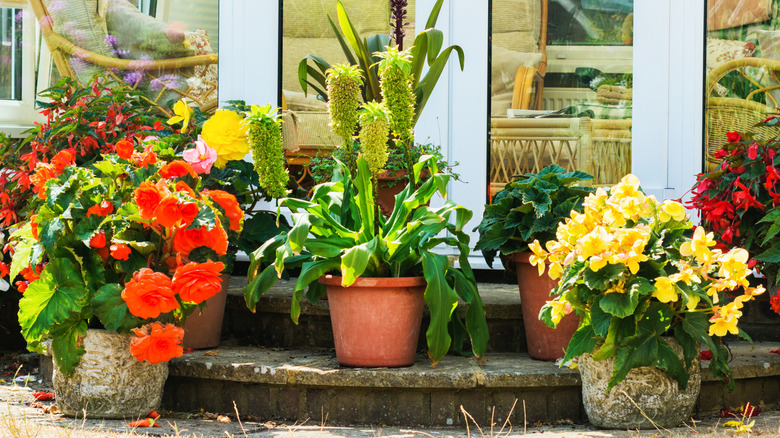
As the name suggests, all-purpose potting mix works in a range of settings. It's ideal if you expect to pot up a variety of plants that don't have demanding needs, or which you'd prefer to later feed individually. These soilless mediums are both lightweight and sterile. At the same time, they don't add the kind of nutrients or pH-altering ingredients that will cause some plants to thrive, but others to suffer. In general, they're the perfect canvas for which you can customize an amendment blend that the houseplants, patio flowers, potted tomatoes, or windowsill herbs specifically need.
A typical all-purpose mix will likely contain one to three ingredients. One of the most common ingredients is peat moss, which replaces soil for "bulk," but is more sterile and lightweight. Vermiculite is made of processed mica and helps retain water and any plant food you later add. Perlite, those "white dots" you may recognize, is another frequent addition to an all-purpose blend. Perlite facilitates drainage from the pot, and helps the roots get the oxygen they need. Try a product such as Midwest Hearth's Premium Potting Soil Mix, which uses these three key ingredients.
Seed-starting formulas promote germination through lightweight blends
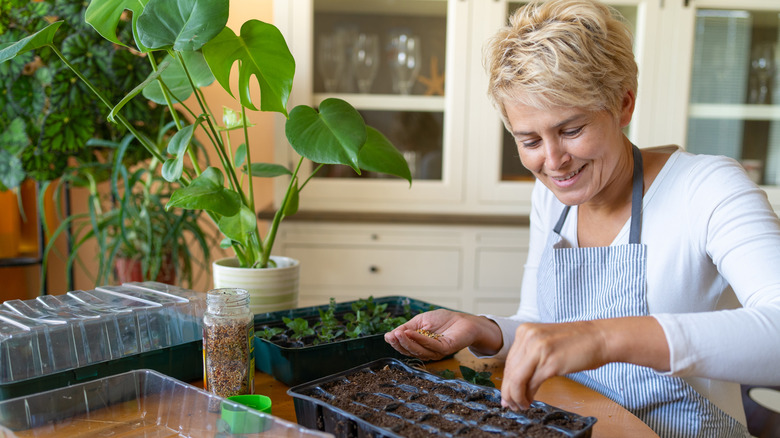
Finer texture and lower weight distinguish seed-starting media mixes from other potting mixes. They're typically made of lighter materials, such as shagnum peat moss, vermiculite (a natural mineral), and perlite." These blends are useful for virtually any plant you wish to grow from seeds, whether they're destined for the outdoor garden or an indoor hanging basket.
Now, do you really need a special seed-starting mix? No, but using modern seed-starting mixes could certainly tilt the odds in your favor. As seeds germinate, they're trying to both break through the surface, and to form strong roots. Seed-starting blends are formulated to have just the right texture to prevent plants from having to push through packed soil. They're also designed to hold onto just enough water, without letting growing conditions become boggy.
Some seed-starting mixes also contain plant food, such as the worm castings in Duspro Premium Seed Starting Mix. This addition can be helpful if you're growing seedlings that need longer in their pots before going into beds or larger containers. Read package labels for recommended use.
Houseplant mixes are lightweight and well-draining to allow indoor plants to thrive
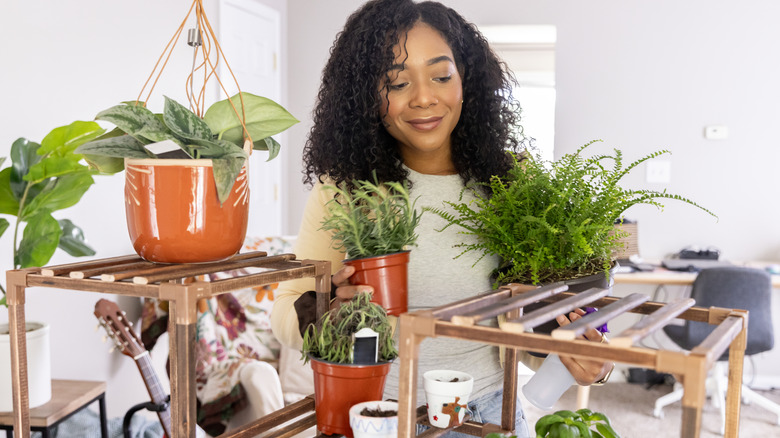
For every "microclime" in your home, there are dozens of houseplants to choose from that will thrive in that environment. Some prefer humidity and indirect light, while others need drier air and a southern exposure. But what most foliage houseplants have in common is an appreciation for a lightweight, sterile potting mix. Depending on the type of potting mix you get, some may contain soil, while others are a soilless mixture. Either type, however, is superior to garden soil, which can harbor plant diseases and discourage proper drainage.
Unless you have specialized indoor plants, a general-purpose houseplant mix should probably suffice. These soilless mixes are made to be lightweight enough for container culture, but able to hold onto moisture without encouraging root-rot. They will likely contain about ⅓ each perlite and vermiculite, with the remaining third being either peat moss or coconut coir, which is a lower-cost alternative to peat. Back to The Roots 100% Organic Indoor Potting Mix for Houseplants is one such blend, which uses coconut coir instead of peat, along with organic plant food geared toward leaf growth. Of course, you'll want to add your additional plant food after a few months, because houseplants eventually need a boost.
Outdoor container gardening potting mixes contain nutrients for ornamental and edible plants
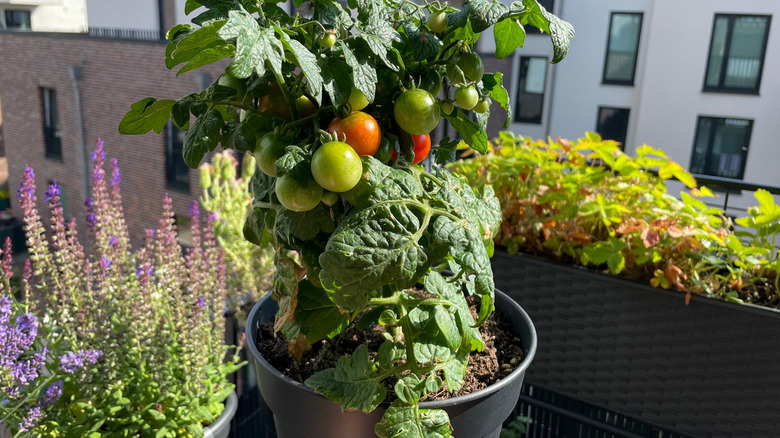
Like other potting mixes, those geared toward outdoor container growing use lightweight materials to reduce weight concerns on decks and balconies. Their lightweight textures also prevent roots from getting bogged down. But outdoor container mixes often add extra nutrients that flowering and edible plants need to get off to a good start. They may also contain light compost, because outdoor containers are generally bigger than houseplant pots.
Many outdoor potting mixes are geared to plants that flower or produce edible plant parts, rather than just foliage. For example, Miracle-Gro's Organic Outdoor Potting Mix combines compost and peat moss for a lightweight but bulky base medium. It also has a combination of slow-release, natural plant food ingredients that promote vegetable and flower growth.
If you prefer, look for specialty blends that cater to your specific plants, whether they be potted citrus trees, roses, or tomatoes. For the latter, turn to focused products such as Soil Sunrise All Natural Tomato Potting Mix, which has the familiar base of peat moss, coconut coir, and perlite, combined with worm castings for food, and limestone for the optimum pH that tomatoes prefer.
African violet mixes provide optimum drainage and pH levels
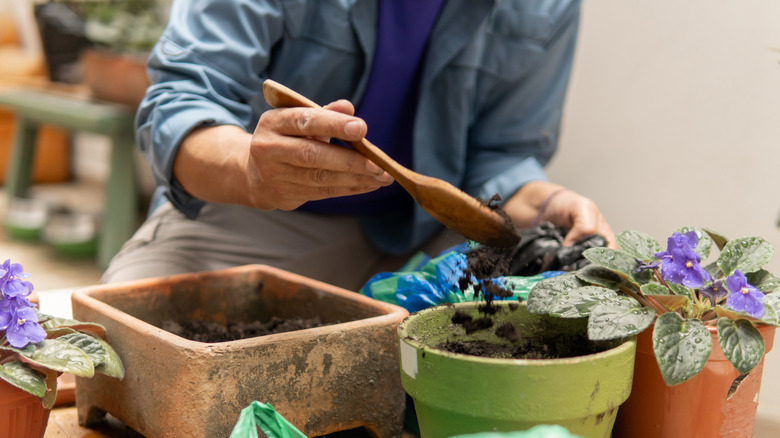
The African violet is a classic, prized houseplant that provides colorful blooms. These days, you have choices beyond the signature purple colors for which African violets are known. They now come in shades of white, pink, and blue, as well as with varying petal shapes. These pretty little houseplants do, however, have a certain list of care demands, including their potting medium. The right mix is crucial in order to successfully grow African violets.
A good potting soil will successfully mimic the growing conditions of African violets. In their native soil, the violets thrive in a pH balance between 6.0 and 7.0. Drainage is also crucial. An African violet potting medium will likely contain a soilless blend of perlite, vermiculite, as well as peat moss, and lime to provide the pH level the violets prefer. Among the products out there that fit the bill is the African Violet Natural Potting Soil Mix. Alternatively, if you use a general potting mix, consider adding dolomite lime to maintain the correct pH. It's helpful to repot the houseplants yearly so that they get fresh soil and nutrients. But keep the pots roughly the same size — about 4 inches in diameter — or only slightly bigger. These beauties prefer being mildly potbound.
Cactus and succulent mediums allow for plenty of drainage and aeration
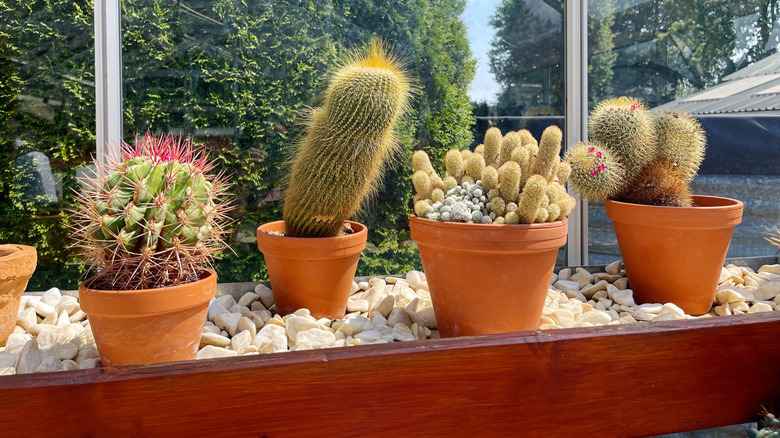
Their endless variety of shapes and textures make cacti and other succulents popular houseplants. These drought-tolerant plants look striking when planted singly in smaller pots, or as a miniature "xeriscape" in a larger container. And while they have obvious advantages like not needing frequent watering, cacti and other succulents aren't completely care-free. Their potting medium should provide good drainage and also be light enough to facilitate good aeration.
To mimic desert conditions in the miniature world of a container, the right potting mix is crucial. Look for labels that specify cactus/succulent blends. These plants need light materials, and ones that are granular. Cactus and succulent mixes provide the quick-draining, airy conditions these plants need to prevent waterlogging. Granular materials like sand and pumice are crucial, as are nutrient-rich materials such as decomposed redwood or fir. Look for brands such as Rosy Soil Cactus and Succulent Mix, which contains sand and pumice for optimum drainage, along with nutrient-rich materials, including pine bark, compost, and worm castings.
Bonsai mixes include sharp stones and drainage material for the best root structure
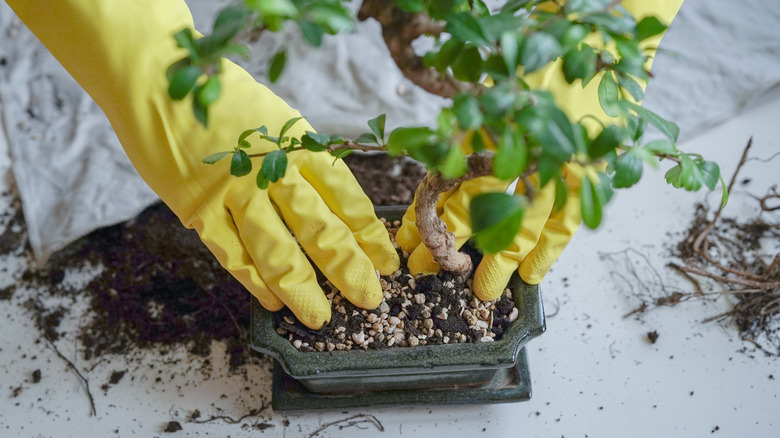
If you've ever visited an arboretum or Japanese garden to see bonsais, you know that growing these miniature trees and shrubs is an art form. The tiny plants need careful pruning and care to maintain their small size and unique shapes. Unsurprisingly, bonsai requires a specialized potting mix. The mini-trees thrive in a medium that includes sharp stones, to encourage root-splitting. Ideally, you'll find a bonsai mix that's geared to whether your mini-tree is a conifer or deciduous tree. That factor influences the specific blend they'll prefer.
When you purchase a bonsai, it will probably already be in its "training pot," which likely will have a potting medium that drains easily and contains coarse granules. Once you repot your bonsai, it's important to use a medium that incorporates sharp-edged stones of various types. This texture encourages young roots to split into several finer-textured roots, rather than just one large taproot. That way, they can better take up nutrients and mimic the root system of full-sized, mature trees in the wild. In addition, the potting mix "recipe" should be geared to whether it is a conifer or deciduous tree. The Tinyroots Conifer Bonsai Soil Blend, for example, includes river sand and lava rock for aeration and root-splitting, as well as ground pine bark for nutrients.
Orchid potting mixes bring on the chunks for healthy root growth
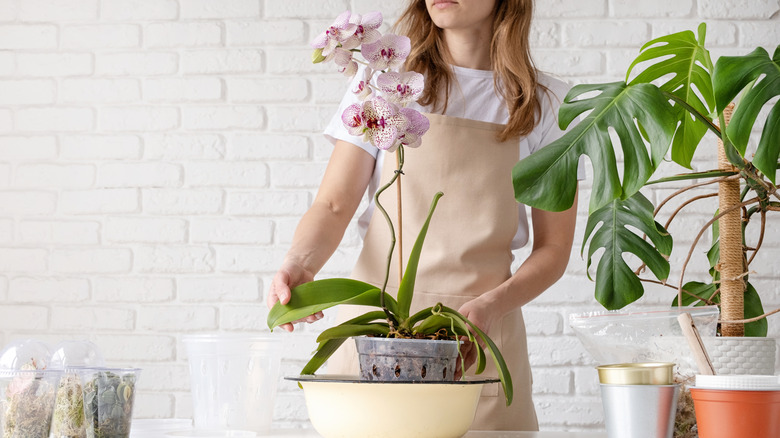
For many people, orchids represent the "final boss" of houseplants. After all, so much can go wrong with them! The exquisitely flowering tropical houseplants reward patient care with sculptural beauty. Among the trickiest parts of the orchid are its roots, which are long, twisting, and prone to rot. The best potting medium for orchids encourages water to flow through these roots instead of packing them in wetness, while also allowing nutrients and air to reach them.
Bark, charcoal, and perlite are key ingredients that help see to orchids' specialized aeration and nutrient needs. One such type is the Better-Gro Special Orchid Mix. In general, the thicker the roots of your orchid species, the chunkier the medium should be. Bark not only supplies nutrients as it breaks down, but mimics the way that many orchid species grow on trees in the wild. Orchid potting mixes tend to come in different levels of coarseness. In general, the bigger the plant, the bigger the particle size of the medium should be. Medium-grade, or about ½-inch particle size, is about right for most orchids. Orchids should be repotted about once a year, because the tree bark in the potting mixes breaks down over time.
Raised bed growing mixes combine nutrients with bulk
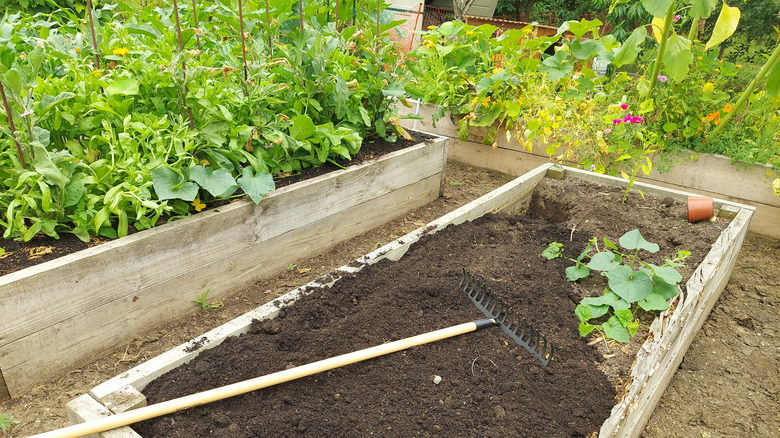
Not everyone buys packaged mixes for raised beds, and for good reason. Raised garden beds require much more growing media than a container or two. There's no question that buying packaged mixes is more expensive than simply using your own backyard dirt. Yet starting out with just raw garden soil or cheap topsoil may doom your plants before they start. The resulting texture might be too sandy or clay-like, as well as devoid of nutrients. If you only have one or two raised beds to fill, packaged soil mixes designed for raised beds can be ideal.
Bulk is the main difference between packaged raised bed mixtures and those designed for container-grown plants. Some types might contain topsoil, while others rely on compost for both bulk and nutrients. The best types for raised beds will offer both a dirt-like base (topsoil and/or compost), combined with ingredients that add a blend of nutrients. The Espoma Organic Raised Bed Mix blends composted bark and peat moss for mass, with nutrients such as alfalfa, kelp, and feather meals, plus worm castings. If you have several raised beds and don't want to break the bank, consider mixing a packaged raised bed mix with topsoil, or bettter, compost. In this way, you won't be relying on a commercial product to fill your framed beds, but you will be amending the soil to improve its texture and richness.
Bog container mixtures deliver moisture-retention
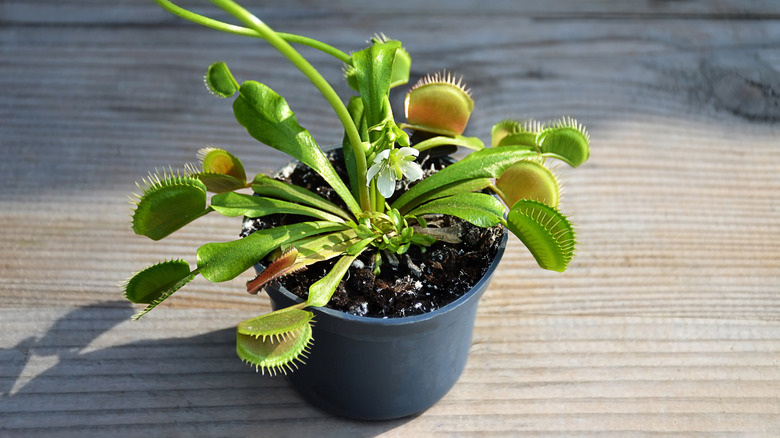
Have you always had your eye on super-exotic plants like Venus flytraps and other carnivorous flowers, or just like the idea of container gardens bursting with vividly blooming bog plants? Unsurprisingly, growing bog plants is little different than growing other patio or houseplants. That distinction includes the growing medium you'll need.
Whereas "well-draining" is usually the number one concern for soil mixes, plants like Venus flytraps and pitcher plants actually crave bog-like (but not soaking-wet) conditions. Another key difference? If you're primarily growing carnivorous plants, you won't want rich soil, because the plants will be getting their nutrients from their "hunting" endeavors.
Start with a shallow container that is wider than it is deep. Fill the container with a potting mix that is geared to bog plants. Sphagnum peat moss is often a core ingredient in the blend, due to its ability to hold water without overly enriching it. The Bog Boss Premium Carnivorous Plant Soil Blend combines peat moss, sand, and perlite, as well as charcoal for bacterial control. Make sure to keep the medium moist. The key to success is keeping your container bog plants moist, but not let them sit in stagnant water.
Rooting mediums encourage success for DIY propagation
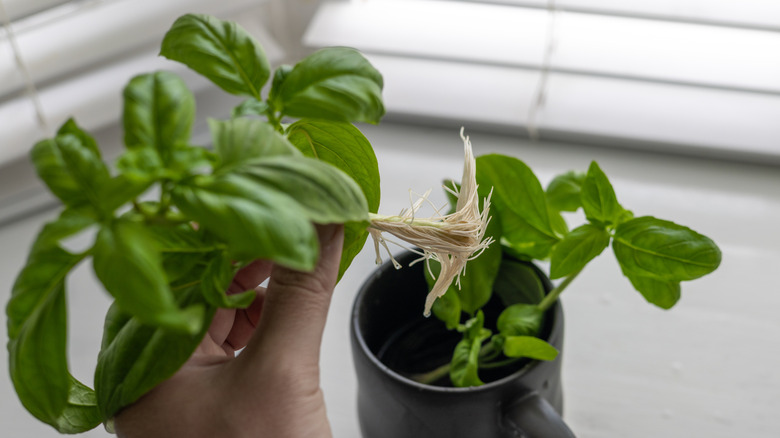
One of the most fascinating and budget-friendly ways to get yourself more plants is to propagate "babies" from your own adult plants — or cuttings from generous friends. If you want to propagate plants like a pro, it's helpful to start with a specialized, sterile potting mix. Use these when replicating your own plants via cuttings, air-layering, or similar methods.
Like seeds, cuttings need the most lightweight medium possible in order to establish their own strong root systems. The medium also needs to be sterile to prevent diseases from getting into the freshly-pruned plant wounds. To keep the soil lightweight and clean, rooting mixtures often contain perlite and/or vermiculite. Sand is another common ingredient in some blends. Try a mixture like Doter Plant Propagation Potting Mix, which blends perlite and vermiculite. Prior to sticking cuttings into this blend, it's helpful to dip the cut ends into specialized rooting hormone powders designed for cuttings or divisions to develop roots.
Organic mixes suit both eco-minded and food-growing gardeners
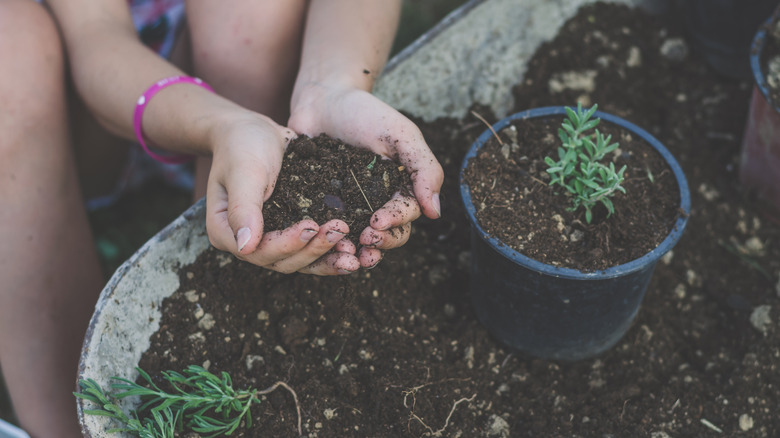
The main difference between organic and non-organic potting mixes lies in the nutrients added to the basic blends. Otherwise, the bases themselves are quite similar, and not all that different from some of the other mixes we've looked at so far. Most bases focus on good drainage, moisture retention, sterile conditions, and a neutral pH and contain blends of peat moss or coconut coir; perlite, vermiculite, or sand; and limestone if needed to balance pH levels. But when it comes to the nutrients added to encourage flowering or fruiting, organic and non-organic blends are a bit different.
Non-organic potting mixes use chemicals like ammonium nitrate to promote growth, especially in flowering species. But many gardeners prefer to use organic blends, especially with their edible plants. The "big three" in plant nutrients are nitrogen, phosphorus, and potassium.
To deliver these in a lightweight potting mix, organic potting mixes typically rely on various "meals" – the dried and powdered form of nutrient-rich natural substances. Blood meal or soybean meal, for example, provide nitrogen. Bone meal or rock phosphorus delivers phosphorus. Greensand contains potassium. Other mixes use worm castings to provide all three, such as the Soil Sunrise All Natural Tomato Potting Mix. This and related blends are ideal for people who are seeking better organic alternatives to Miracle-Gro and similar chemically-based potting soils.
Homemade potting mixes are customizable and often budget-friendly
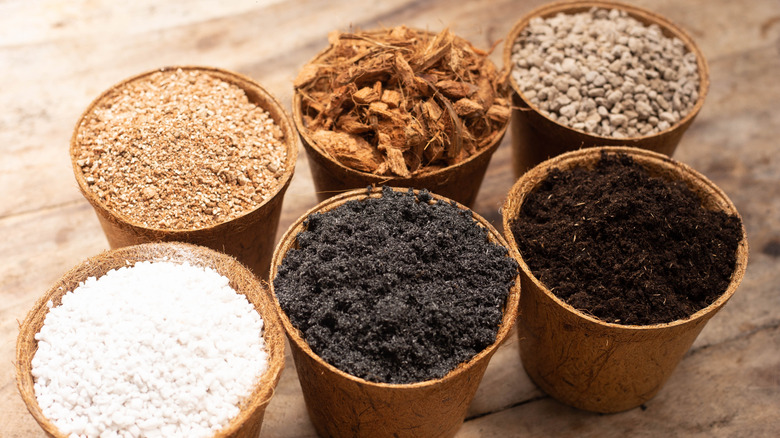
Looking for genius ways to save money on potting soil? Make your own! There are countless recipes available for creating a potting mix that is geared to specific plants and their growing conditions. You can certainly "reverse engineer" the ingredients from a commercial mix. Even better, check out recipes from online resources, including your local extension services. These sites will not only give you suggested ingredients, but also the proportions in which they should be mixed.
You're likely to find all of the ingredients you need at your local garden center. A good all-purpose mixture might be one part peat moss to one part perlite and/or vermiculite. Consider making a big batch of this, so that you can customize parts of it with various amendments, depending on the plants you're growing. To do this, you might want to pick up amendments like limestone, sand, and various "meals" while you're at the garden center shopping for your base blend.