

10 Berry-Producing Vines That Attract Beautiful Birds
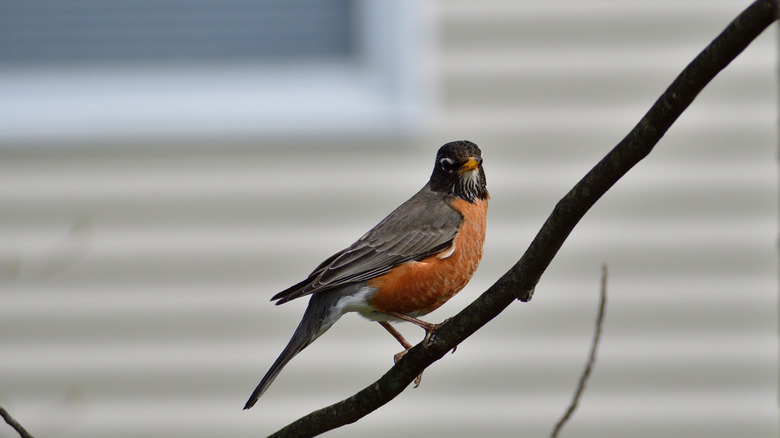
Growing vines is a great way to cover fences and other unsightly garden structures. The abundant foliage hides them from view, creating a more aesthetically pleasing landscape. It's even better if you plant quick-growing vines that produce pretty flowers for you to enjoy and tasty berries that encourage beautiful birds to visit your garden. Common backyard birds that enjoy berries include American robins, cedar waxwings, Baltimore orioles, and northern mockingbirds. In fact, growing a range of different plants, including vines, is a great way to attract a more diverse variety of birds to your yard.
Many berry-producing vines are deciduous and lose their leaves in winter, but some are evergreen, providing year-round cover. Any of these fruiting vines have the ability to attract birds. Some species produce berries both birds and humans can eat, like kiwiberries, wild grapes, or coral greenbrier. Others, like Virginia creeper, American bittersweet, and American rattan vine, grow berries that are not suitable for human consumption; hungry birds, however, flock to them. Note that many berry-producing vines are aggressive or even invasive: birds spread the seeds or they proliferate via runners. While there are no invasive species on this list, it's wise to check in with your local extension office before planting any vine.
Wild grape
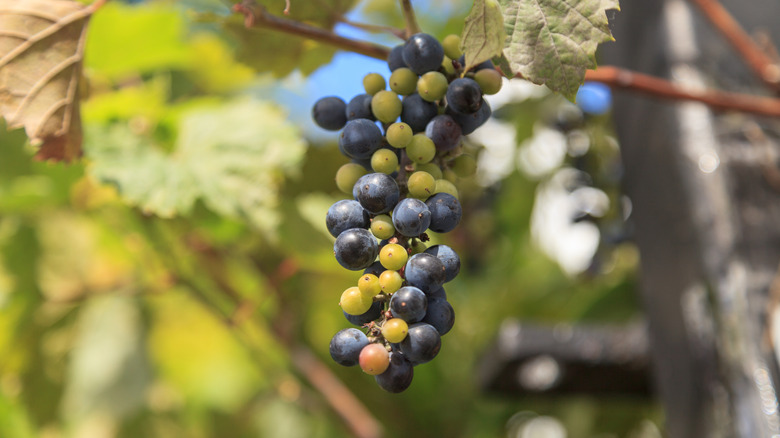
Native to the U.S., wild grape (Vitis riparia) produces bunches of grape-like berries that are edible for humans and absolutely loved by birds. The vine is typically a vigorous grower and thrives in USDA Hardiness Zones 3 through 9. The berries appear from late summer to fall, starting out green and turning to blue-black as they ripen. They are attractive to songbirds, waterfowl, game birds, and are even enjoyed by mammals big and small.
Virginia creeper
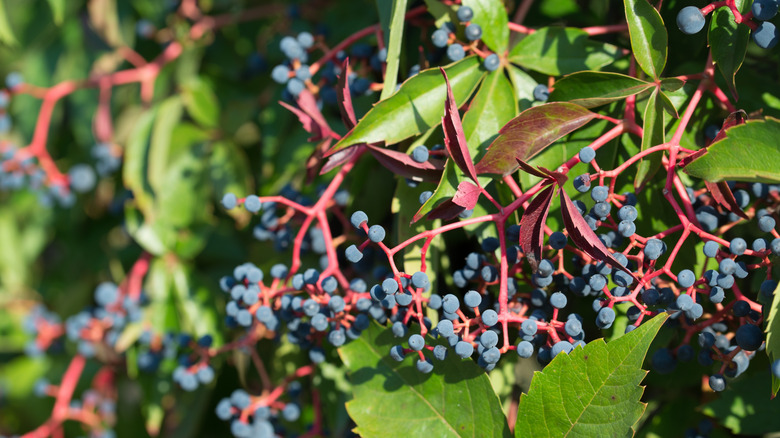
The popular Virginia creeper (Parthenocissus quinquefolia) is also in the grape family. It grows well in USDA Hardiness Zones 3 to 10. From summer through fall, the vine produces small, round, blue-black berries that are hidden within the foliage. The berries become clearly visible in fall, when the leaves change color and drop from the plant. (In North Carolina, the berries appear earlier in summer.) Virginia creeper is an important food plant for songbirds, especially as the weather cools, but take care where you plant it because the fruit is highly toxic to humans.
Coral greenbrier
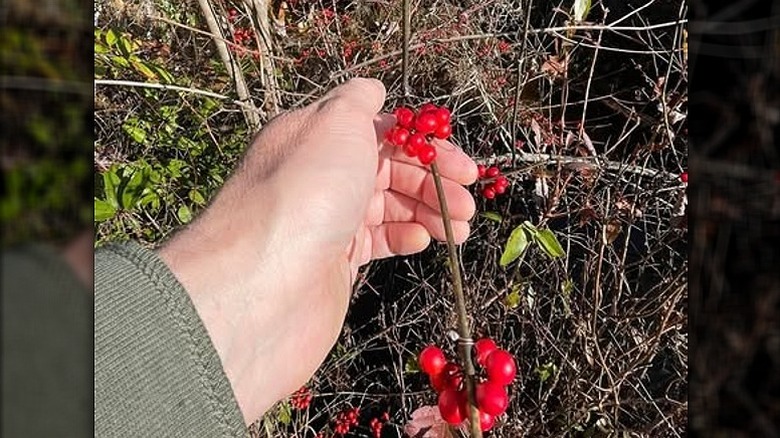
If you love displays of brilliant red berries in your garden, consider growing a coral greenbrier vine (Smilax walteri), which thrives in USDA Hardiness Zones 7 through 9. It's a woody vine that is also deciduous — be prepared to sweep up all those fallen leaves. To produce the vibrant berries that the birds love, you'll need to plant a male plant close to a female — only the latter bears fruit. What's great about this species is that the berries persist into winter, providing a welcome food source for any cold-weather birds visiting your garden.
Common greenbrier
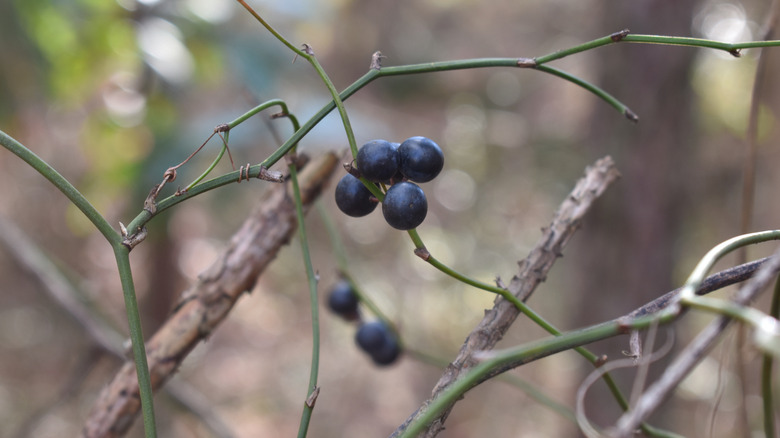
If you have no luck finding coral greenbrier plants or seeds for sale, you might want to consider common greenbrier (Smilax rotundifolia) instead. Although it produces black berries rather than vibrant red ones, they are still loved by birds, especially in the fall when they cover the vine in abundance. This species of vine grows in Zones 4 to 9, and you can expect northern cardinals to visit if you plant it in your garden. The berries are also enjoyed by white-throated sparrows, and both rabbits and deer like to munch on them, too.
American bittersweet
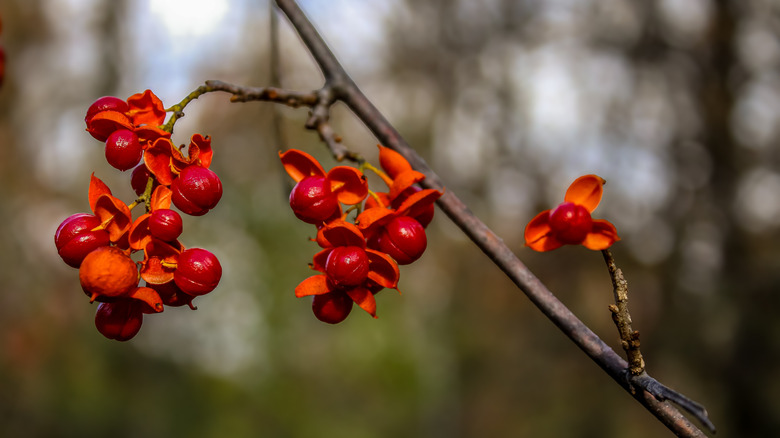
If you're enamored with the idea of growing a red berry-producing vine, why not give American bittersweet (Celastrus scandens) a go? This winding native plant should not be confused with oriental bittersweet (Celastrus orbiculatus) — the latter is an aggressive vine that can cause severe allergic reactions. However, all parts of American bittersweet are also toxic to humans and pets. Deciduous American bittersweet puts out berries in fall in Zones 3 through 8, accompanied by yellow leaves that eventually fall off the stems. The fruit stays on the stems in winter, making this vine a favorite of songbirds.
Coral honeysuckle
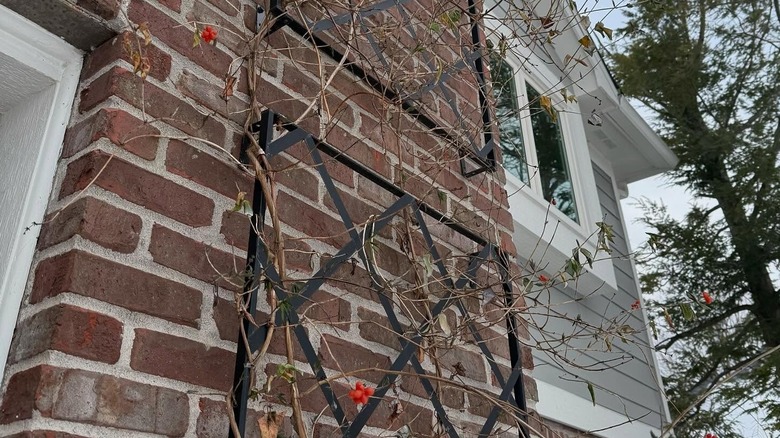
If you're a bird lover, you should really consider planting a coral honeysuckle (Lonicera sempervirens) vine. The lovely tubular flowers will attract nectar eaters like hummingbirds in spring and summer, while the red berries will keep visiting songbirds fed from late summer to early fall. It's also (mostly) deer- and salt-resistant. You can successfully plant and grow this native variety of honeysuckle in USDA Hardiness Zone 4 to 9 gardens. The only downside to growing coral honeysuckle is that the flowers don't have any distinctive fragrance.
Arctic kiwi
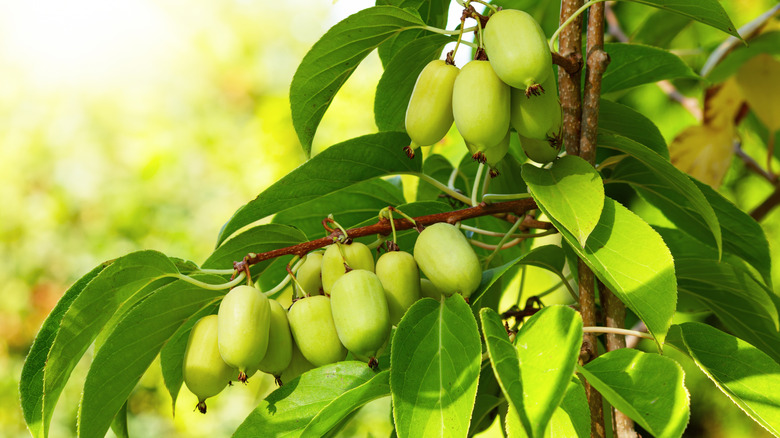
If you'd like a share of the berries you're growing for your backyard birds, consider growing an arctic kiwi (Actinidia kolomikta) vine. You'll just have to harvest often if you want to sample any yourself. The small berry-sized fruits, called kiwiberries, are edible for humans and our feathered friends alike. Plus, they're full of vitamin C. This vine will grow in Zones 4 through 8, but you will need both a male and female plant if you want any scrumptious fruit. While the soft berries are beloved by birds, the fragrant flowers that precede them also attract pollinators.
Magnolia vine
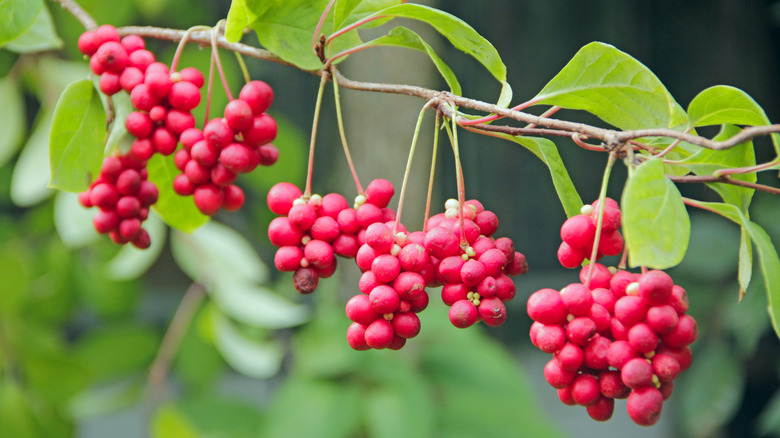
Magnolia vine (Schisandra chinensis) is another plant with berries that you and the backyard birds can share — that is, if you can get your hands on any before your feathered friends gobble them all up. As the botanical name suggests, this vine is native to the forests of northern China, Russia, and Korea. It's hardy down to Zone 4 and deciduous. However, if you want berries, you will need to grow a good mix of male and female plants nearby for success.
Muscadine grape
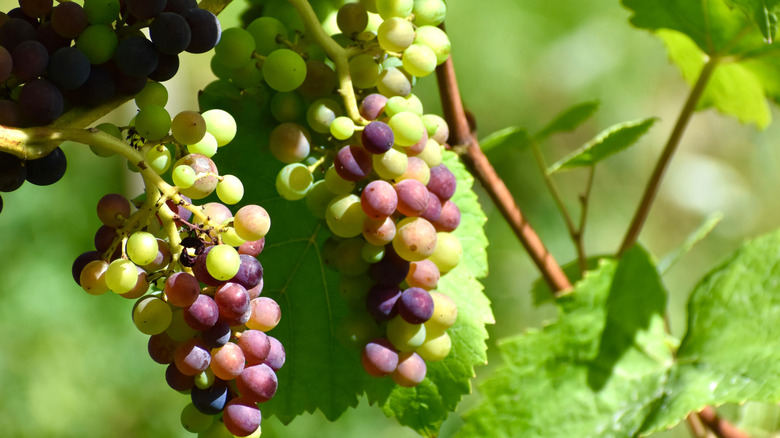
The muscadine grape (Vitis rotundifolia) is another wild grape species that's native to the U.S. It grows well in Zones 5 through 9, and the berries are popular with songbirds, wild turkeys, and ruffed grouse. Mammals, small and large, like squirrels, foxes, and white-tailed deer, also like to feast on the sweet berries. The fruit is edible for humans, too, and is commonly used to make jams, jellies, and wine. Choose a perfect-flowered cultivar, like 'Alachua,' 'Carlos,' 'Doreen,' or 'Noble,' along with many others, if you don't want to plant male and female vines.
American rattan
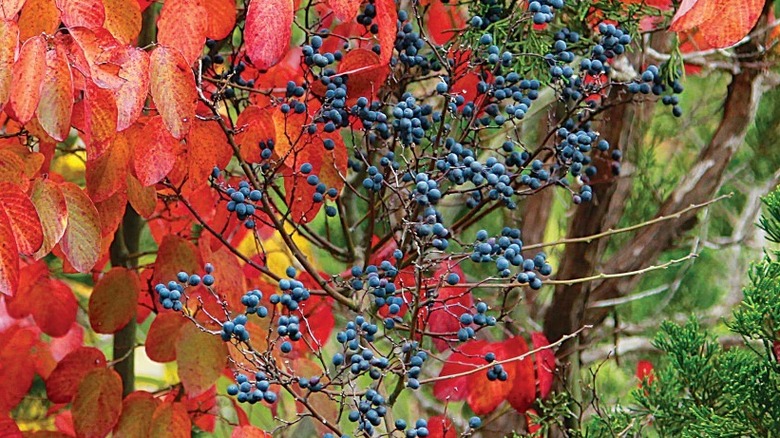
If you're looking for a vine that will provide you with lots of stunning color, then the American rattan (Berchemia scandens) could be a good choice. It's a woody vine that grows in Zones 6 to 9, and produces masses of blue berries in the fall. It's deciduous, so you'll also love the vivid color change the leaves undergo at the same time of year. Songbirds are particularly drawn to the berries, but they're also enjoyed by wild turkeys, raccoons, and squirrels. They are, however, mildly toxic to humans.