

How To Overseed Cool Season Grass In The Spring
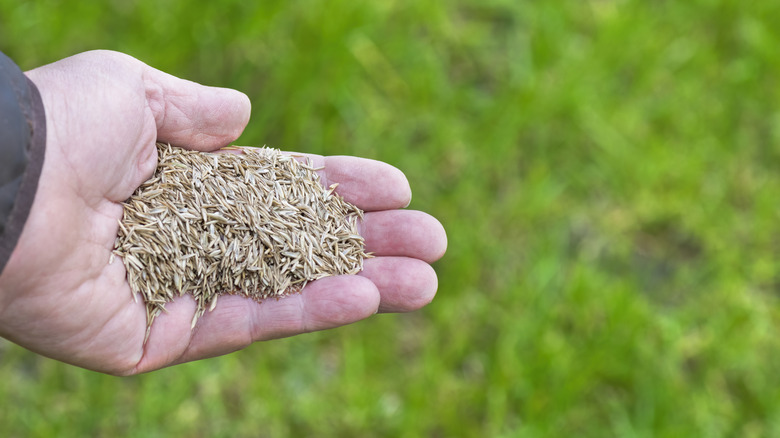
It's not an uncommon problem — spring rolls around and you notice your lawn growing in patchy and thin. This could be the result of winter-related damage, such as heavy snow or snow mold. While the damage might not be severe enough to turn the soil and start over, it also may not be lush enough to leave it as is. The simple solution is overseeding, or spreading seeds to create more grass density. This task is usually reserved for the late summer or early fall when it comes to cool-season grasses, but it's still possible to implement in the spring.
Cool-season grasses include Kentucky bluegrass, fine fescue, tall fescue, and perennial ryegrass. These varieties are typically used in regions that experience extreme weather fluctuations throughout the year. You'll see cool-weather grass growing in the northern two-thirds of the United States, in regions like the Pacific Northwest, Upper Midwest, High Plains, and Northeast. These grasses are resilient against harsh freeze-thaw cycles and hot summers alike. But these tough varieties can still succumb to winter damage. That's where spring overseeding comes into play.
The best way to overseed your lawn in the spring is to carefully consider the timing. In order to overseed cool-season grass in the spring, you'll need to wait for the soil temperature to sit comfortably between 50 and 65 degrees Fahrenheit. Mid-March to April is usually a good window to aim for. Once the time is right, you'll need to pick out the proper seeds and prepare your lawn before you can overseed.
Prepare your lawn before overseeding cool-season grass
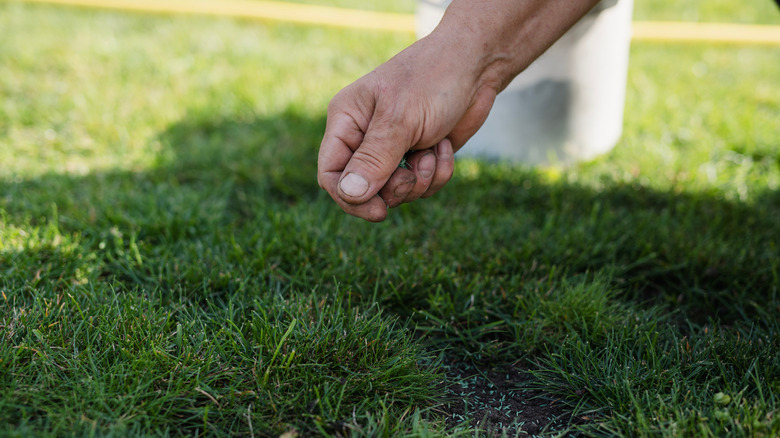
The best seeds to use when overseeding will completely depend on the state of your current lawn. Of course, you will need a seed that matches or plays well with your current grass variety. You might also choose to go for a regionally specific or specialty seed mix, such as one that does well with high traffic.
The most important first step in your overseeding project is preparing your lawn. Start by dethatching to remove the buildup of dead grass, twigs, and leaves. While a small amount of organic material can be helpful for grass, too much can prevent the roots from getting vital air and moisture. Detaching can help your grass seed reach soil more easily. You can also aerate your lawn before overseeding and mow it slightly lower than normal to improve germination rate.
Identify the problem areas in your lawn. Spread seed generously where you notice patches or thin spots. You can use a seed spreader if you're overseeding larger areas. Once the seeds are in place, be sure to water your lawn each morning. This helps keep the seedlings moist while also allowing the lawn to dry out before nighttime to combat moisture-related issues such as fungal disease. Your seeds should germinate within two weeks. At this point, you can reduce your watering to every few days. Once the new grass is the same height as the rest of your lawn, water it on your normal schedule.