

Get Your Home Ready For Spring With These Beautiful Easter Flowers
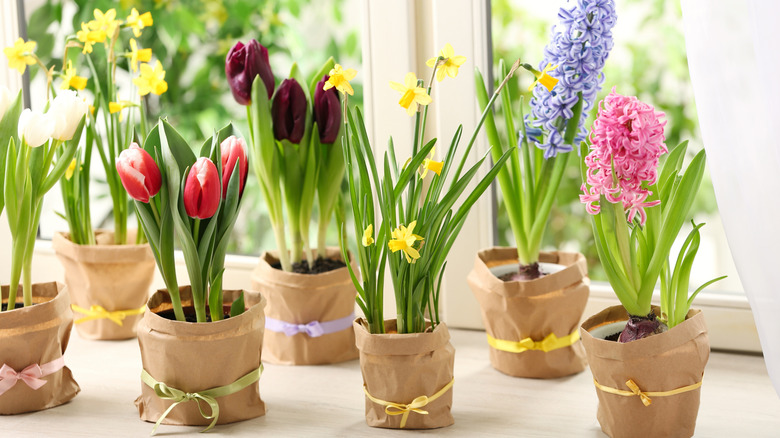
For gardeners and plant lovers, spring is an exciting time. We're saying goodbye to the long, cold months of winter and looking toward the year ahead, excited for a summer of beautiful blooms, yard hangouts, and homegrown veggies. However, it's not just outside the home where we can get ready for spring. Easter is a wonderful celebration of growth, hope, and new life, and we can bring flowers into our homes during this time. Whether we're hosting Easter lunches or celebrating it alone, flowers in our homes can serve as a reminder of how blooms will always bud, even after the harshest of winters.
To get your home ready for spring, it's a good idea to pick flowers that will bloom in March or April while the Easter festivities are occurring, such as daffodils, tulips, and kalanchoe. Some of these spring blooms are bulbs that you can plant in pots in late winter for blooming in spring, such as daffodils and hyacinths. Others are flowering houseplants that make your home look amazing by blooming around Easter, such as the Easter cactus or African violets. Let's look at some of the best spring blooms to liven up your home at Easter.
Easter cactus
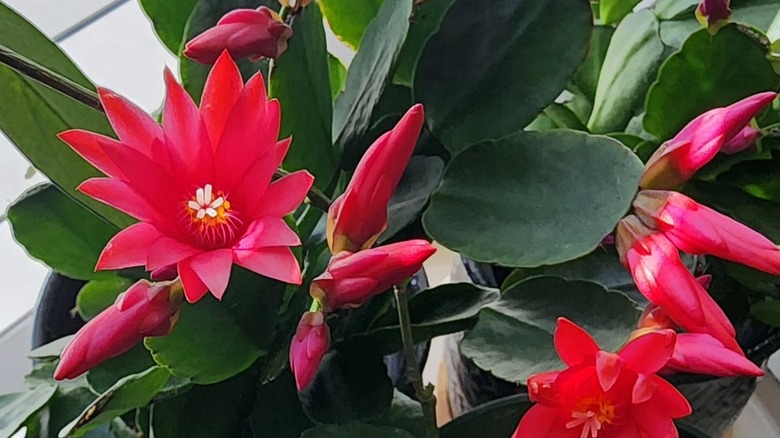
The Easter cactus (Rhipsalidopsis gaertneri) is an easy-to-grow succulent with beautiful star-shaped red blooms that decorate the plant between late March and May. Its floral display usually lasts around 20 days, with individual flowers staying strong for about 10 to 14 days. To keep your Easter cactus happy so it puts on a show over Easter, ensure you place it in bright, indirect light and mist it regularly. Fertilize it during its growing season, and keep the soil moist. Easter cactuses can get stem rot easily, so make sure to avoid overwatering.
Daffodil
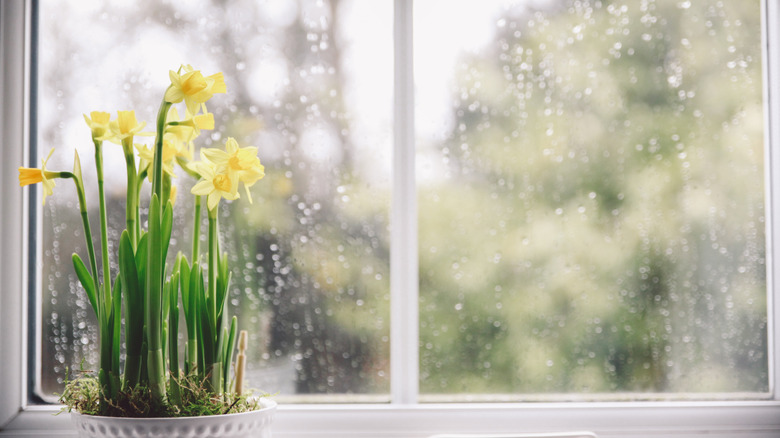
For many of us, there is nothing as synonymous with Easter and spring as the sunny blooms of daffodils (Narcissus). You can grow beautiful daffodils indoors by placing the bulbs in cold storage over the winter months. Remove them from the cold storage three to four weeks before you wish them to bloom. At first, you will need to keep the bulbs in a cool location with low light after removing them from cold storage. Then, once the shoots start to go green, you can place them in a sunny location and water them regularly.
Hyacinth
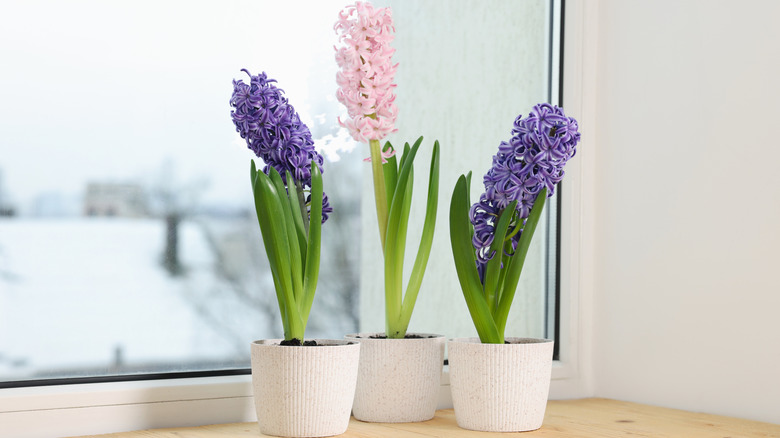
With their iconic flower spikes that bloom in vivid colors of indigo, pink, orange, white, and red, hyacinths (Hyacinthus orientalis) are fabulous spring blooms. Like daffodils, these flowers will easily bloom indoors. You will need to chill the bulbs for 12 to 16 weeks at around 40 to 45 degrees Fahrenheit. Then, they will usually bloom a month after you have moved the bulbs to a room temperature location. You can also grow these gorgeous flowers indoors without any soil by using an hourglass-shaped hyacinth glass with water.
Florist kalanchoe
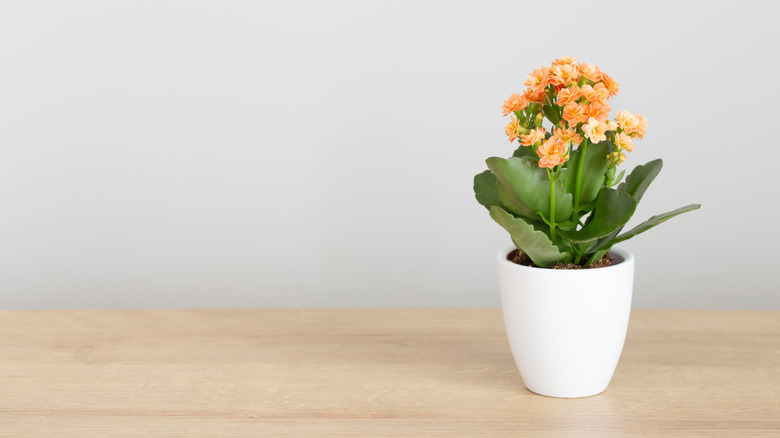
For a houseplant, the blooms of the florist kalanchoe (Kalanchoe blossfeldiana) really are a spectacle. They cover the plant in the spring, lasting for weeks and signaling the end of the winter months. Interestingly, it is 14-hour nights that trigger this beautiful plant to flower, with buds starting to appear after six weeks of long nights. Grow your florist kalanchoe in full sun to help with flowering, and deadhead spent blooms to promote new ones. When flowers start to appear, you should also reduce watering and fertilization.
African violet
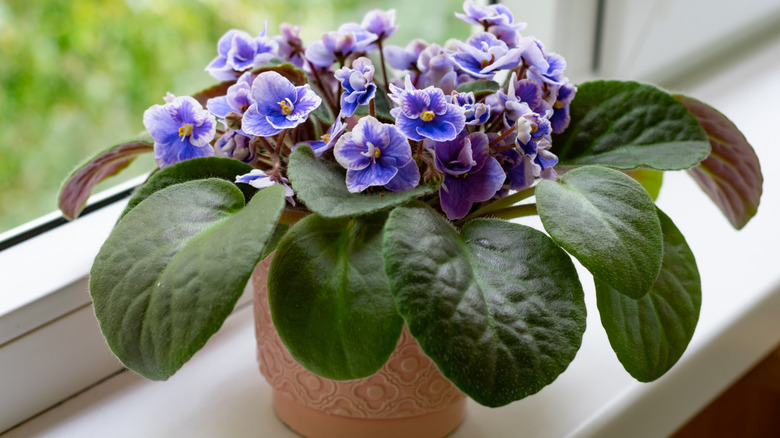
The African violet (Saintpaulia ionantha) is a popular houseplant that is easy to grow and easy to make flower. Although they can flower throughout the year, their flowering is linked to light, meaning they will often start to bloom in spring after a period of darker days and longer nights. African violets need eight to 12 hours of bright, indirect light a day for flowering and eight hours of darkness. Keeping the soil evenly moist and fertilizing them regularly can also help promote flowering, and there are specific fertilizers available designed to help African violets flower.
Moth orchid
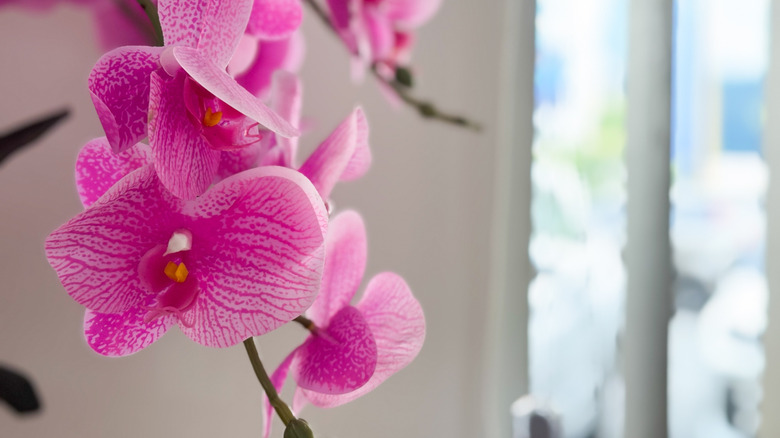
With their intricate blooms that sit delicately on top of long stems, moth orchids (Phalaenopsis) are a sophisticated flowering plant to have in your home. These plants tend to bloom in late winter and spring, with their flowers often lasting for months. To get your moth orchid to bloom for Easter, make sure it has had a period of cool weather in the fall, as this triggers the plant to produce the flower spikes. You should also keep your moth orchid in the correct conditions, including bright, indirect light, suitable fertilizer, and enough water.
Easter lily
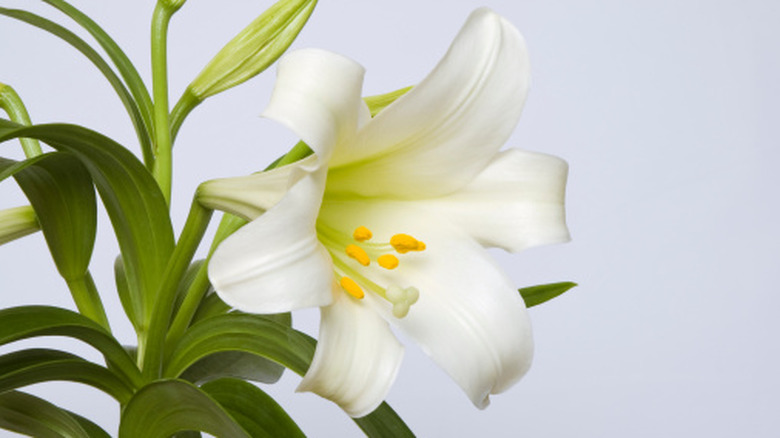
Easter lilies (Lilium longiflorum) often line the shelves of stores in the spring months, but these plants don't naturally bloom at this time of year. Native to Japan, Easter lilies will bloom in the fall under normal conditions. However, growers will force them to bloom for the holiday. If you buy an Easter lily for the spring, place it in bright, indirect sunlight and remove the yellow anthers to promote a longer blooming period. Do not bring these flowers into your home if you have cats, as they are highly toxic to them.
Florist's cyclamen
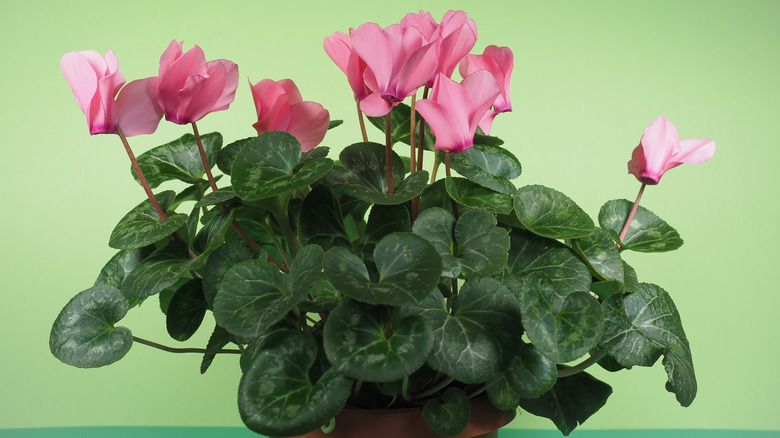
Florist's cyclamen (Cyclamen persicum) is a dainty plant with heart-shaped leaves and bright blooms that reach up from the foliage. Only growing to around 6 to 9 inches tall, it is fairly small, but its beautiful blooms really make an impact in a home. Florist's cyclamen blooms from winter into spring, and with the right care, the plant can flower for around four weeks. Keep the soil moist, place the plant in bright, indirect light and in a cool location, and deadhead it to help the plant produce more flowers.
Tulip
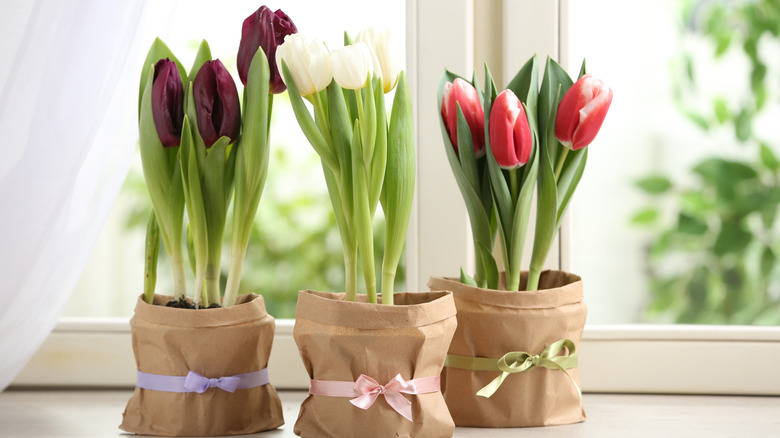
With their bright blooms appearing in every color except for blue, tulips (Tulipa) are a fantastic indoor flower to bring some cheeriness into your home. Flowering naturally in spring, tulips can be grown indoors by placing the bulbs in cold storage for 12 to 16 weeks at temperatures of 40 to 45 degrees Fahrenheit. After this time, place them in a low-light location until the stems go green, and then bring them into a warm, brightly lit place. Keep the soil moist, deadhead once the flowers have faded, and fertilize the plant once a month to keep it happy indoors.
Pocketbook plant
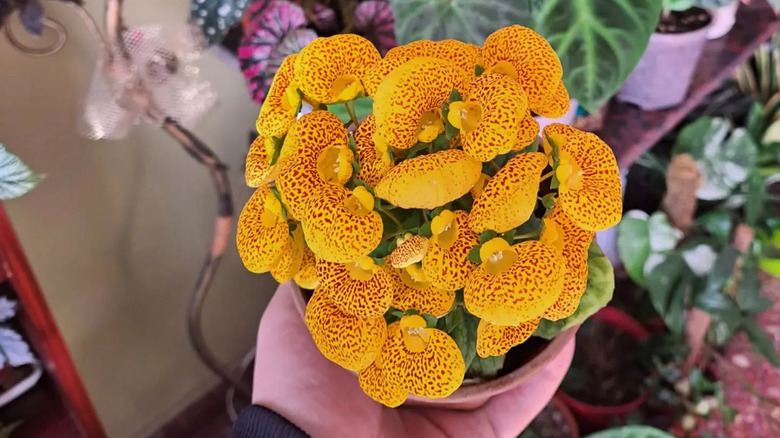
The strange, alien-esque blooms of the pocketbook plant (Calceolaria crenatiflora) make it an interesting indoor flower. It is a high-maintenance plant that is difficult to make rebloom, which means that many people opt to buy the plant in spring, enjoying its blooms, then discard it once they have turned. However, there are things you can do to extend its blooming period and enjoy it for longer. Ensure your pocketbook plant is in a cool, bright location, and water it when the top of the soil is dry. Pinching the plant back can also extend flowering.