

The Trumpet-Shaped Flower That'll Bring Swallowtail Butterflies To Your Yard
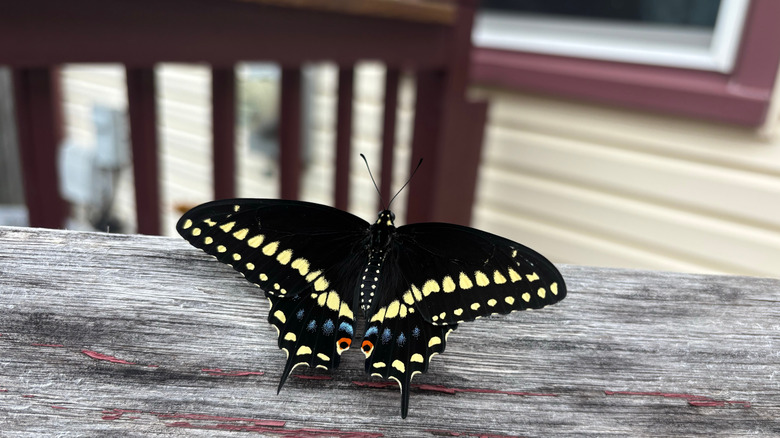
Butterflies are an important part of any ecosystem. For one, they're good pollinators, just like bees and other flying insects. They're also delightful to watch as they fly from flower to flower, gathering the nectar inside the blooms. To attract more butterflies to your garden, you basically need three things: flowering plants with blooms that contain lots of accessible nectar, host species that the larvae will feed on, and water. To craft a landscape that butterflies will visit, consider planting colorful tubular flowers. One of the best and easiest butterfly-attracting plants you can grow is pentas (Pentas lanceolata), also commonly known as the Egyptian star flower. It's actually a favorite source of nectar for stunning swallowtail butterflies.
Most gardeners grow pentas as an annual, but those in USDA Hardiness Zones 10 to 11 can grow it as a perennial. It's a fairly low-maintenance plant that produces dense clusters of tubular, star-shaped flowers in pink, red, white, yellow, and purple. Bloom time is summer and fall — right up until the first frost. The soft green foliage can be trimmed regularly to keep the plants neat. Be careful not to prune too often, as this can remove budding new growth. Interestingly, it seems that swallowtails prefer the pink blooms over other hues, so this is definitely one of the colors you should add to your garden to attract these beautiful butterflies. Some cultivars, like Pentas lanceolate 'Butterfly Light Lavender,' even have butterfly in the name! As a bonus, pentas is popular with hummingbirds, especially if you're growing a red-flowering variety.
How to grow pentas and keep swallowtail butterflies happy
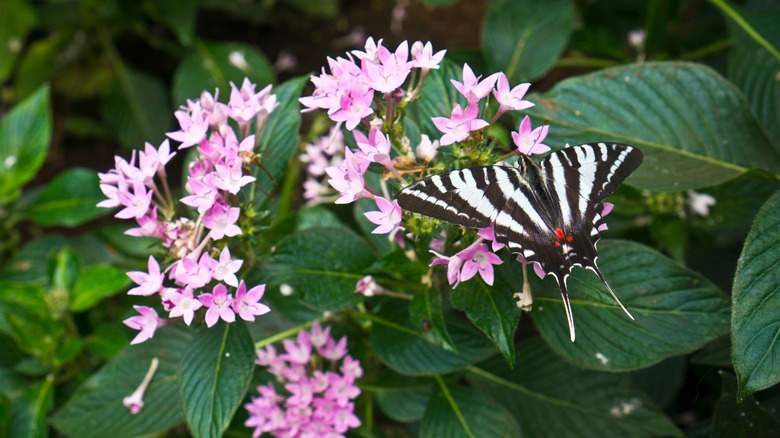
All a pentas shrub needs to grow happily in your garden is a sunny spot and some well-draining soil. They'll survive a little afternoon shade, but if you want lots of swallowtail-attracting flowers, a full-sun site with six or more hours of sun a day is best. Despite their love of the sun, pentas need evenly moist soil. Water them regularly during long periods of dry weather. It's also a good idea to deadhead spent flowers — it's a top tip for creating long-lasting blooms on pentas shrubs. You can even bring the flowers indoors after cutting them and display them in a vase. Or, if you pop them out on your uncovered porch, the swallowtails may visit them there, too.
While pentas flowers will certainly attract many species of swallowtail butterflies to your yard, you might also like to grow some host plants that will feed the caterpillars. For eastern tiger swallowtails, plant annual herbs like dill and fennel, as well as biennial parsley. These herbs are also host plants for black swallowtail larvae, which also enjoy munching on the leaves of celery and carrot. Heavily reduce or eliminate your use of pesticides and learn to embrace the partially eaten or hole-filled leaves as a sign of a healthy ecosystem. Pentas are highly pest-resistant anyway; they only occasionally suffer from mites. Finally, place shallow dishes or saucers of water with a rock inside among your pentas shrubs to keep visiting swallowtails well-hydrated.