

The Best Type Of Fencing To Keep Pesky Gophers Out Of Your Yard
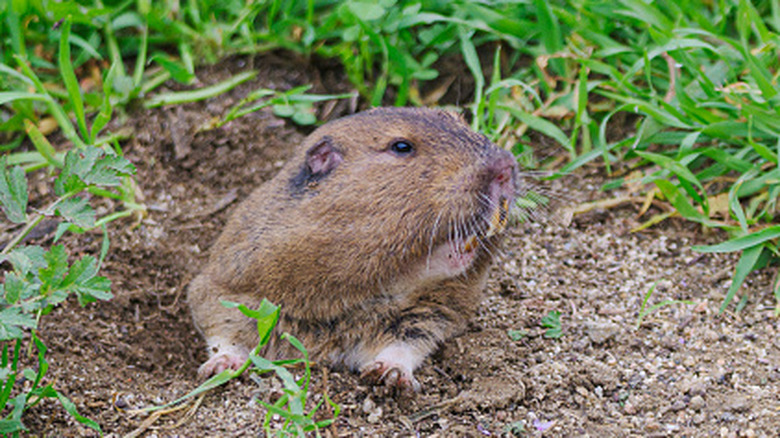
If you've noticed gophers in your yard, along with damaged plants and missing bulbs, chances are you are dealing with a pocket gopher infestation. Despite their cute appearance, these burrowing creatures are not the best garden guests, as they can eat your garden plants, chew up cables and irrigation lines, and even dig up and snack on your freshly planted bulbs. Unfortunately, there is little to no supporting evidence that strong scents in your soil can help prevent gopher damage. However, there are several ways to get rid of gophers humanely, including different types of barriers. The most effective one involves installing a closely spaced wire mesh fencing product like hardware cloth beneath the ground.
Hardware cloth, which is sometimes marketed as gopher wire, is a type of wire mesh often used for keeping digging creatures like gophers, rats, birds, and rabbits from accessing plants. Hardware cloth is made from small, interwoven wires to create an almost fabric-like material. You can install hardware cloth flat on the ground underneath a specific area of your garden or beneath an entire lawn. This is an installation process you can typically tackle on your own, armed with just a few tools.
How to install a wire mesh gopher fence
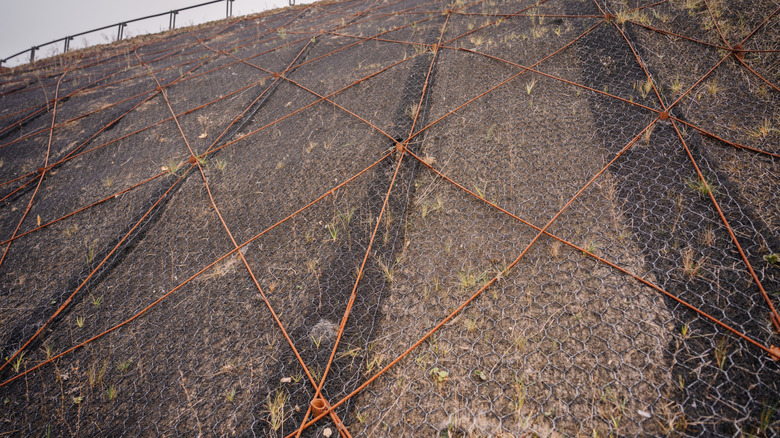
First, select the type of hardware cloth you want to use. You can choose the size of your wire mesh, the thickness of the wire (gauge), as well as the material. For gophers specifically, it's recommended to use a welded wire of ½-inch-by-½-inch squares that's at least 16 gauge, which is on the heavier side. Wire mesh is commonly manufactured from galvanized steel, which offers a good degree of corrosion resistance. However, it can also be made of aluminum, which is easier to handle thanks to its light weight, or stainless steel, which is ideal for underground applications because of its robust corrosion resistance. Vinyl-coated mesh is also durable and worth considering. Besides the hardware cloth, you'll need a hammer or mallet and some landscape staples.
Before you start digging, call 811 to find out if there are any utility line to stay clear of. To install the gopher fence, remove about 1 to 1½ inches of soil, then lay the hardware cloth flat on the ground. If you have multiple sections of mesh, overlap their edges to ensure the critters cannot squeeze through the gaps. Next, secure it in place using your hammer and landscape staples. Finally, distribute the soil you dug up evenly to cover the mesh. Pro-tip: Combine your newly installed fence with this clever natural pest-deterrent trick to keep gopher populations in check.