

13 Plants To Propagate In March To Fill Your House With More Houseplants For Spring
We may receive a commission on purchases made from links.
Early spring can be a temperamental time for outdoor planting. But for those itching to get some potting soil under their nails, it's the perfect period for a little houseplant propagation. I've had the absolute pleasure of being one of House Digest's biggest houseplant nerds for a few years now, sharing all of the cool things I get to learn about horticulture with our audience. I had planned to dust off the propagation tubes this month and make some more plants as a way to welcome the sun back to my dreary patch of upstate New York. But, seeing as I'm already busy maintaining a collection of well over 260 indoor plants and hosting a podcast dedicated to plant history, I think it's maybe time to back off the obsession. You know, just a little.
But that doesn't mean I can't live vicariously through you. So, dear reader, let's talk about how you can spend this March shaking off those winter blues by making some new baby plants via propagation. I'm going to show you 13 plants that are resilient, easy to propagate, and can create multiple little plantlets from just one mother plant. That way, you'll be able to take your attention away from that last frost date that feels like an eternity away and instead focus on just being the best new plant grandparent ever. So, grab an alcohol wipe to sterilize those pruning shears, because it's time to dive in.
Purple spiderwort
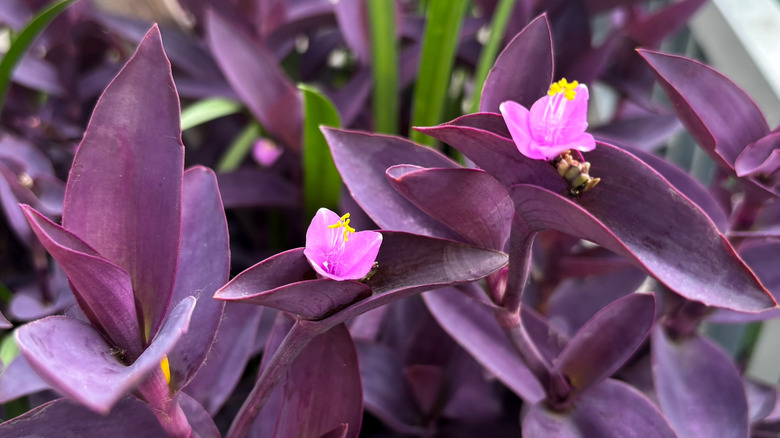
Let's start your March off with a colorful plant to perk up your indoors: Purple spiderwort (Tradescantia pallida). Highly propagatable, purple spiderwort has muted green leaves and stems in the winter, so don't worry if your plant doesn't look like the picture just yet — that's just March life for this tradescantia. Once the sun comes around, those green hues turn a gorgeous, deep shade of purple. It's, in my opinion, one of the easiest tradescantias to propagate, and the mature versions are one of the rare plants known to flower indoors, bursting with cheerful pink blooms and yellow-orange stamens. It's like your goth phase teamed up with your Barbie phase.
Tradescantias are, overall, some of the easiest plants to propagate, as all you need is a stem with a node. A node is where the stem will develop branches and leaves, so look for a little knobby thing that's slightly off-color and make a cut about 1 inch under. Some people like to stick the cutting right back into the soil — a good idea if your tradescantia is looking a little leggy — but I prefer to use distilled water or rainwater in a clear jar on a windowsill with bright, indirect light so I can watch the roots' progress. If you've got a long stem with multiple nodes, clip a few off and you'll have multiple T. pallidas in about a month.
Tradescantia 'Blushing Bride'
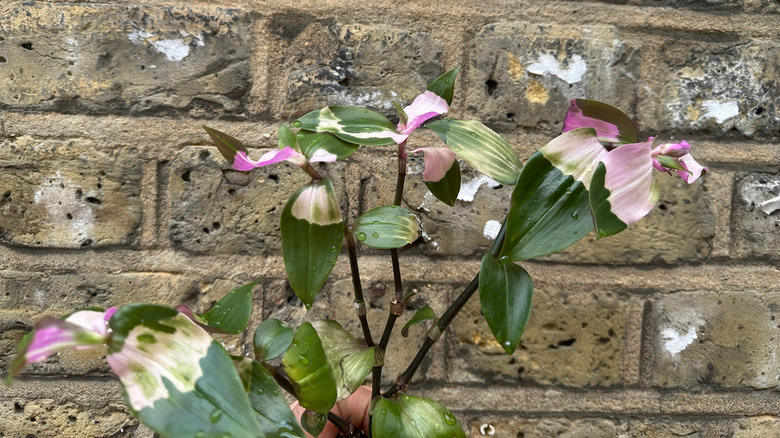
Like the purple spiderwort, the 'Blushing Bride' (Tradescantia x andersoniana) can easily propagate in March, even with lower light levels. 'Blushing Bride' is a more delicate-looking tradescantia than its purple cousin, with dark green leaves and stems. But once it's settled in and happy, it'll start to produce these amazing blush-pink splotches and will even throw up a dainty white flower here and there.
That said, I wouldn't expect any flowering or color changing until the active growing season starts. But that's why it's such a champ for early-season propagation, because you can start it now and have multiple 'Blushing Brides' ready to go and flourishing. To propagate 'Blushing Bride', you'll need to cut about 1 inch below the node and stick it in distilled, rain, or aquarium water. I tend to avoid tap water as you're dealing with a wounded stem, and fluoride can be harsh on open plant wounds. If tap is all you've got, let your cuttings callus over for a day before putting them in water. Make sure that there aren't any leaves touching the water, either, as they can rot if they're consistently wet. By mid to late April, you should have new baby 'Blushing Brides' ready to be potted up.
Swiss cheese plant
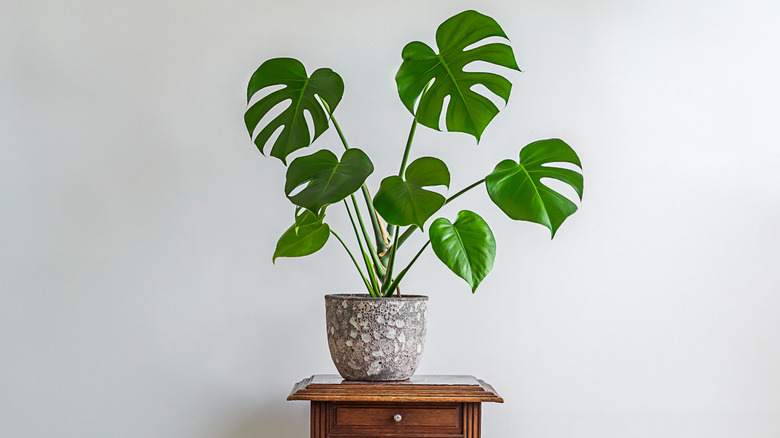
Is there any plant more aesthetically pleasing than the Monstera deliciosa? I love propagating Swiss cheese plants because of how readily they take to rooting, even when they're supposed to be dormant — like in March. But these plants have been around for millennia, so they know how to adapt and grow in less-than-ideal conditions. Plus, when they're happy, they grow massive, fenestrated leaves and can really fill out a room faster than you might think.
One of the easiest ways to propagate Monstera deliciosa is in water. You'll want to look for a node and make your cut a little below it. In monsteras, the node is where stems branch off, so you'll probably have a tall cutting with multiple leaves, which is good. The key here is to make sure you don't actually chop the node, so give yourself about two finger widths' worth of stem underneath it, just to be safe. You can let it callus for a few days before putting it in water, or plop it in freshly-cut; I've had success with both, but would probably recommend callusing rarer or more expensive variegated varieties, just to make sure nothing attacks those genetically abnormal cells.
Adanson's monstera
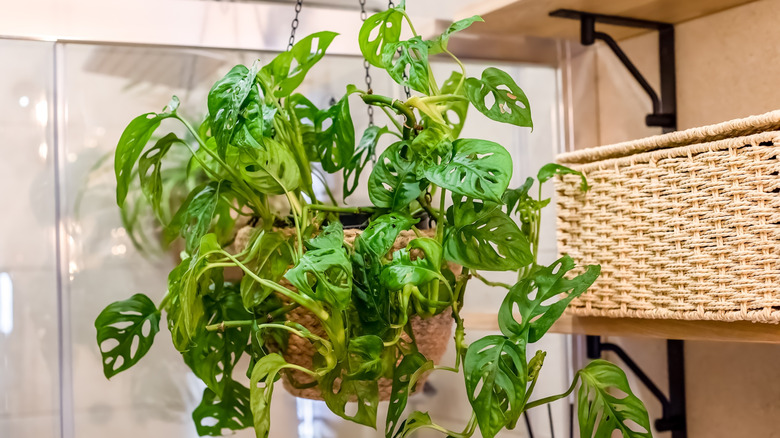
Like its deliciosa cousin, the Adanson's monstera (Monstera adansonii) is another rewarding tropical plant that can be propagated in March to help fill out your space with greenery. This one is more like a vine than M. deliciosa and won't get leaves as big, but it's a very cool-looking plant that's highly adaptable and great for achieving that fenestrated, Swiss-cheese look in smaller spaces.
Propagating M. adansonii works like a tradescantia: Look for a node with a leaf and make your cut under that point, then put it in a jar with water. As long as there's a little leaf to catch the sunlight, you can make multiple propagations from one stem, too. Make sure to keep your jar in bright, but indirect light so that algae doesn't get a chance to grow.
'Cebu Blue' pothos
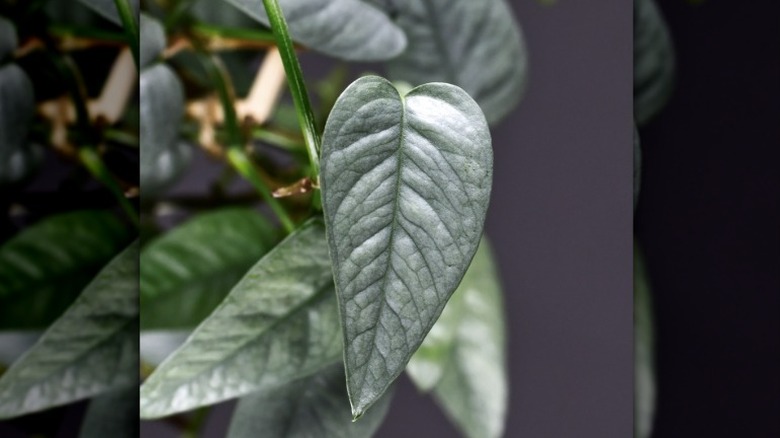
The 'Cebu Blue' pothos (Epipremnum pinnatum) is one of my favorite plants to propagate early because it's just so easygoing. I've had one grow a stem that was 7 feet long in a spot with almost zero light. When I found it, I just redirected the giant-but-leafless stem over to a window and it started popping out leaves like crazy, all aching to be propagated into their own little plant. They're almost challenging you to make as many of them as you can because they've got more than enough plant material to spare.
'Cebu Blue' pothos do best in water propagation; just make sure you have a leaf with a node. Actually, maybe you don't even need a leaf; if my plant could grow leaves on a 7 foot long vine after months in the dark, maybe yours can, too. I'd probably look for a leaf though, if you want to play it safe or don't have much plant to play with.
Snake plant
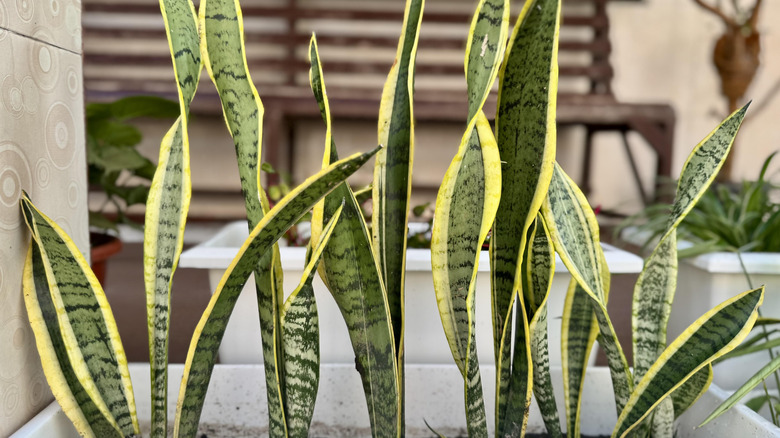
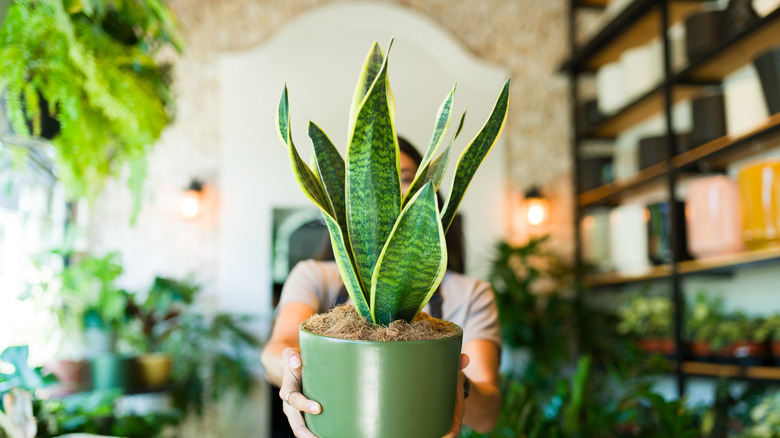
Did you know the snake plant (Dracaena trifasciata) was once planted around gravesites to protect the dead? With those sharp-looking leaves and hardy nature, it makes sense. They're also excellent to propagate in March and spring because there are so many ways to do it. Play your cards right and you'll have enough for a protected gravesite in no time (if that's what you want).
If you've got a bushy snake plant, your safest bet for successful propagation is by division. This is particularly great to do in March because your plant is dormant so it won't freak out. Gently remove the whole plant from the pot and clear off the soil, then use a garden saw to cut the root ball in half. I like using my Workpro Hori Hori Garden Knife for this, but even a bread knife that you're willing to sacrifice can work. Pot each half in its own pot with fresh soil and leave it alone to recuperate.
You can also propagate snake plants with just a jar by cutting 3-inch sections of leaves and putting them in water or soil. However, I find that rooting them in water gets finicky, as you don't want the leaf too deep in the liquid or it will rot. You can always let it callus for a day or two to hedge your bets, but if you notice the leaf cutting is getting translucent and soft, then it's a dud. If everything goes right, you can expect new baby snake plants within about two or three months via this method, which is a while, but well worth the wait.
'White Wizard' philodendron
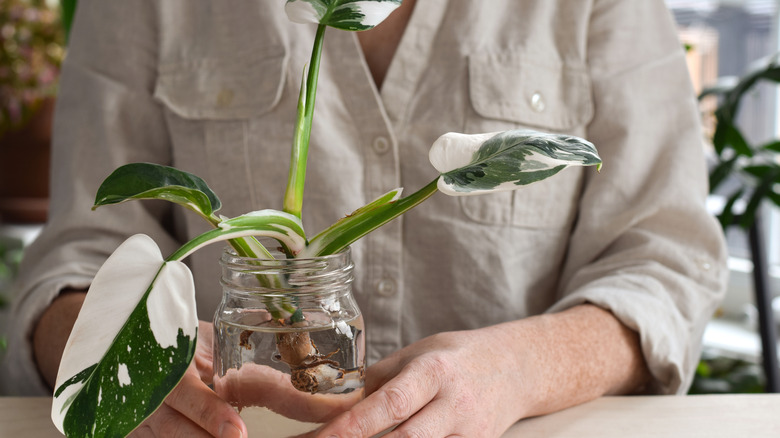
I had a hard time picking which philodendron to feature, as they're all propagation champs, even in March when the sunlight is spotty at best. However, I chose the 'White Wizard' philodendron (Philodendron erubescens 'White Wizard') because it looks fancy, but is a tank of a plant that you can propagate multiple times and have a collection of variegated tropical plants everywhere in no time.
Philodendrons do best with water propagation, so make a cut a little under the node and pop it into water, then place it in bright, indirect light so it can photosynthesize without worrying about algae overtaking the water. However, if your home is on the drier side, you may want to put it in a glass cabinet, terrarium, or even use a clear plastic bag to keep its relative humidity up until it grows roots, which takes a few weeks.
Golden pothos
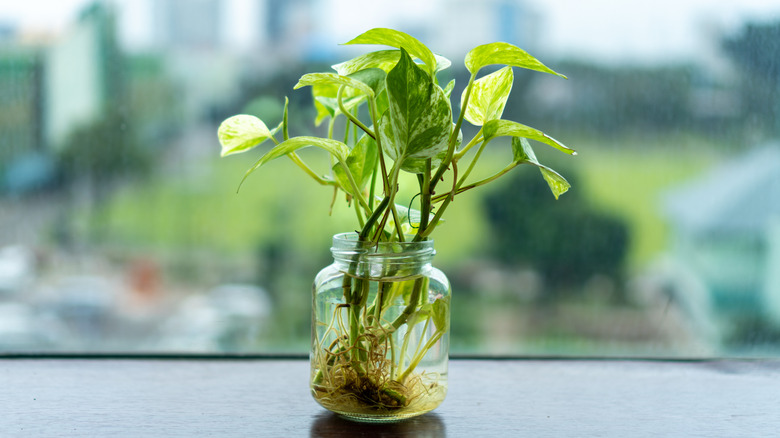
Golden pothos (Epipremnum aureum) is a go-to plant to propagate in March or even earlier because it's just so indestructible. Plus, it has the most amazing yellow-green variegations on its leaves, and adds a really dynamic look when placed around more monotone plants. Of all the plants on this list, this is the one I can almost promise you won't be able to mess up propagating.
Water propagation is probably the easiest method for the golden pothos, but putting a callused cutting in soil works fine, too. Take a cutting about 1 inch under a node and make sure you've got a leaf so the cutting can photosynthesize. If you decide to go with water, make sure to add some fresh water every now and then as your cutting will need a fresh hit of oxygen to root.
'Milk Confetti' syngonium
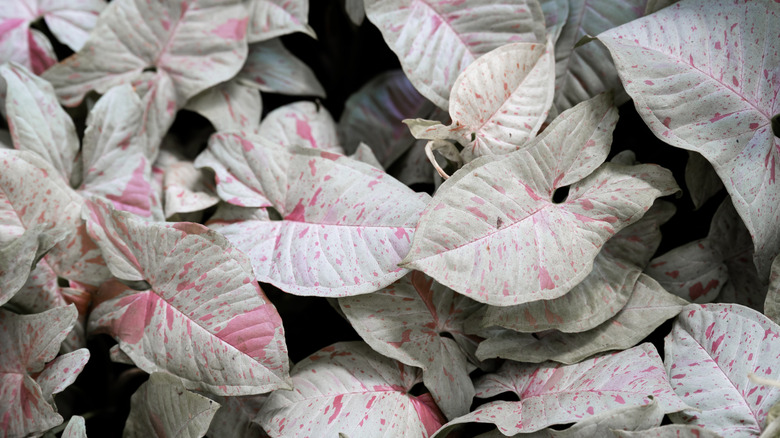
For one season, I was all about syngoniums and had to collect every one I could get my hands on. While 'White Butterfly' syngonium is a great plant that's cheap and easy to find, I have to pick the gorgeous 'Milk Confetti' hybrid (Syngonium podophyllum 'Milk Confetti') for a March propagation because it's just such a cool-looking plant — who wouldn't want a couple more specimens gracing their home this growing season? Plus, it's hardy and takes very well to propagation.
Syngoniums can be propagated by water or soil with node cuttings that have at least one leaf. Like the monstera, syngonium's nodes are where a stem splits so it doesn't have as many nodes to play with as a vine like a pothos or tradescantia. However, like pothos, tradescantia, and even monstera, a leaf isn't totally necessary if you want to do wet stick propagation. This works best if all you've got is a little nub of a node. Cut the stem down to the node so that the whole thing is no bigger than a piece of penne pasta, then put it on moistened sphagnum moss and cover with plastic wrap. Put the wrapped node under a grow light and leave it alone. Within a month or so you should start to see some growth.
'Krimson Queen' hoya
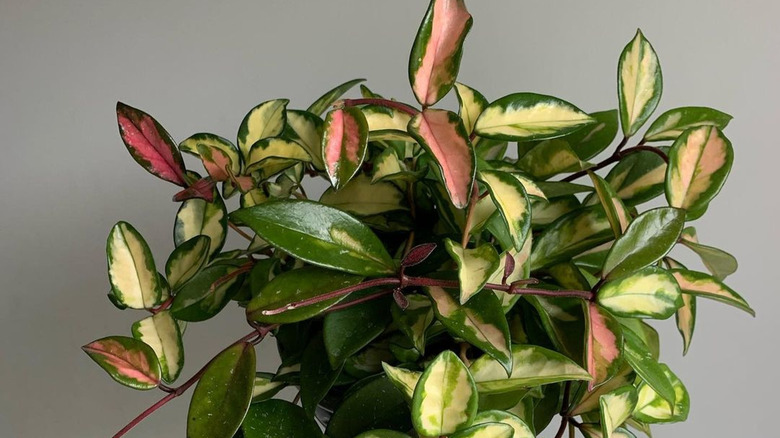
I think the Krimson queen hoya (Hoya carnosa 'Krimson queen') is probably the gateway variety of the hoya world, because once you get your hands on one, you'll want more. Luckily, you're here learning how to propagate plants, so multiple hoyas won't be a problem. In my opinion, they're incredibly easy to propagate — so when you've got that plant-collecting itch once the sun begins to peek out in March, a hoya is a good bet. Plus, the Krimson queen's dramatic coloring will make multiple propagations often look like completely different plants.
Hoyas do well with water or soil propagation, just make sure you've got a node and a leaf. However, I save a special tactic for propagating hoyas that's as close to a guaranteed win as possible. First, fill a clean shot glass or sauce cup with half perlite and half Fluval Stratum, then mix well. Stratrum is a substrate made for aquariums that's chock full of nutrients but gets expensive quickly, so the perlite helps extend it while adding spots for roots and oxygen to break through. Put your hoya cutting into the stratum/perlite mix, moisten the mix ever-so-slightly, then place in a clear box with a lid to keep it humid — I use these Sterilite Large Clip Boxes — and slide it under a grow light. Within a few weeks you should see roots. When you're ready to pot up your plant, let the stratum/perlite mix dry out, then save it for the next precious cutting.
Polka dot begonia
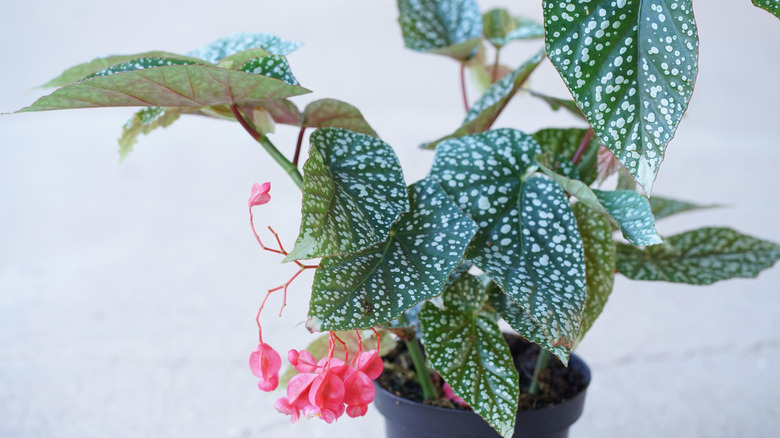
The polka dot begonia (Begonia maculata) is one of my favorite science experiments to propagate at any time of the year. Not only is it a hardy cane begonia with beautiful flowers and fun-looking leaves, but it's so easy to propagate that taking cuttings in early spring, while the temps are still low, shouldn't be an issue. And, not to get too click-baity about it, this a weird trick you can try for begonias that makes their propagation especially cool.
You could propagate your polka dot begonia with stem cuttings that have at least one node and leaf, and just place the cuttings in water or soil. But you can also try this method: Use one of those clear Sterilite boxes and fill it halfway with moss, then moisten slightly. Next, take a leaf off of your begonia and cut it into pieces, making sure each piece has a vein (check the underside of the leaf to be sure). Lay the leaf cuttings gently onto the moistened moss, then close the box and put it under a grow light. Within a few weeks — maybe a month — each leaf cutting should develop its own new plant. It's like magic!
Spider plant
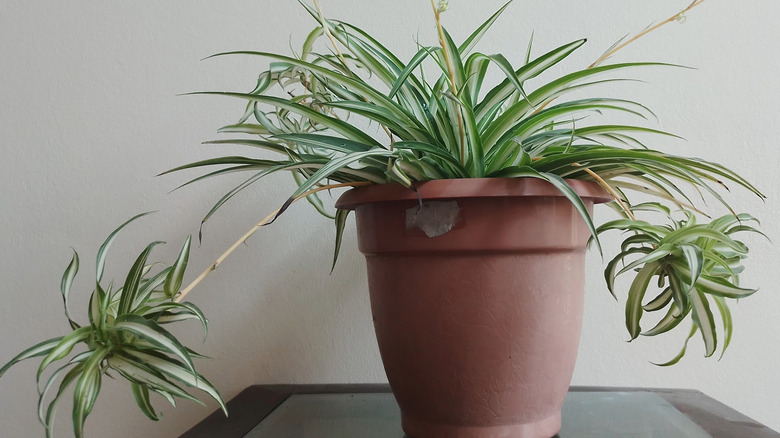
I don't think the spider plant (Chlorophytum comosum) gets enough love; maybe because it's such a common houseplant for beginners to grow. But spider plants deserve their flowers (no pun intended) because they're highly adaptable and make propagation so easy that March's dappled sunlight isn't a big deal. It's actually the perfect time of year to propagate this easygoing species, because spider plants need short days and long nights to naturally produce plant babies that are ready to go.
Spider plants create baby spider plants, known as "spiderettes," on the tips of their leaves when they receive 12 hours of night for around three weeks, so now really is the perfect time. Once you see the little plantlets growing, you just set them on top of a moistened pot of soil for a few weeks until they root. Some people like to cut them from the mother plant, but I leave them on until they're rooted, just so they get some of Mom's nutrients to grow. Then, clip them off with sterilized pruning shears and send them off to plant kid college; they're ready to make it on their own.
Jade plant
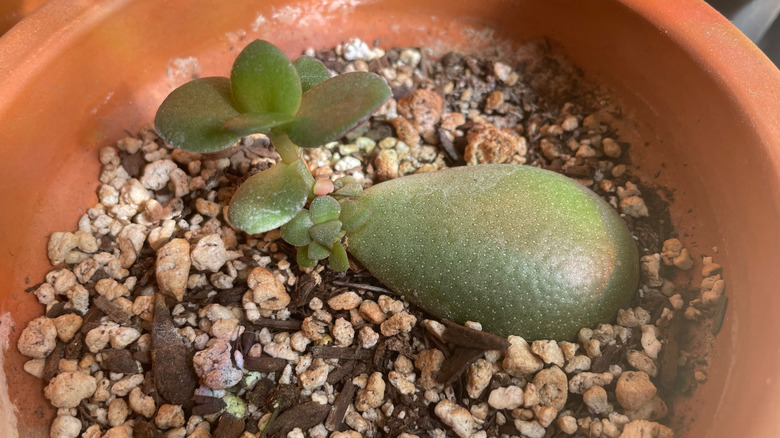
I'll confess: I am terrible at keeping succulents alive. But jade plants (Crassula ovata) are the exception and I have so many that have accidentally propagated (seriously, do you want one?) that I had to include them on this list. It's so easy to grow new jade plants from an existing specimen that if you start now in March, you could have a whole jade forest by June.
You could propagate a jade plant with a stem cutting in water, but save yourself the hassle and just pick off a plump leaf and set it on some soil. Wrinkled, soggy leaves won't work for this; you want healthy growth, so give any jade leaf you find on the ground a little pinch to see if it's squishy. Use succulent/cactus soil mix, as you don't want moisture to sit around the leaves for too long, or they could rot. Put the nursery pot somewhere that receives bright light but isn't too hot (again, this is why March is so awesome for jade propagation), then leave it alone. Within about three weeks, you should see a baby jade plant growing from the leaf wound. Once it's big enough, you can discard the mother leaf — it's done its job and is ready for the Great Compost Heap in the Sky.