

How To Keep Your Clematis From Wilting
We may receive a commission on purchases made from links.
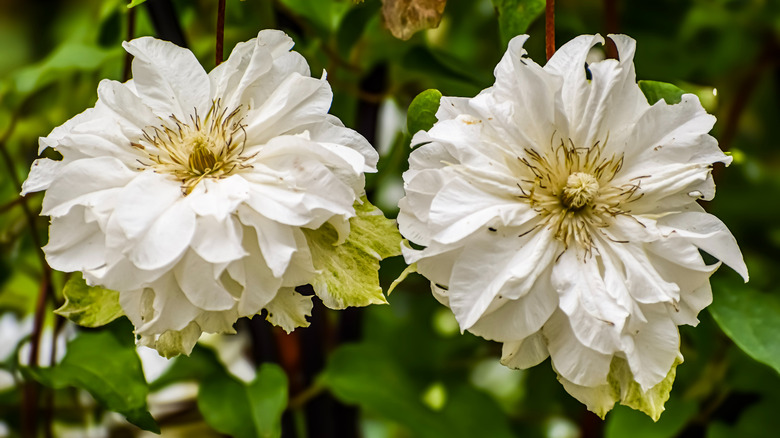
Is there anything more stunning than a perfectly formed clematis flower? Whether you're growing a stunning variety of vining clematis or just one that grows as a shrub, you probably wait eagerly each spring for those first, almost perfect flowers to open up so that you can admire them and enjoy their delicious fragrance. But your excitement can quickly turn to dismay if you start to see your plant wilting. Those stems are quite fragile, and it doesn't take much for them to start to droop if a problem arises. Wilting in clematis can be caused by not enough or too much water, rough handling, or a fungal disease known as clematis wilt.
Clematis has quite a deep root system, so during extended periods of dry weather, the lack of moisture may cause the plant to start drooping. You'll find this quite evident in the stems that are producing the flower buds. You can easily remedy this by giving your plant a nice, deep watering, particularly at the root level. Try to do this in the morning and avoid getting the leaves wet as this can lead to fungal disease. Of course, you want to ensure that you don't overwater either, as constantly soggy soil will also encourage a fungus to take hold. It does help to check the soil moisture first. It should be damp down to around 6 inches. If you don't know how to check this, this might be one of those times when you really need a moisture meter with a long probe, like this Hathdia soil moisture hygrometer, which will help.
Preventing and dealing with clematis wilt issues
As is the case with most plant diseases, prevention is always the recommended course of action. To help keep your clematis disease-free, make sure you handle it gently and carefully secure the climbing stems to a trellis or climbing structure of your choice. Remember that the stems are quite delicate and prone to breaking, so securing them will help to keep them intact. You also want to ensure that you're providing your clematis with its prime cultural needs, like enough water and the right amount of fertilizer during its active growing season. Plus, it's recommended that you keep the roots well-mulched, both to conserve moisture and to keep the soil a little cooler. And, of course, you'll need to know exactly how and when to prune your clematis for optimum healthy growth.
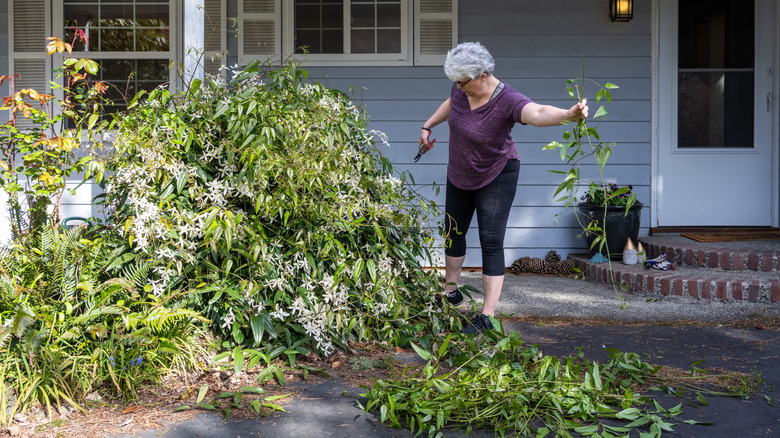
If your plant is already infected, you immediately want to cut away the infected foliage and stems and dispose of them. This will stop the disease from spreading. Don't be concerned if this means that you have cut your clematis right back to ground level because the roots should initiate new, healthy growth before too long. It's important to remember that this disease tends to affect younger plants and often those that have the largest flowers. You may find that after a few years of cutting back, your clematis will never be affected again. As a last resort, you can apply a fungicide drench to the soil as a way to get rid of any fungal spores that are hiding there.