

Effortlessly Grow This Award-Winning Flower In Pots For Porch Beauty
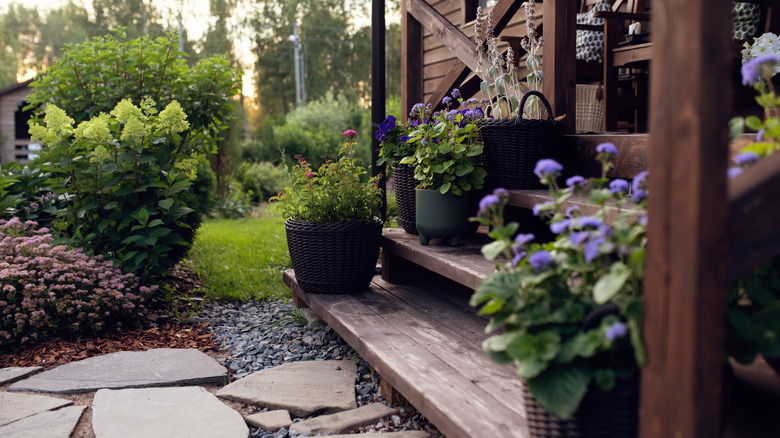
When you want to add some color, beauty, and interest to your porch, growing gorgeous flowers in pots is one of the best ways to do this. It's even better if you can find unusual plants that are also easy to grow. Such is the case with the globe thistle (Echinops ritro), which has not only won the Royal Horticultural Society's Award of Garden Merit in 2024, but is also perfect for growing in containers, and has the most stunning blue-purple, globe-shaped flowers.
As eye-catching statement blooms, these round thistle-like heads are actually made up of a mass of tiny blue flowers that are particularly attractive to bees and butterflies, making them even more valuable in your garden. Even the foliage is quite attractive with dark green leaves that have jagged edges and are prickly to the touch. That's probably one of the reasons that deer and rabbits won't usually go near globe thistle, and why this plant can boost bees while keeping deer out of the garden. As perennials, globe thistles will thrive in USDA hardiness zones 2 through 8, making them a valuable addition for gardeners in many states.
How to grow globe thistle in pots on your porch
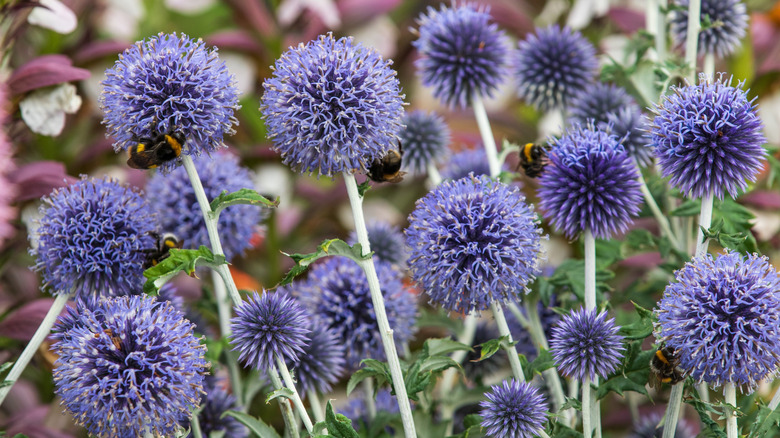
As long as your porch gets plenty of sunlight, globe thistle will happily grow and flower in a beautiful pot. The plant can reach a height of up to 4 feet, so you'll want to select a container that's large enough to support this type of growth. Make sure it has plenty of drainage holes as this species does appreciate excellent drainage, especially during the colder weather. For that reason, you also want to use a quality potting mix that's not too high in nutrients to fill your pot with.
One of the easiest ways to start growing this plant is by seed, but you should be able to find young plants at your local nursery or garden center. Once planted and placed on your porch, keep your young plant watered, ensuring the excess can drain away freely. You should be rewarded with those gorgeous blue flowers from mid-summer to early fall. You can grow this beautiful, blue-blooming flower for unique bouquets and dried flower arrangements, too. The blooms will retain their color if you cut them just before the small, individual flowers are fully open. If you're deadheading during flowering, cut each stem right back to the foliage at the base. When the blooming season comes to a close, refrain from cutting back the plant until spring arrives again. If possible, move the planters slightly away from your porch because leaving the seed heads in place will provide winter feed for the birds in your garden.