

Extra Dirty Wood Floor? Look To Your Liquor Cabinet For A Cleaning Hack
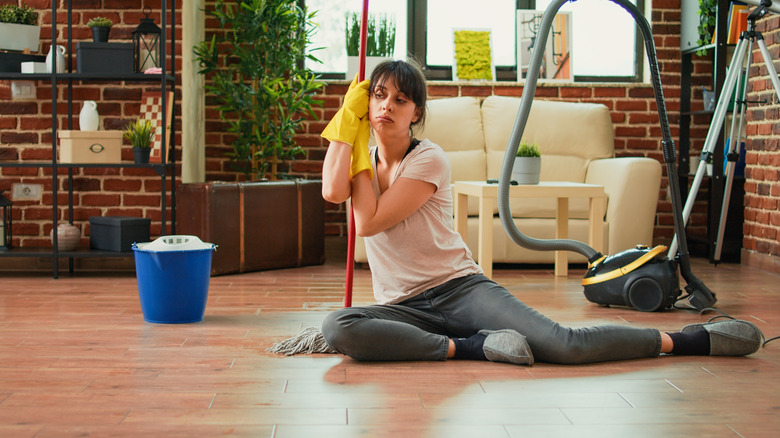
When it comes to grimy wood floors, sweeping and mopping don't always cut it. Entryways get scuffed by shoes, kitchen floors collect greasy footprints, and even dining areas can end up with a few sticky patches after a spilled drink or two. Even after a good cleaning, all of this buildup can stick around and leave your floors looking dull. If you feel like your floors may not be at their prime, there's good news: You may well already have the perfect solution on hand. Clear alcohol like vodka can work wonders on tough residue, loosening it significantly so it can be wiped up with ease.
Alcohol is an effective cleaner because it acts as a solvent. This allows it to break down oils, grease, adhesives, and other sticky residues that water can't break through (which is one potential reason why floors still look dirty after mopping). While cleaning with liquor isn't meant to replace routine sweeping and mopping, it can be surprisingly helpful when dealing with the occasional stubborn spot.
Why vodka works to clean your floors
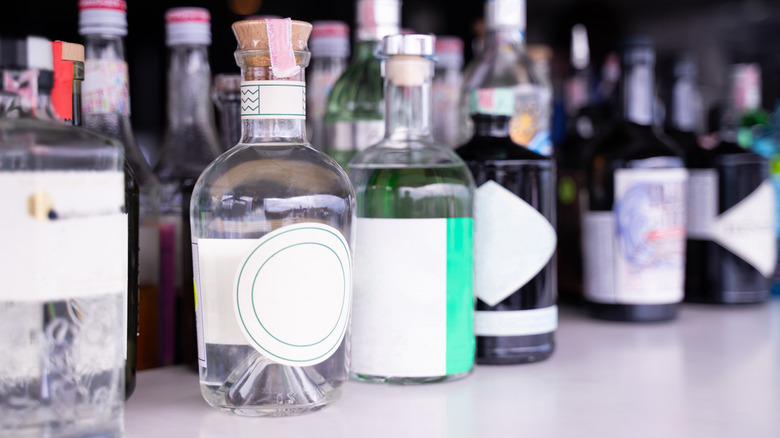
Most floor cleaning routines and products rely on water combined with mild detergents. That combination works great for lifting everyday dust and dirt, but it won't have much of an impact on any substance that repels water, namely oils. Water molecules literally can't stick to grease molecules — a tough reality since grease is such a common mess factor. When you use a mop on oily messes or other residues that water molecules can't bond to, it may look like they're being lifted away, but the water is just spreading it around, especially if the water is warm.
Vodka is an alcohol that'll cut through grease and its effect on residue all comes down to science. It contains ethanol which is classified as a solvent. This explains why ethanol is a main ingredient in many commercial degreasers and disinfectants. Even better, vodka is comprised mostly of ethanol and water, with very few allergens compared to darker liquors, which allows it to break down residue and evaporate extremely fast.
Vodka can also offer benefits that go beyond traditional cleaners in some respects. Some traditional hardwood cleaners rely on surfactants or added fragrances that leave streaks or a hazy film when used too heavily, while vodka leaves virtually no trace. Traditional cleaners also introduce more chemicals to your floor, and contain more allergens.
How to clean wood floors with vodka
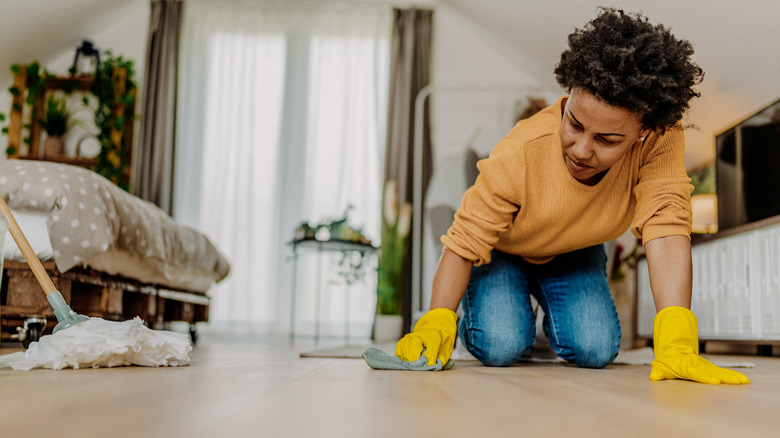
All this cleaning hack requires is a small amount of alcohol and a cloth. Rather than pouring vodka directly onto the floor, it's best to lightly dampen the cloth, since this adds more control and prevents over-wetting the surface of the floor and wasting product. The stained area can be rubbed gently with the alcohol until the residue begins to loosen, or the alcohol can sit on top of the residue for a few minutes to break down the oil while rubbing is saved until the end. A quick pass with a clean cloth afterward removes any remaining particles.
There are a few precautions to keep in mind before getting to work. Ethanol can dissolve and remove some types of paint, so it may be best to avoid using vodka on painted floors due to its high concentration of the chemical. Using alcohol to clean also shouldn't apply to vodka beverages with a higher sugar content, since sugar can leave a sticky residue behind. Even when using vodka, testing the method in an inconspicuous spot is a good idea before treating a stain to ensure there won't be any reaction. If this trick is a fit for you, save yourself a trip to the store and tackle grimy floors with this clever use for vodka around the house.