

Attract Hummingbirds To Your Yard With A Nearly Maintenance-Free Flower
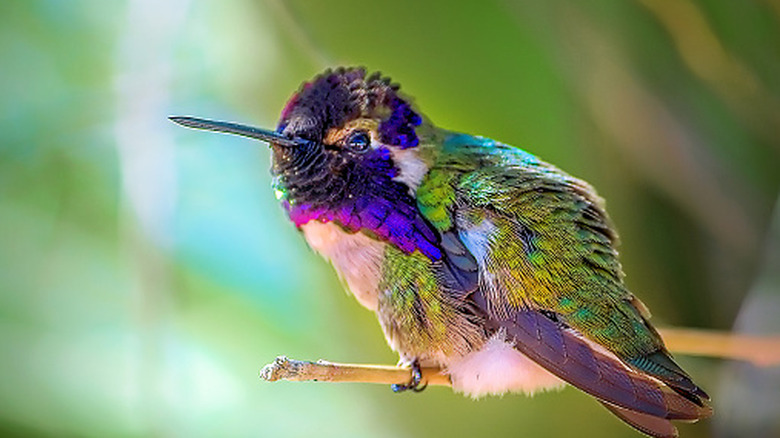
There's only one thing that's better than starting a pollinator garden to attract more hummingbirds: doing so without the hassle of high-maintenance, finicky plants that even expert gardeners struggle with. Gardening has a variety of mental health benefits, but if you're constantly stressing over care specifics, you may not be able to bask in the relaxation this hobby offers. If you want to create a more hospitable environment for hummingbirds without the hassle, consider this flower that's so easy to grow, it's nearly maintenance-free.
Also known as purple sage or silverleaf, Texas sage (Leucophyllum frutescens) is an evergreen shrub native to Texas and Mexico. Within its native range, it takes on the harsh challenges of a desert environment, so it easily tolerates drought and rocky soil. Paired with its lack of need for fertilizer or pest control, this plant is nearly maintenance-free, making it a perfect choice for gardeners who want to attract hummingbirds (and other pollinators like butterflies and bees) without following a strict garden care routine. There are several cultivars of Texas sage with magenta or white tubular flowers, all of which bloom in the summer and fall and are popular with hummingbirds. There's also a dwarf variety, 'Compacta', which could be perfect for creating a low-maintenance but hummingbird-friendly container garden.
As hands-off as Texas sage is, it isn't entirely hands-free. Choosing the right spot for this flower goes a long way, especially for drawing more hummingbirds to your yard and garden, as well as knowing the basics of its day-to-day care.
How to grow Texas sage in a hummingbird garden
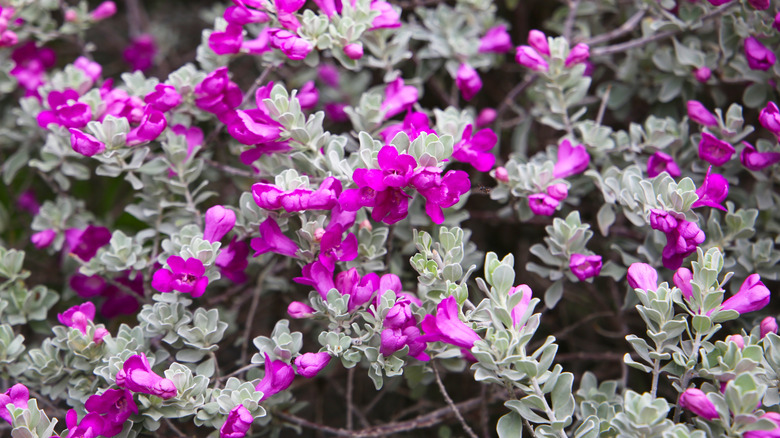
Once you establish Texas sage in your yard, whether that's in a container, as a privacy hedge, or as a statement piece elsewhere, it does well on its own. However, before this plant can become an established part of your garden, you'll need to pick the right planting location. Texas sage is winter-hardy in USDA Hardiness Zones 8 through 11. Additionally, one unique feature is that its blooms occur sporadically, specifically before or after rainfall, when humidity is highest. This has also earned it the common name of barometer bush. So, while the plant can thrive throughout its range, drier regions may not be able to enjoy those hummingbird-friendly flowers as often.
Like with many flowering plants, Texas sage grows in either full sun or partial shade. As a result, you're not limited to just that south-facing, sunny spot in your yard. With that being said, sunlight plays a larger role than just keeping your plant alive. Instead, it also dictates the prolificity of its blooms, with full sun maximizing flower production.
When it comes to watering, the Texas sage is one of the most durable, heat-tolerant plants to grow in Texas and beyond, and it holds up well to dry conditions. Too much water can even be detrimental, so ensure that the soil dries out before you water it again. Once established, you may not need to water your Texas sage at all, as it can survive with natural rainfall alone without any supplemental moisture.