

Know These 11 Downsides Before Growing A ZZ Plant
We may receive a commission on purchases made from links.
The ZZ plant (Zamioculcas zamiifolia) is often called one of the easiest houseplants for people to keep alive. While it's true that this is a low-maintenance houseplant that can live for years, it's still got a few quirks you should know about if you want to keep yours happy. Sadly, getting these things wrong can mean the difference between your plant living for decades or just a few weeks.
So we've rounded up 11 essential pieces of information you need to know before buying a ZZ plant so that you're aware of exactly what you're signing up for. We'll break down why these issues can make or break the longevity of your plant, and we'll give you a few tips for navigating them so that your ZZ flourishes. All that's required of you is taking the time to give them the best environment possible. Get that right, and you've got a plant that will grow with you for the long haul.
They're toxic to kids and pets
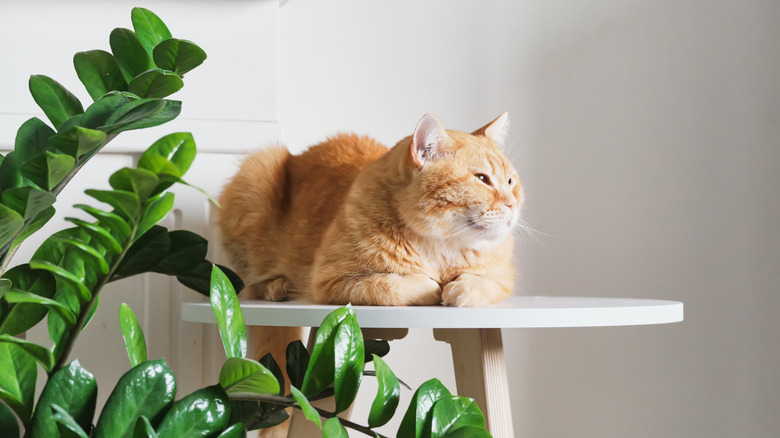
Well, okay, this one is a little more than a quirk, but it's definitely something you need to consider before bringing a ZZ plant home. ZZ plants are one of the more common houseplants that have calcium oxalate crystals in their leaves. For adult humans they can be painful if ingested, as the crystals can tear your mouth and esophagus. But for kids and pets, they're much more toxic and can cause serious pain and GI distress.
If you want to keep a ZZ plant in the house with your kiddos and pets, your best bet is to find some place high for it to live so that it's out of reach. Keep in mind that cats like to jump, so it'll have to be somewhere out of reach even for them. Make sure your plant's new spot gets adequate light and airflow, too, as tall shelves can sometimes be too high for consistent light to reach.
They're extremely slow growers
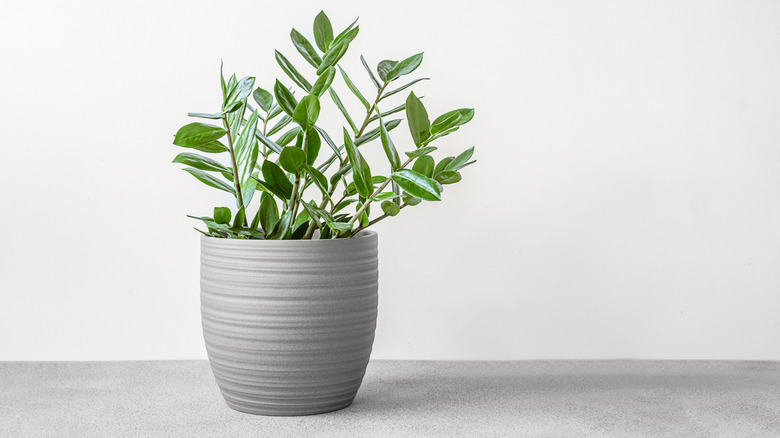
ZZ plants are one of those easy to care for indoor plants because they do best when left alone. But there's a trade-off to their go-with-the-flow nature: they're almost painfully slow to grow. You may never need to repot your ZZ plant, which on one hand will save you money. But on the other, it means you've got a plant that just sits there — sometimes for years.
Realistically, you've got two options here. One is to accept that the way your plant looks today is most likely the way it's going to look next year, give or take. If that's not something you're willing tolerate, the other option is to get a similar-looking plant with faster growth, like a jade (Crassula ovata) or umbrella (Schefflera) plant.
It's very easy to overwater them
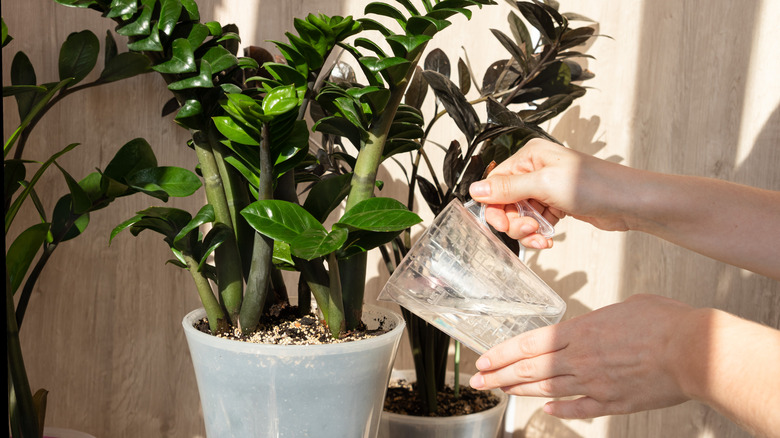
Not only does the ZZ plant have slow growth as-is, but overwatering them can stunt their growth. Sadly, it's incredibly easy to overwater this plant, especially if you have it living with tropical houseplants from humid rainforests. ZZ plants are from Africa and have thick, fleshy rhizomes and stems that store water for the plant in preparation for drought seasons in its native regions. That means it retains water especially well, and giving it an unnecessary drink could just end up causing it to rot.
Your best bet to keep your plant from drowning is to set yourself up for success. Use well-aerated potting mix so that excess water drains away from the plant. Also make sure your pots have multiple, unblocked drainage holes. Discard any water that drains out of the pot and let the soil dry out between waterings. It may seem counterintuitive, but don't worry — your plant barely needs water and is made to handle dry soil, so it can go without waterings much longer than its tropical counterparts.
They'll break out of their pots if you're not paying attention
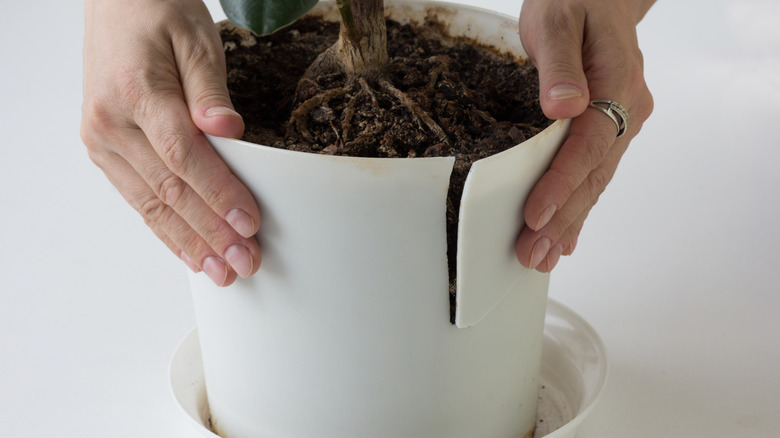
Since your ZZ plant is a slow grower, you may have thought you could put it in whatever dollar store plastic pot you can get your hands. But then you hear a crack and suddenly, your ZZ plant is breaking loose like an Audrey II from "Little Shop of Horrors." Its thanks to those thick stems that your plant can make a mess out of thin or too-small pots.
First, take this as a good sign because your plant is happy enough that it can spend precious resources stretching out to make room for new growth. Then repot it ASAP in a pot that's a few inches wider than the root ball and also made of thick materials, like metal or more robust plastic. Terra cotta is also an option, just know that they can break, too, if you're not careful.
They can't handle too much light...
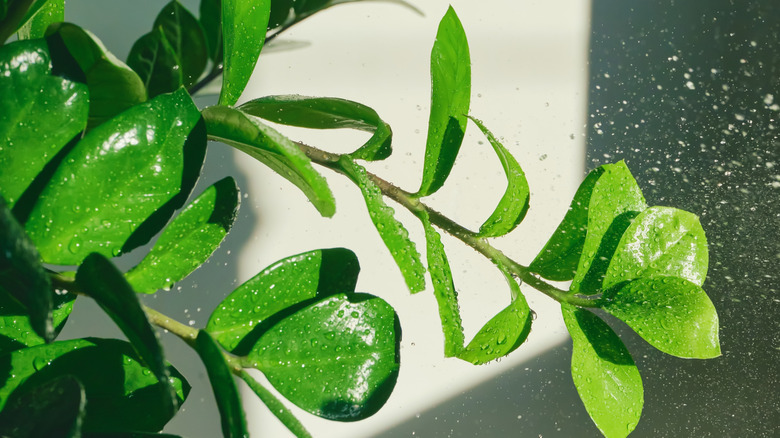
Most houseplants love bright, indirect light, but not the ZZ plant. It's very persnickety with its light levels and can develop brown or scalded leaves if it's placed somewhere too bright. For some plant parents, this isn't a problem. But for those who have multiple tropical plants in their collection, caring for a ZZ plant can be tougher than they think because of their light requirements.
If you're planning to keep your ZZ plant outside then it needs to be somewhere with partial shade, particularly with protection from the high noon sun. If you're keeping a ZZ plant indoors, you may want to put it in a corner with a light that has a timer and set it for 6 to 8 hours. An option like the Kullsinss Full Spectrum Grow Light would be a great choice because its light settings are adjustable, and it has a stake so can go right into the ZZ's pot. Also, pay attention to the way the light changes with your seasons — a room may be fine in the winter, but can turn into a summer oven for plants like this.
...But they also won't thrive in the dark
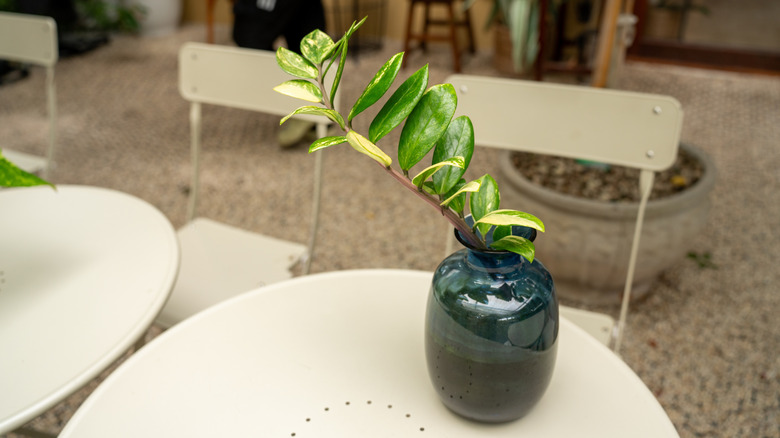
The ZZ is infamous for being able to live in low light rooms, but one of the biggest mistakes people make with their ZZ plant is putting it somewhere too dark. It still needs light to photosynthesize, and keeping it away from the sun completely can stunt its growth or make it weak and yellow.
If you notice your ZZ plant has begun to lean to one side, that means it's reaching for the light and could probably use more of it. Yellowing leaves or droopy stems are also signs that it's not receiving enough light. You can either move it to a better spot or use a grow light with a timer to give it the light it needs. Also, keep in mind that lighting changes with the seasons so you may need to supplement your ZZ plant with a grow light when the sun is only out for a few hours a day.
They're picky about fertilizers
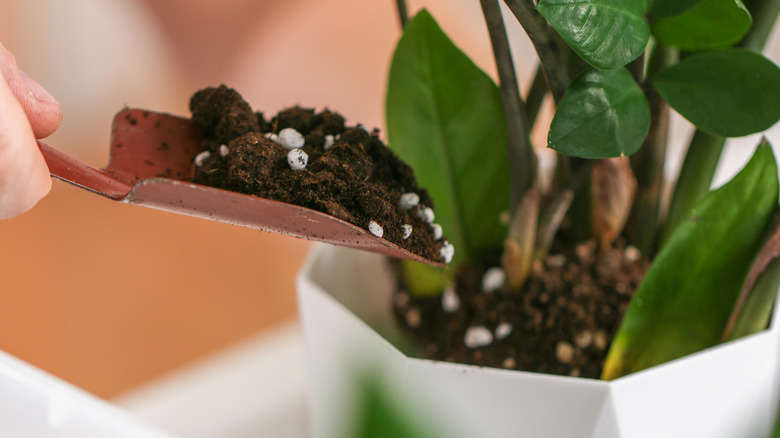
If you've got multiple plants to care for, then you most likely have a routine set up where you water and fertilize them all at the same time. If that's the case, save the fertilizer for your other plants as the ZZ plant would rather do without. It's incredibly finicky about getting fertilized, and it won't grow any faster, so you're just wasting fertilizer and money. Remember, you're on its timeline and not the other way around.
Your ZZ plant will only need a hit of nutrients once or twice a calendar year. Seriously, do not try to boost its growth by overfeeding it. Not only will you stunt its already-slow growth, but you may end up causing damage to its roots, which will make it even harder for your plant to thrive.
They need high humidity
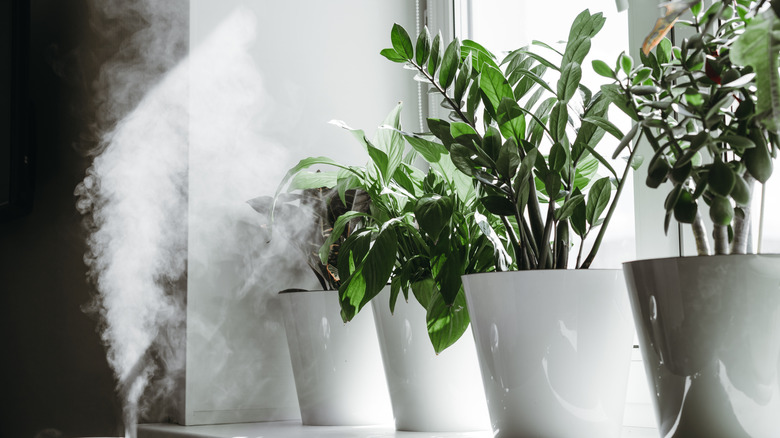
Despite keeping their own water supply in their rhizomes, stems, and leaves, ZZ plants cannot thrive in dry climates. They need seriously high levels of humidity – around 90% — in order to keep browning leaf tips at bay. But having humidity that high in your home can lead to mold growth, so it's not something you can just wing; you'll need a plan for keeping your ZZ plant happy and your home safe.
Your best bet is to meet in the middle by putting it in an enclosed space, like a plant cabinet. Another place you could keep your humidity loving houseplant is in the bathroom, but you might find that your humidity levels just aren't consistent enough in there to make it happy. There's also the option of using a cloche or even just covering it with a large, clear freezer bag. The enclosed spaces will require airflow to keep mold away, so you'll want to add a fan to your plant cabinet, or open the cloche or freezer bag at least once a week. If you don't want to keep your ZZ plant covered, consider placing a humidifier near by to keep the air around it nice and moist.
They rarely flower indoors
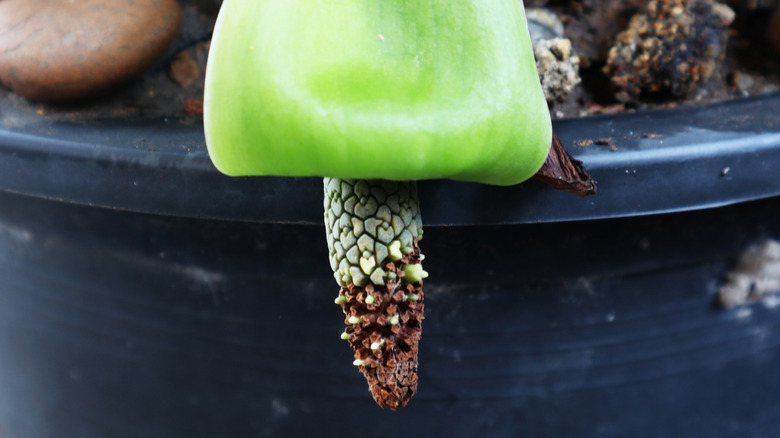
ZZ plants don't have typical flowers; they grow a spathe and spadix like peace lilies (Spathiphyllum). However, you probably won't need to worry about what it looks like because ZZ plants almost never flower indoors. You may be able to see a small spadix if it lives outside, but even this is rare. In fact, getting a ZZ plant to flower is so hard we weren't even sure we could find a picture of one.
If you want a flowering plant, ZZ's just aren't going to be for you. A peace lily is probably a better option, and it's much more tolerant of less-than-ideal conditions. But if you're not into the spadix and spathe look, opt for a Tradescantia plant, instead. They come in a range of colors, are easy to grow, and usually flower at least once a year indoors.
They can be hard to propagate
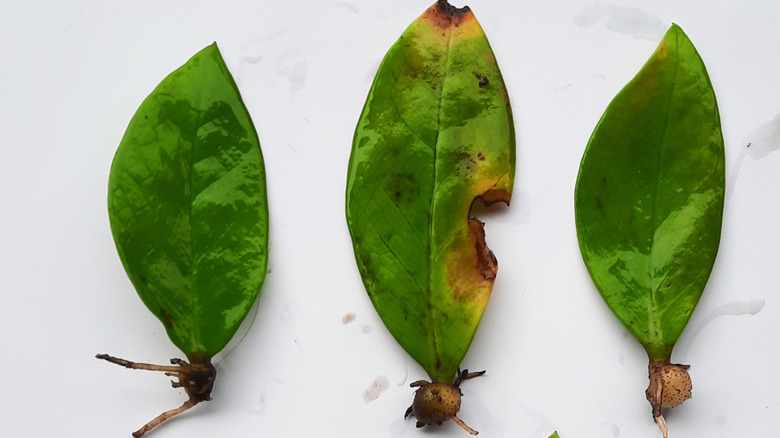
We love propagating plants because it's like getting more plants for free. And while a ZZ plant can be propagated, it's not easy. In fact, it can take months for roots to develop. In our experience, many indoor houseplants can be propagated within a few weeks. But keeping a perfectly consistent environment settings for a ZZ plant cutting to thrive is a challenge, even for the most dedicated of plant parents.
If you want to go for it, you can try propagating a ZZ plant by division or cuttings. To divide your ZZ plant, you'll need to remove it from its pot and saw the root ball in half, making sure each half has stems and leaves. For cuttings, you'll need an intact leaf with a stem. Let it callus over after cutting, then place it upright in well-draining potting soil. Keep an eye out for rot, and only water it when the soil feels dry.
ZZ plants can be quite pricey
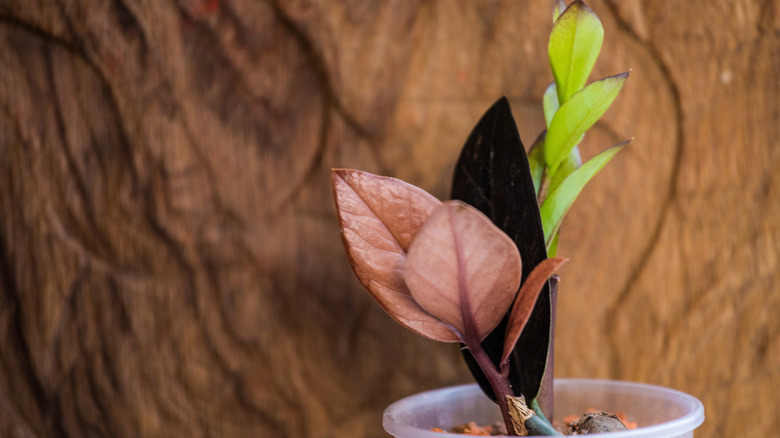
You'd think a slow-growing, low-maintenance(ish) plant would be relatively cheap. But there's been a ZZ plant boom the last few years, so mature plants can cost a pretty penny. Plus, now there are variegated ZZs, new colors, and more. The more we tinker with its tissues to make new varieties, the higher the price goes.
If you want to keep your plant budget low, stick with a starter plant or cutting. These typically run around $10 on Etsy and can be a good way to dip your toes into seeing if you get along with ZZ plants. Or if you think a ZZ may not be for you, opt for a cheaper houseplant that's commonly found in big box and grocery stores, like Monstera deliciosa. Thanks to tissue culture production, you may even be able to find a variegated monstera variety that's cheaper than a mature ZZ.