

13 Outdated Design Trends That Are Scaring Buyers Away From Your Home
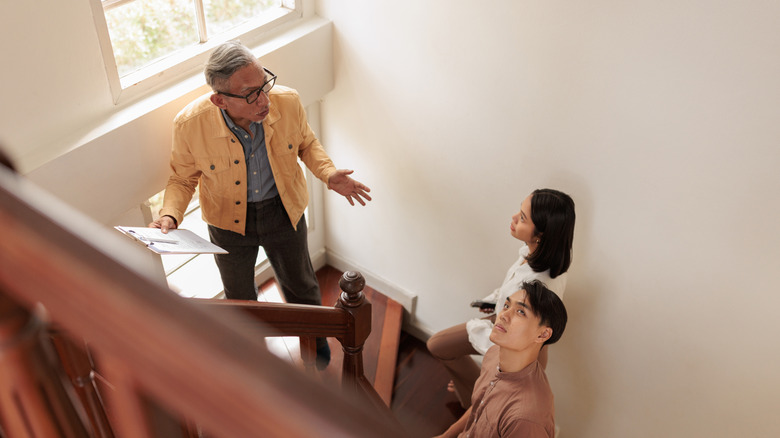
Interior design trends come and go — and while they can be a great source of inspiration, there are a few outdated ones you might want to steer clear of if you're getting ready to sell your home. Of course, your home should ideally serve as a reflection of the style and trends you like best. But if you want to appeal to potential buyers, then you'll need to start with a clean, updated slate — and consider ditching these outdated home trends.
We've rounded up 13 interior trends that used to be all the rage but just aren't impressing buyers anymore. As an added bonus, we've also shared advice on what you should swap these outdated designs for instead. Wave goodbye to wall-to-wall carpet and millennial gray color palettes. Here's what prospective buyers are actually looking for in today's housing market.
Wall-to-wall carpets are out of date
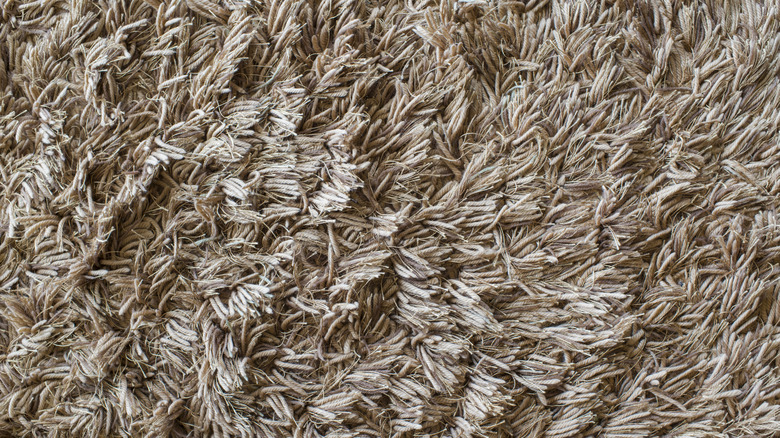
Walk into a modern home, and you might find a distinct lack of wall-to-wall carpet. Gone are the days when everyone's living rooms and dining rooms were covered in carpet. Instead, carpet is primarily reserved for bedrooms, if there is any at all. Flooring expert Yuri Grakovski (via Realtor.com) says that hardwood is the more attractive flooring option for contemporary buyers, although even luxury vinyl planks take precedence over carpet — especially in terms of durability.
The anti-carpet movement is often more about maintenance than it is aesthetics. There's no denying that carpet can be harder to keep up than hardwood. It stains, can be difficult to fully clean with a vacuum, and traps allergens within its fibers. Buyers looking for move-in-ready houses may not want to deal with ripping up carpet and restoring the floors underneath; they'd much prefer a home that primarily has hardwood floors.
However, wall-to-wall carpet can still be a practical option for certain spaces and households. If you want to install wall-to-wall carpet in a way that won't feel outdated, consider choosing the carpet options buyers like best. Stick to neutral colors, and keep your carpet free of patterns. The fiber you choose should be short (say goodbye to the shag carpet) and soft to the touch. The most important part is that the carpet in your home is clean and looks new. If you have pilling, bubbles, gaps, or stains, it's time to consider a replacement.
Bold-colored walls could turn buyers away
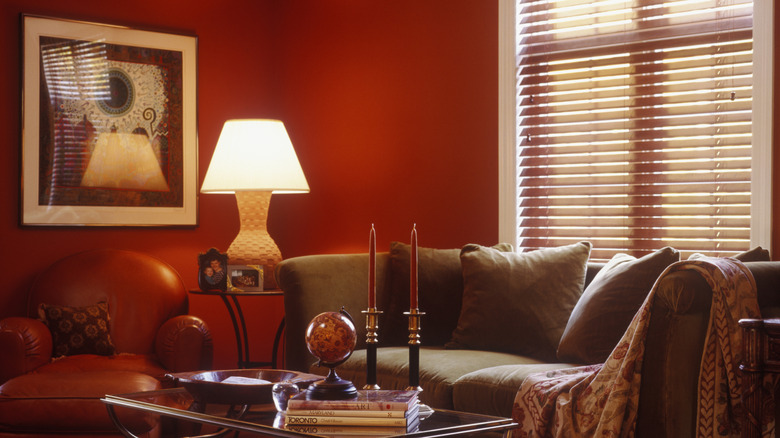
It's true that bold-toned colors aren't completely out of fashion these days. After all, moody bathrooms and maximalist decor still hold a place in many hearts within the world of interior design. Your home can still look stylish and trendy with bold colors, but the biggest issue is that not all buyers will appreciate your bright walls. According to a Fixr.com survey of design experts and home stagers, bold colors — especially red and lime green — can scare buyers away from your home. The issue isn't that most buyers are willing to repaint; it's that they can't easily imagine themselves in your space when it isn't painted neutrally.
The key to selling your home is allowing buyers to develop an emotional attachment to it. You want them to be able to picture their lives in your home, and imagine how they'd style it once they move in. Extremely bold colors can make it difficult for buyers to look past the paint. Neutral colors, on the other hand, allow them to see the space for what it is.
Overall, paint trends are moving more towards earth-toned neutrals. While bold colors are still popular in some cases, they're not the paint color of choice that most of your buyers are going to lean into. It's better to embrace softer, neutral, or earth-toned spaces if you want to decrease the odds of buyers finding your home out of date.
Tiled countertops are out (and not worth the upkeep)
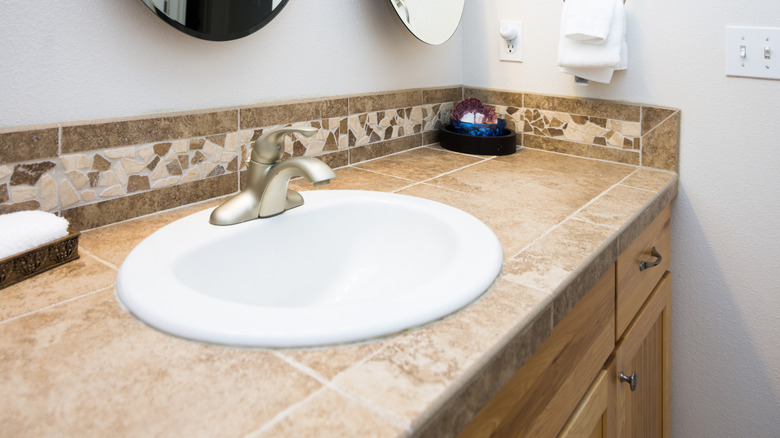
The tile countertop trend was a big hit in the '80s and has lost a lot of steam since then. Tiled bathroom countertops saw a brief reemergence in more recent years. But it's still a decidedly retro look that can easily date a space. And an even bigger issue that could influence buyers is the fact that tile countertops can be difficult to keep clean.
To be specific, grout is all too easy to stain. It requires consistent cleaning and resealing. In your shower or on your floor, that's one thing — but tiny bathroom counter tiles will suffer the most from spills, pooled water, and staining. Additionally, you'll likely have a hard time finding a stable spot to put your toothbrush or countertop organizer.
Currently, the spa bathroom still reigns supreme. Smooth, sophisticated slab countertops are a better option if you want to attract buyers and increase your home value. Right now, quartz and marble counters are especially popular. Replacing your tile countertop becomes even more important if your grout looks old or if you have any issues with staining or cracked tiles.
Granite countertops are dating your kitchen
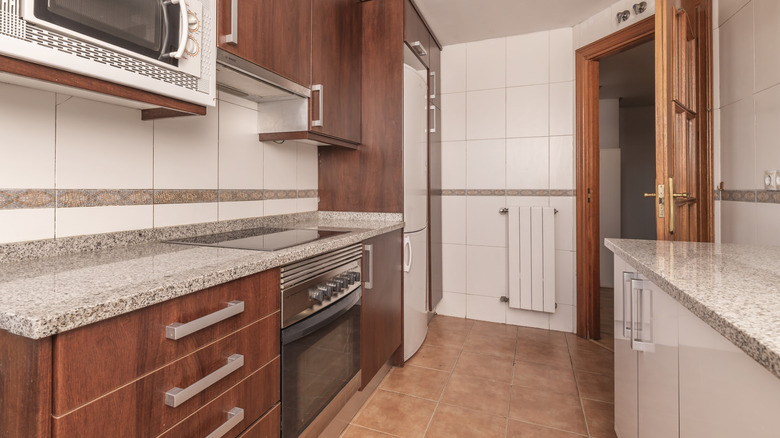
Granite countertops were the go-to for many years, but in 2026, buyers think they're outdated. Quartz, marble, or soapstone countertops are much preferred — and buyers will likely have a better reaction to one of those materials than granite. Interior designer Lauren Caron told House Beautiful that many people are a bit scarred from "the late 90s to early 2000s where every kitchen had shiny, busy granite countertops."
There are all kinds of granite, and some feel more out of style than others. For instance, brown granite is an outdated countertop color, and granite with very speckled patterns can read like an instant timestamp. Dark, neutral granite, on the other hand, could still blend into a kitchen well, serving as a hardwearing, neutral backdrop.
And if you really want to add a bonus to your house for prospective buyers, you may want to consider changing out your countertops. Quartz is generally easier to care for than granite, which adds another point in its favor. Engineered quartz does not need to be sealed, whereas granite countertops require sealing (and resealing). Quartz is stain-resistant, but granite is more prone to staining.
Millennial gray is officially outdated
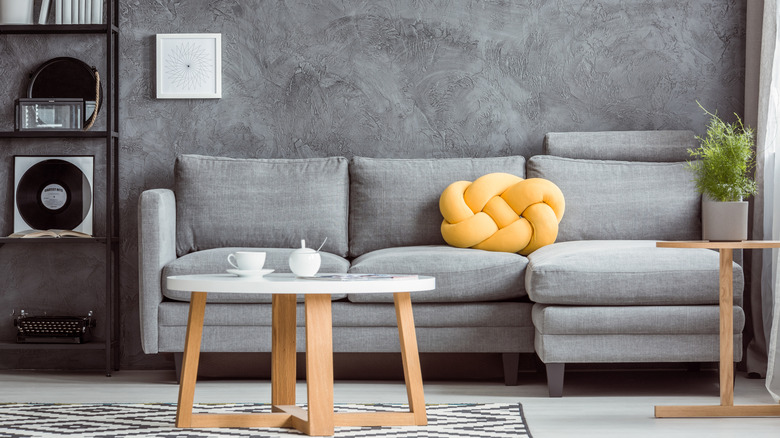
Gray's heyday seems to be officially over. The millennial gray home decor trend was aptly named after its popularity with millennials, particularly in the 2010s. While it used to be stylish to drench your entire home in neutral, cool-toned gray shades, many people are tired of it — and that could include your potential home buyers.
Cool gray, in particular, just doesn't fit with that earthy, warm-toned aesthetic that designers and buyers alike are seeking. Unfortunately, it can also have the added effect of making your space look smaller and darker — and it's just another one of those pesky paint colors that make it more challenging for buyers to truly imagine themselves living in the space. Soft and romantic color palettes are more appealing to buyers, so stay far away from anything overly gray and drab.
Specifically, the millennial gray aesthetic is about cool-toned gray colors. If you want to keep your gray paint around while you sell your home, then a warm-toned gray should remain a solid choice. Opt for a lighter shade to make your space feel more open and welcoming.
Buyers are beginning to shift away from open floor plans
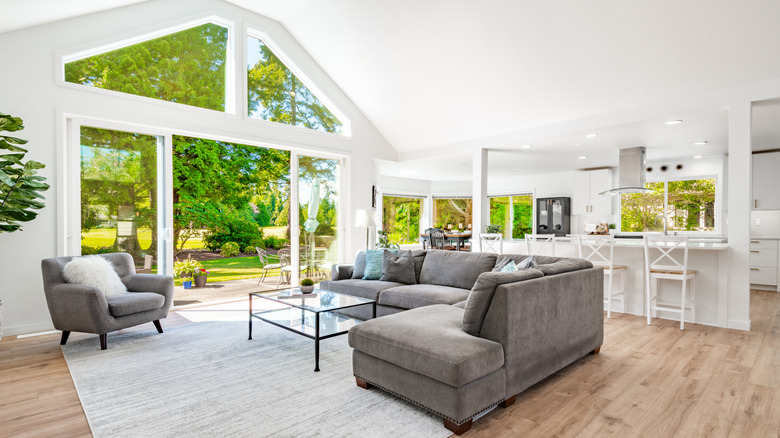
In 2023, Rocket Mortgage conducted a survey to see if homebuyers' preferences had changed when it came to open floor plans. Surprisingly, buyers were split almost down the middle — possibly the first time the layout has truly started falling out of fashion since it was popularized in the '50s. For decades, the open floor plan has been seen as the ideal option for homes, but it's clear that's no longer the case.
The main reason why buyers may be uninterested in your open floor plan is that they want more privacy. Closed walls mean homeowners can do more with a single room — a dining room could be turned into an office, while a living room could double up as a space to exercise without disturbing the rest of the house. Some hosts may also prefer having a closed-off kitchen that guests can't see into.
So, do you need to add walls to your house just to sell it? The answer is no — or at least not yet. However, the trend towards privacy is extremely important for you to keep an eye on, as nearly 50% of buyers are looking for closed floor plans.
Say goodbye to stark white walls in 2026
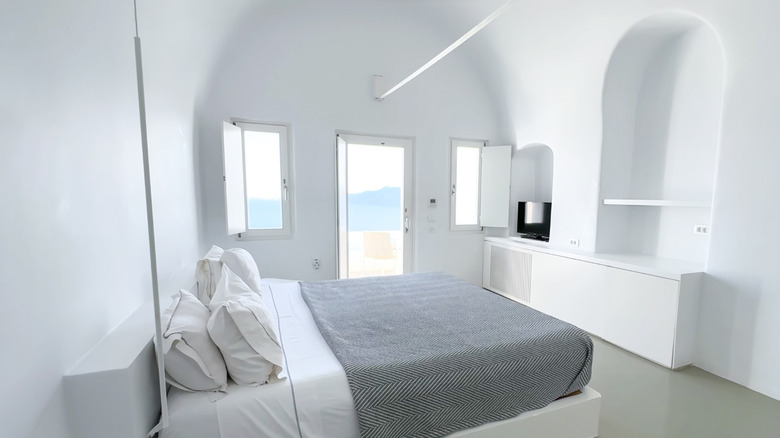
For a long time, blank white walls have reigned supreme in the housing market. After all, white walls are easy to paint over for buyers who want to change things up when they move in. They're also a total blank slate. Unfortunately, much like cool-toned gray, stark white walls are officially outdated and may turn buyers away from your space.
But wait — what about the fact that painting your home in neutral colors is supposed to be a good thing? While you do want to give your buyers a neutral space to look at, you don't want it to look sterile. A stark, all-white color palette may make your space feel uninviting.
It can be challenging to walk the line between a blank slate and a space that feels personal enough to feel welcoming. If in doubt, opt for a simple shade of cream or a warm white. This will keep your home feeling neutral, but it will also add a cozy and warm color to your walls that invites buyers inside. You could also try adding soft-colored accents. Gentle earth tones are a good fit for those who want to add a unique aspect to their homes before putting them on the market.
The love for formal dining rooms is vanishing
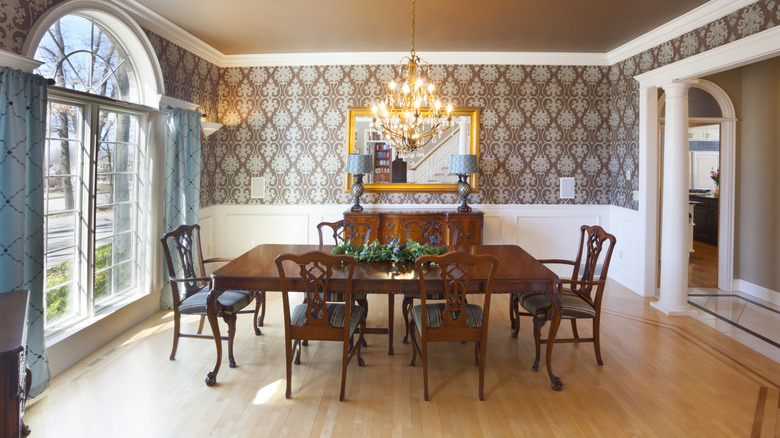
Along with the slow decline of the open floor plan comes the disappearance of formal dining rooms. Buyers want to focus on purchasing homes that are functional enough for daily use. For many households, the formal dining room is wasted space that's only used on special occasions. They would rather have this area become a gathering space, working space, craft room, or even just a flexible space with which they can do as they please.
The dining room likely won't disappear forever. If you have a formal dining room in your home, you can always consider styling it differently before you put your home on the market. Try marketing it as a flex room instead of a formal dining space. Buyers can then imagine exactly how they want to use it, whether that's as a dining area or something else entirely. Lastly, dressing your dining room down to feel a bit more casual can make the space feel trendier and more welcoming, if you decide to keep your dining table and chairs around.
Maximalism no longer appeals to buyers
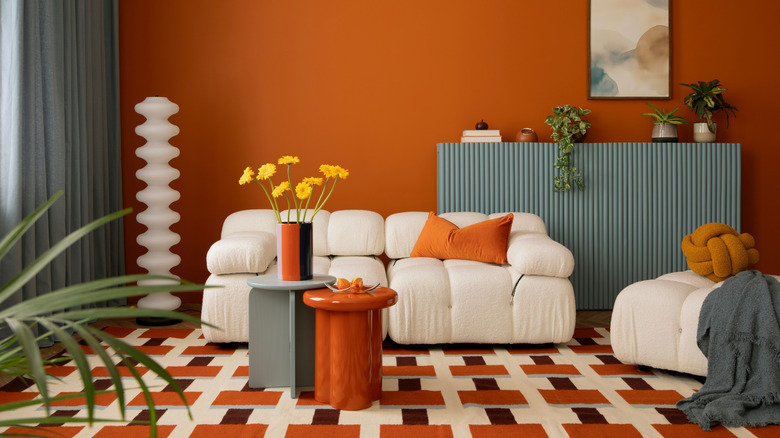
Maximalism has been having a major comeback – so don't worry, anti-minimalists, it's not going anywhere just yet. Unless, of course, you're selling your home. In that case, the maximalist aesthetic could be a point against your house for buyers. The biggest issue, again, is the push-and-pull of how much personality buyers want to see in your home. It shouldn't be empty, but it shouldn't be full of extremely personal style choices, either. Some buyers might be dissuaded from homes that are cluttered and maximalist, because their eyes are no longer drawn to the true features of the space. As designer Jennifer Jones told Realtor.com, "In general, the goal is for buyers to notice the appealing features of the home such as the architectural details or open layout, not the existing homeowner's over-the-top design style or furnishings."
In terms of trends for 2026 — especially within the real estate world — maximalism can clash with what buyers are looking for. Soft, welcoming, and calming neutral spaces are the name of the game. You don't need to make your home a minimalist oasis, but be careful not to overwhelm your buyers, either.
Get rid of your basic dome lighting
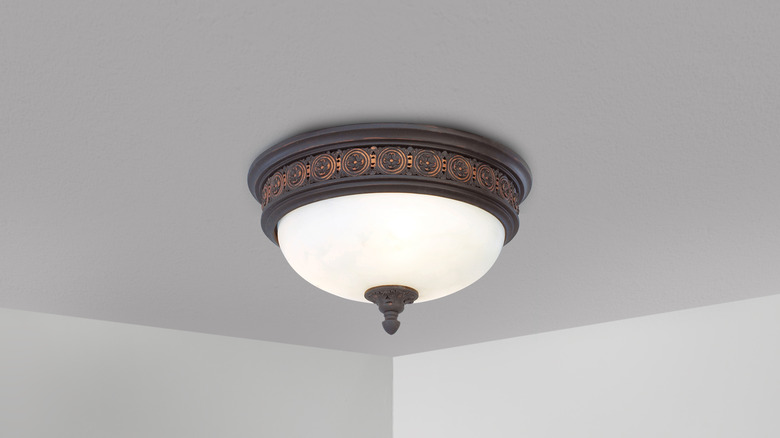
To add a more high-end feel to your home, it's time to ditch your basic dome lights — especially those infamous flush-mounted ceiling domes (you know the ones). While common, these light fixtures are tragically outdated. Achieving soft and welcoming mood lighting is never helped by an overbearing ceiling light. Dome lights in particular are notorious for flat, one-dimensional lighting.
What's likely to really impress are light fixtures that make your home feel more luxurious. Sustainable LED lights, smart lighting, and stair or shelf strip lighting are all extremely popular options that most buyers will likely love. You can also try swapping out your basic builder-grade fixture for a chandelier or pendant lamp that's a little more unique, especially over an area like a dining table or bed.
Get rid of your jacuzzi tub
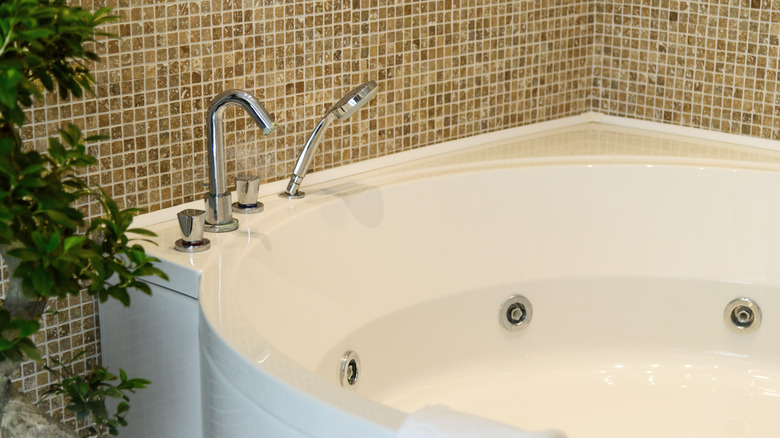
As fun as they might be, jacuzzi tubs are considered sadly outdated in 2026. A hallmark of the '90s, these tubs are just too old-fashioned to fit into the spa bathroom aesthetic. They take up a lot of space in your bathroom, often come with outdated fixtures and finishes, and can be awkwardly shaped.
Besides the outdated look of a jacuzzi tub, there's a bigger reason this bathtub might make buyers turn away from your home: It's a high-maintenance feature. Jacuzzi tubs require regular deep cleaning, even when they aren't used all that often. Additionally, buyers will have to deal with the grime and bacteria that build up in the jets over time, something that will put most people off a tub that isn't brand new.
Buyers tend to prefer sleek, modern, and spa-like bathrooms. If you're going for a luxurious look, then a freestanding tub is sure to wow viewers. A wet room or large shower might even be a better selling point than a jacuzzi tub. Otherwise, stick to a standard acrylic tub. Your realtor will thank you for it.
Busy, bold wallpaper
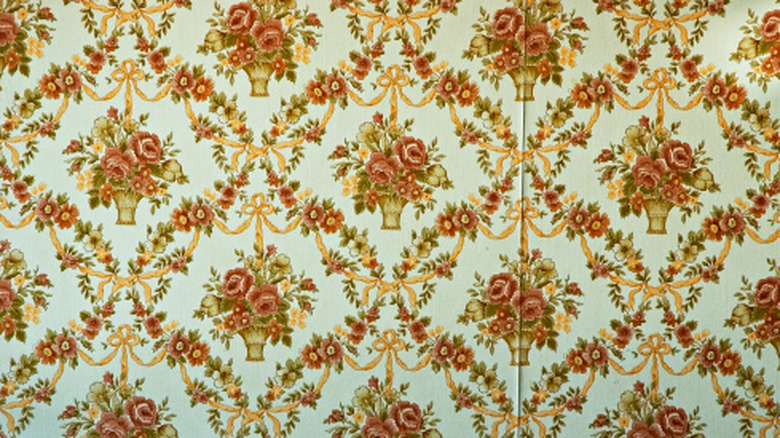
Much like the color of your interior paint, the wallpaper you choose for your home can sway buyers. While bold and busy wallpaper has been a trend over the past few years, it can be a downside for most buyers. Formerly loved patterns like geometric shapes and large prints are considered especially out of style in 2026.
If a potential buyer dislikes the wallpaper in your home, it doesn't just make it difficult for them to consider living there. They may also start to worry about how difficult it will be to replace said wallpaper. While you may be able to paint over wallpaper in some cases, that won't always do the trick. Wallpaper removal isn't a task that all buyers will want to tackle — and the chances of a buyer loving your choice of bold and busy print, especially one that's no longer trendy, are low.