

The Best Soil Mixture To Keep Your Spider Plant Happy & Healthy
We may receive a commission on purchases made from links.
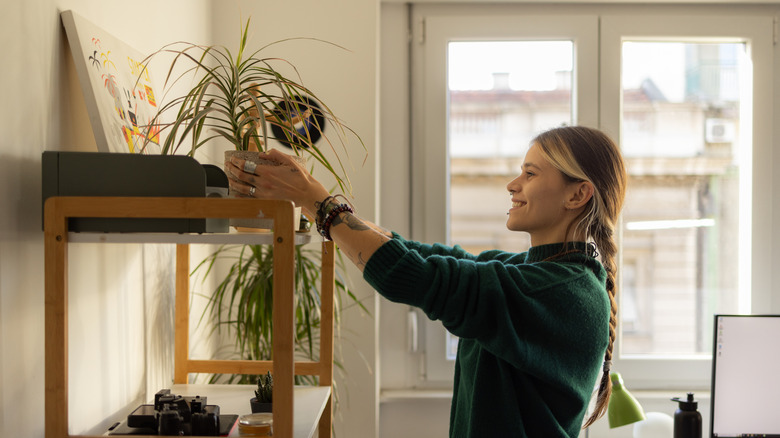
Spider plants (Chlorophytum comosum) are some of the most popular houseplants out there — and for good reason. They have gorgeous variegated leaves, can be found for a reasonable price in just about any gardening center, and are one of the easiest houseplants anyone can keep alive. In many cases, spider plants don't just tolerate neglect, they thrive on it — it's recommended to wait until their soil is dry between waterings, and over-fertilization can lead to browning leaves and fewer plantlets. These plants are more than happy to hang out on your shelf and look pretty, readily accepting a drink whenever you remember to provide one, so they're perfect for those who want some added greenery without much fuss.
With that being said, however, it's important that your spider plant has the ideal setup from the get-go. Ensuring that it has the correct sized pot, receives the right amount of sunlight, and is in a soil mixture that will provide the necessary nutrients and drainage will make it much more tolerant of any other problems that come along. Regardless of the spider plant variety you choose, it's best to place your plant in a pot with either soilless growing medium or regular potting soil. While these plants do prefer things on the drier side and need a growing medium with adequate drainage, they're not quite as drought-tolerant as a succulent, so the mix should strike a balance between being well-aerated and having the ability to hold on to a bit of moisture.
How to make your own spider plant potting mix
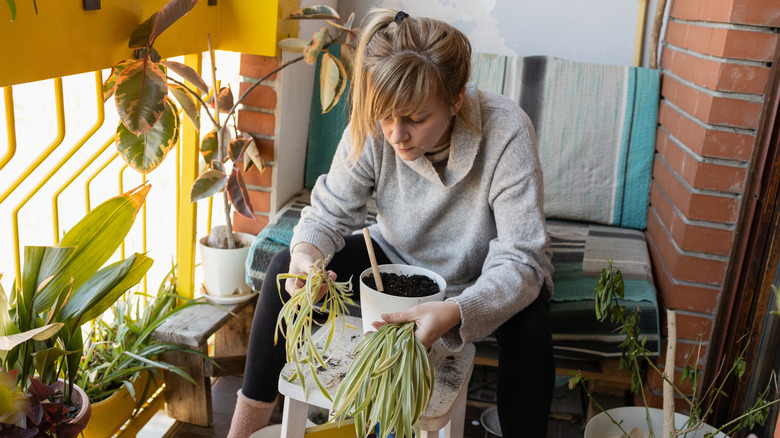
While it's perfectly acceptable to pot your spider plant using only a store-bought product like this Miracle-Gro Indoor Potting Mix, creating your own growing medium blend will give you a greater degree of control over your plant's conditions. To do so, you'll need to pick up a couple things: your potting mix of choice and either perlite or peat moss. Many people believe you shouldn't use peat moss in your garden due to the fact that it's not very sustainable to harvest. While perlite is also a resource that doesn't renew very quickly, it's plentiful and often seen as a more environmentally friendly option. Either of these materials will work to better aerate the soil and improve drainage, ensuring that your spider plants don't end up developing rot.
After you've purchased your potting soil or created your mix, it's time to get to potting. Ideally, you should do this once you notice your spider plants' roots are crowding the pot. Use a pot that's a couple inches larger than the last one (or a couple inches larger than the root ball if you're planting for the first time) and fill the bottom layer with your soil mix. Plop the plant in, fill the rest of the pot with soil, and place your spider plant somewhere it can get indirect light. If it's been a few months since you've fertilized, now's also a good time to provide your plant with some nutrients in the form of a balanced fertilizer diluted to half strength. After your spider plant stretches out its legs and settles into its pot, you should be rewarded with lush, cascading leaves and possibly even a couple of easily propagated plantlets!