

13 Things To Know Before Fertilizing Plants In The Spring
We may receive a commission on purchases made from links.
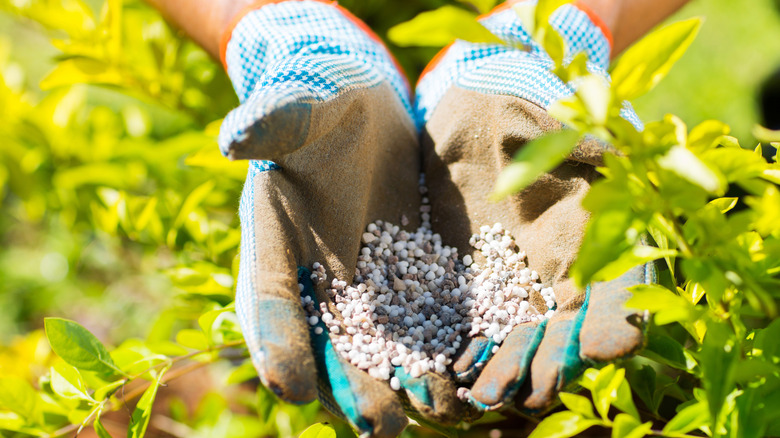
Now that the last frost date is on the horizon, it's time to start planning your fertilization strategy. Should you get a product with high nitrogen or something more balanced? Besides picking the right fertilizer, you must also know when (and when not) to apply it. Below, we break down the crucial things you need to know about fertilizing plants in the spring.
Sure, you could just wing it with whatever's on sale at your local big box store, and your plants would probably be okay for the most part. But we're not here for just okay; we're here to make our plants thrive. From what type of fertilizer to how much you'll need, these 15 strategies will help you understand the science behind why you might want to fertilize your plants and how to do it so that you stop feeling lost, and instead give your plants the nutrients they need in the easiest, safest way possible.
Spring is the best time to start a fertilizing routine for plants
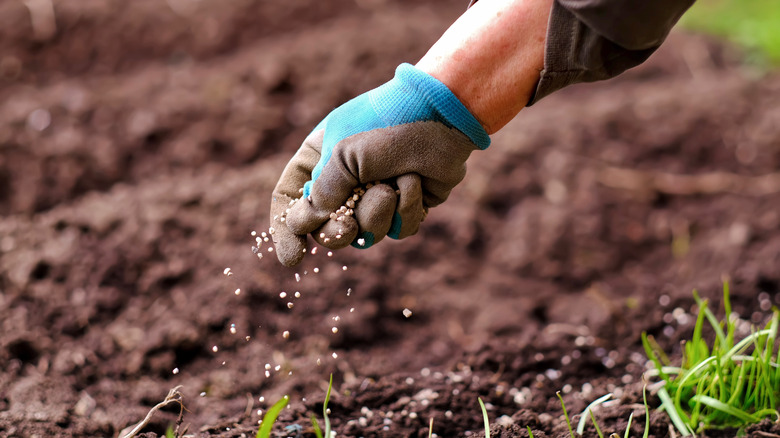
Have you ever looked at your plants in the winter and thought they could use a little boost? It can be tempting to assume some late winter feeding will help them along. But it's important you hold off fertilizing your plants until the spring because that's when they break dormancy, restart their growth spurts, and actually need the extra nutrients.
Fertilizing your plants off-season can actually do more harm than good, potentially causing root damage. In some cases, fertilizing too early can even cause trees to prematurely shoot, which then opens them up to cold injury. Your plants need some time off to rest, which is great because that means fewer garden chores for you. Once the soil temperatures get above freezing, though, that's when roots wake up and resume pushing those nutrients up the plant's stems, so they'll want some food. Remember, it's not the air temperature you're focusing on — although that's important, too — but rather the soil's.
Different soil types will need different fertilizers
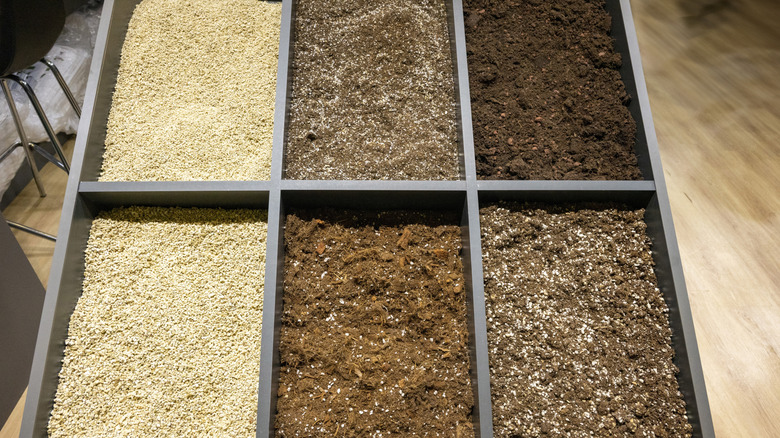
One reason all-purpose fertilizers can be problematic is that not all soil textures are created alike, so you'll need to adjust your strategy accordingly. For example, if your soil is clay-heavy, then it probably tends to hold more water, meaning fertilizer will stick around longer before leaching out. A sandy soil is more porous, so water-soluble fertilizers pass through more easily. That makes a big difference when you're infusing fertilizer in your watering can, as the same scoop volume can end up being either too much or too little.
The easiest way to tell what your soil's made up of is to get a soil test done. That can take a few weeks for results, though. If you're impatient, try using your hand to figure out your soil type. Grab a scoop of soil in your hand and feel it. Is it grainy, or does it feel moist and sort of like putty? If you close your hand to make a fist and open it, does the soil keep its shape or does it break apart? If it's loose and grainy, then it's most likely got a lot of sand content, while malleable, dense soils that clump together will have more clay. Knowing this ahead of time will help you adjust your dilution rates, preventing your fertilizer from either burning your plants' roots or having it be too weak to make a difference.
Pick a type of fertilizer that works best for your soil's temperature
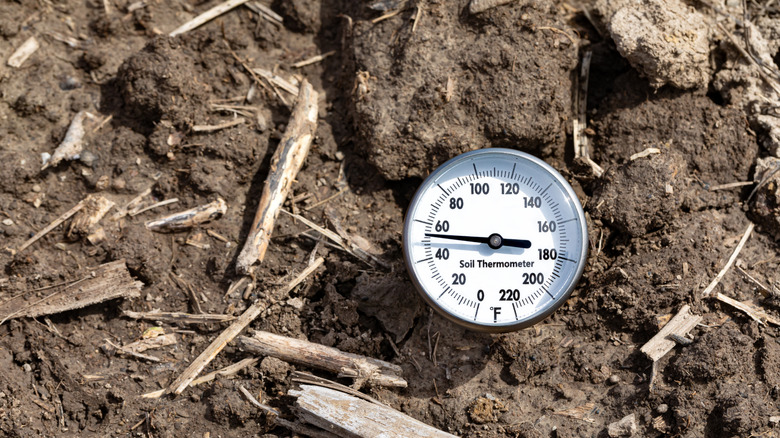
Like soil texture, soil temperatures can fluctuate and make it hard for your fertilizer to work its magic. It can get confusing deciding if you should pay attention to your last frost date versus soil temperature, so we'll just put it like this: If your soil's temperature is under 50 degrees Fahrenheit or stays frozen longer, it can be hard for granular fertilizer to break down. The longer fertilizer stays out of the plant, the more likely it is to leech off with rains or your next watering session.
You could wing it and just press your fingers into the soil to feel how cool it is. If you have some resistance and it feels cold to the touch, it's likely that the lower layers of your soil are still frozen. However, if you want to play it safe, just get a soil temperature probe, like Urban Worm Store's 5-Inch Stainless Steel Soil Thermometer. There are also fancier, digital probes that don't look quite so much like the one that gets pulled out every Thanksgiving, but the analog ones are cheap and get the job done. If your soil stays cooler longer, opt for a liquid fertilizer that is not specifically designed to be slow-release.
Understand what your plants need in a fertilizer

There are so many macro- and micronutrients that it can feel like you're back in Pre-Chem classes instead of the garden, so let's break it down. Plants need certain kinds of nutrients to grow, flower, and fruit. The three main ones you'll find on a fertilizer label, called macronutrients, are nitrogen (N), phosphorus (P), and potassium (K). One way to identify which nutrients your plants are deficient in is by looking for tell-tale signs, like yellow leaves or weak growth.
Next are the secondary macronutrients, which are important but not as critical as N-P-K. These are calcium (Ca), magnesium (Mg), and sulfur (S). Last are the micronutrients: These can be included in a fertilizer but are more "nice to haves" than "absolutely critical." Manganese (Mg) and iron (Fe) are probably two of the most common. Once you have a general idea of the nutrients, you'll need to tailor your formula to your plants. For example, corn plants need a lot of nitrogen to grow, but that same amount might make your bean plants push out leaves instead of pods.
A soil test can save you money and prevent your plants from getting fertilizer burn
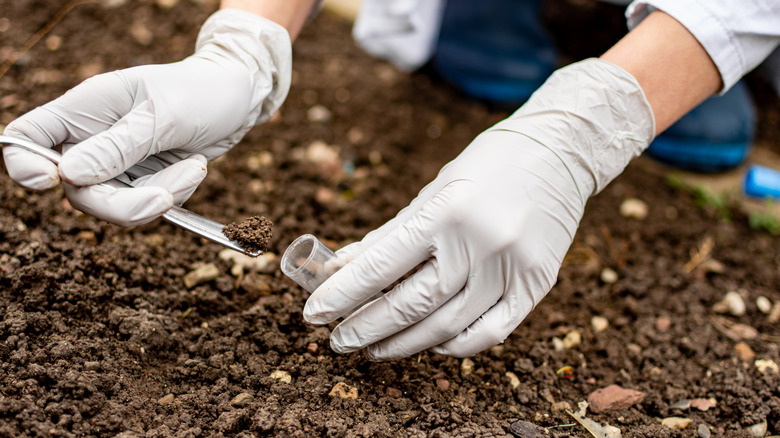
Fertilizing soil without getting it tested is like pouring yourself a glass of juice while wearing a blindfold. Could you do it? Maybe, but it's more likely you'll waste a lot of juice and make a mess. Adding too much of a nutrient can have seriously bad side effects for plants. As an example, nitrogen is super-useful for leafy growth, but too much of it can burn roots and injure plants. How will you know how much nitrogen you need when you don't know what's in your soil?
There are home-based soil testing kits available, but their accuracy is a little iffy, so we recommend going to the pros. Soil tests are typically under $50 from your local university cooperative extension and are so worth the cost — some are even free! Not only will you get accurate measurements of what your soil is made of and its pH level, but your report will also tell you what nutrients your soil is lacking and give specific recommendations for how much to add — no guessing and no wasting money buying the wrong fertilizer type.
Start with a balanced fertilizer if you're new to plant care
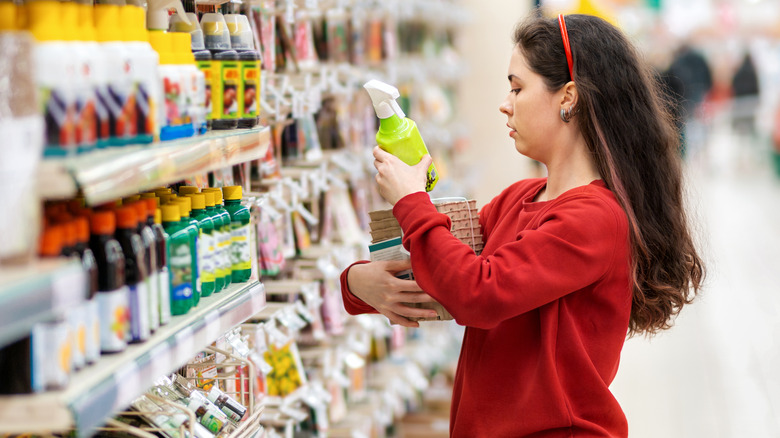
If you walk into a garden store or browse the "fertilizer" section of Amazon, you'll see that there are hundreds of options available, and most of them are listed as "complete." Complete fertilizers have formulas with a balanced level of macronutrients, N-P-Ks. Typically, they'll list them as something like "10-10-10" meaning that they're guaranteed to have 10% nitrogen, 10% phosphorus, and 10% potassium.
This is as close to a no-brainer method as possible. However, it's still a good idea to get a soil test first. You can also find options like Jack's Classic 20-20-20 All-Purpose Fertilizer that contain additional micronutrients. Before buying a fertilizer, read the reviews and see if others mention using it on the same plants you plan to grow, so you know how they handle that fertilizer.
There are synthetic and natural fertilizer options
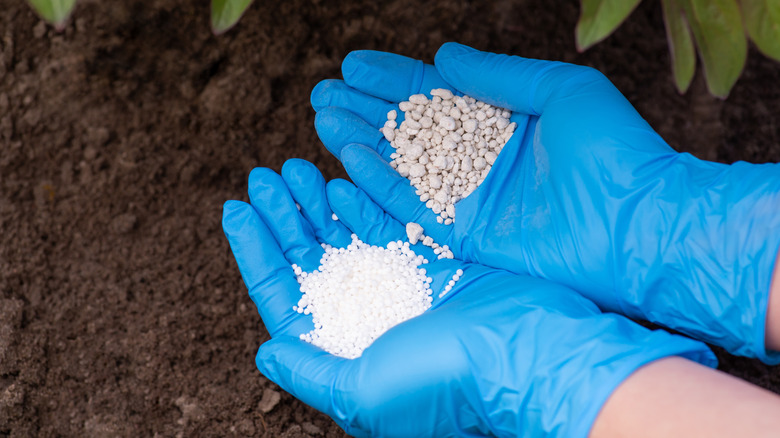
Not only are there hundreds of fertilizer formulas, but you can also buy fertilizers made of synthetic or natural materials. While you might not care and just want the cheapest or best-reviewed option, natural fertilizers work differently from synthetic ones because of the way they break down. Also, if you're trying to start your own organic garden, you should know that means you cannot use synthetic fertilizers or pesticides.
Synthetic fertilizers are manufactured, easier to control, and typically have a higher concentration of NPK macronutrients that are delivered to the roots quickly. Natural fertilizers, on the other hand, tend to have more diluted NPK levels and take longer to break down. Consequently, you may need to buy more of a natural fertilizer to get the same hit of nutrients to your plants as a synthetic option would give. But on the other hand, they may be a better option for someone who wants fewer synthetic ingredients around their plants and crops.
Dilute your fertilizer before applying
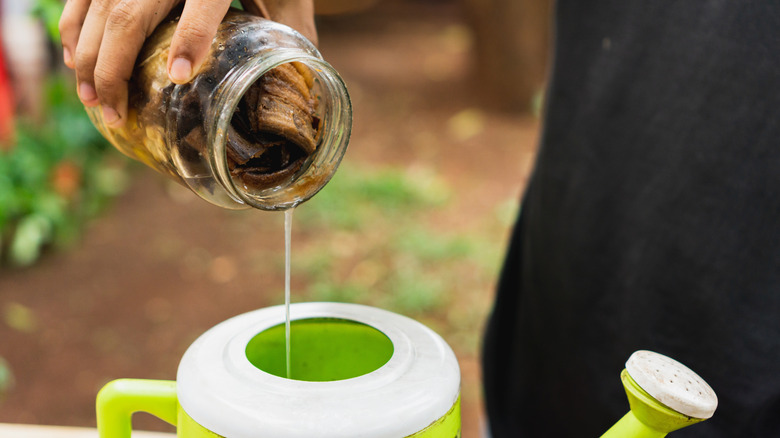
One thing that's great about buying fertilizers instead of making a DIY fertilizer tea is that they come concentrated, so a little goes a long way. You might think you can save a sick plant or speed up a healthy plant's growth by giving it a concentrated shot of fertilizer, but that would probably kill it or, at the very least, burn the roots. Instead, you may need to dilute your fertilizer before applying, depending on what the manufacturer says.
Granular fertilizers get diluted by the moisture in soil, and from your watering routine, so as long as you're applying the correct amount at the right depth, you're probably good. Liquid fertilizers, on the other hand, need to be diluted directly, so you'll need a watering can with measurement levels. Your fertilizer's bottle label will have specific dosage instructions, so default to that, but if the label is missing or worn, a good rule of thumb is to use half a cap's worth (or less) in a gallon of water.
Don't fertilize young seedlings or new plants
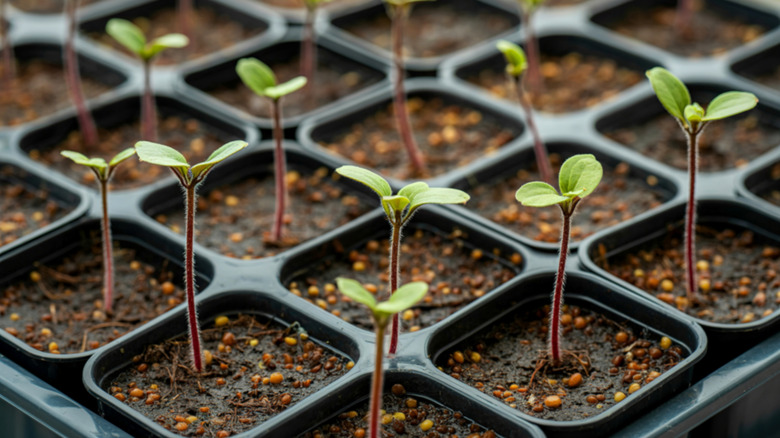
Your new baby plants have sprouted; how exciting! You might think those little plantlets worked so hard to grow, and maybe they'd like some plant food to recoup. While this is well-intentioned, adding fertilizer might not be necessary.
If you've sprouted seeds in a potting mix, chances are that mix might already contain enough fertilizer to support them for up to a month and a half. It's also a good idea to not fertilize new plants that you've just brought home from the garden center, even if they're mature. Nurseries tend to grow their plants with fertilizers already in the soil, and since you're most likely planting the specimen with its included potting soil, you risk overwhelming the plant while it's trying to settle in. Instead, give new, and new-to-you, plants a chance to get established before adding more nutrients.
Some plants will need more fertilizer than others
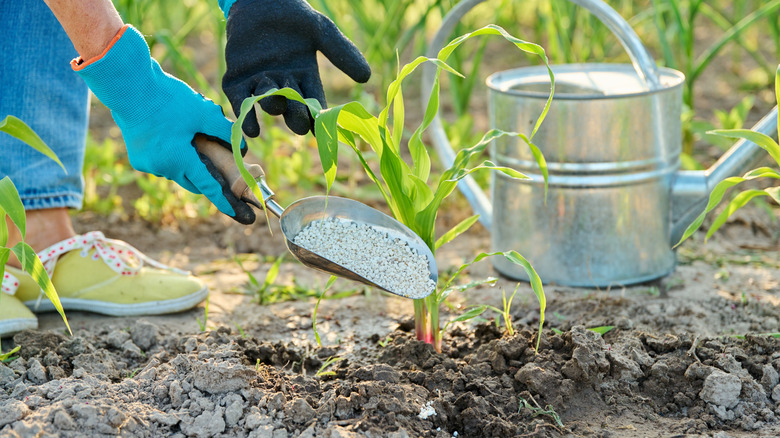
Not all plants will act the same, even when planted in the same growing conditions. Some will prefer to be left alone, while others act like high-maintenance divas. Some will need support so they don't fall over, others may grow stalks so thick they push support stakes out of the way. And some will want only occasional fertilizing, while others act like ravenous beasts. Knowing the difference will ensure you don't waste precious fertilizer — or precious plants.
Generally speaking, vegetable plants that take a while to mature, like tomatoes, corn, peppers, and melons, are considered heavy feeders and need more plant food than faster-maturing crops. On the flipside, there are many vegetables that are sensitive to overfertilization. It's easy to go too far with fertilizers, so don't exceed the recommended amount on the label. There's also the option of buying specialized fertilizers that are formulated for specific plants, like Espoma Organic Tomato-tone. That said, specialty fertilizers are really only worth it if you've got dozens of the same plant growing. Unless you want a 4-pound bag of Tomato-tone mocking you in your shed for years, believe us when we say there's more in a bag than you might think.
Fertilizer/pesticide mixes are probably not going to help
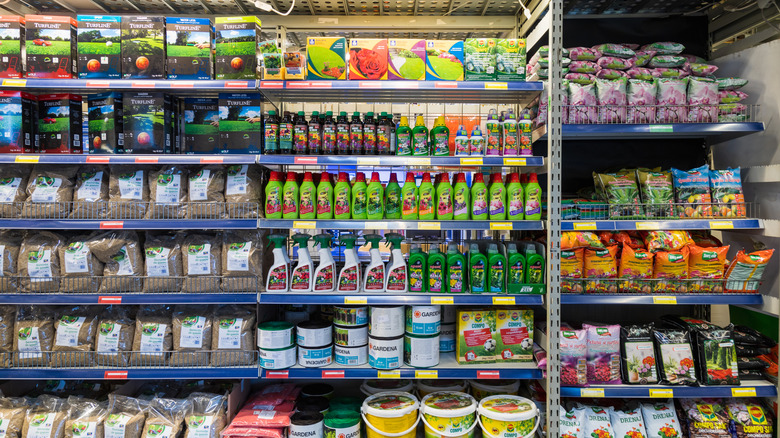
Gardening chores can be a lot, so it makes sense to buy products that save you some time. Some fertilizers, for example, will also include a pesticide or weed-killer in their formula. On the surface, that seems great — less labor for you! But you may find these products end up being pretty problematic.
The issue comes with the way the fertilizer breaks down. It might break down quickly when there's no disease or pests to be found. Or it might take too long to break down and leech into the soil after the damage is already done. Also, they can be more expensive than a traditional fertilizer. In short, they're not always worth the cost, because it's often nearly impossible to time your garden's needs in a way that both products deliver results.
Don't use fertilizer on dry soil
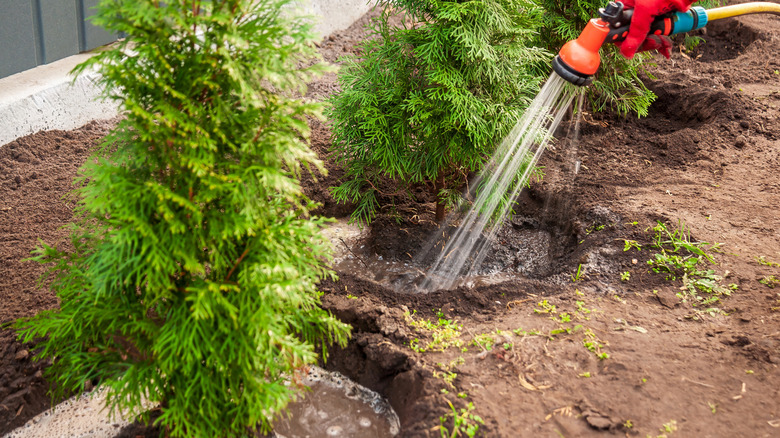
Liquid fertilizers need to be diluted in water before they're applied, so you typically don't run into this type of issue. But if you're using granular fertilizers, then you need to apply them just so, or you'll waste them. You could just broadcast them about and see what happens, but we want you to save your money and use fertilizers the right way, so make sure the soil is moist before spreading the granules over your garden.
The problem with laying fertilizer on dry soil is that it can blow away or burn the plants. To avoid this, prep the soil by irrigating or watering well — or wait for some rain to moisten the ground. Spread the fertilizer granules out evenly on the soil, focusing on the area near the roots. Then rake the soil a little to drive the granules down and give your garden a final drink with your hose. Focus on the soil so that water doesn't stay on the leaves or flowers.
Don't fertilize before a rainstorm
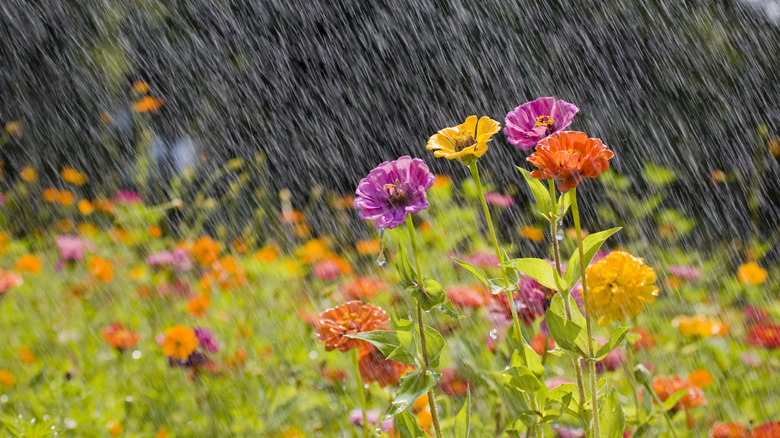
you don't want to apply fertilizer when the soil is too dry — but you also shouldn't apply it when the soil's too wet, like before or during a rainstorm. Fertilizers are water-soluble: They break down when wet, which is great when they're applied to the right area at the right amount. But when there's too much rain to soak into the soil, that water's got to go somewhere. It can end up running off the soil and making its way into sewer systems, taking your fertilizer with it.
Not only will this waste the fertilizer you paid for, but it's problematic for your town. Run-off containing fertilizers can end up polluting waterways. So be a good neighbor instead, and fertilize plants when you know there's a good chance the fertilizer will stay put by only using it when you're sure it has time to soak into the soil instead of washing away.