

The No-Fuss Flower To Plant Near A Birdbath For Them To Enjoy
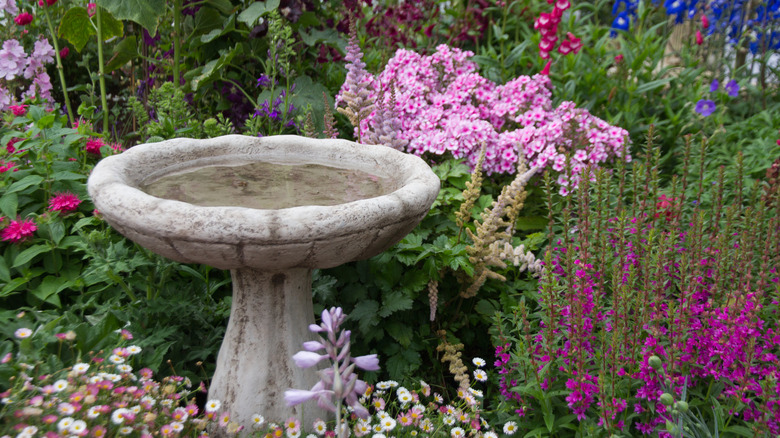
Adding a birdbath to your yard can be one of the best ways to attract birds to your garden. After all, us humans enjoy a space to freshen up and hydrate. Is it really any surprise that our feathered friends do, too? However, that doesn't mean you can't boost the avian appeal of your yard even more. Plant this easy-to-grow flowering herbaceous perennial near your birdbath, and you can create an environment that all kinds of backyard birds will enjoy.
There are several factors to consider when choosing the perfect plants to grow alongside your birdbath. You want to pick greenery that birds are drawn to for food or security, while also taking into account the environment around your birdbath. When you're thinking about where to put a birdbath to invite beautiful wildlife into your garden, areas that offer some shade are often best. This means you can't grow full sun lovers. Fortunately, bird-attracting asters (Symphyotrichum spp.) grow well in part shade.
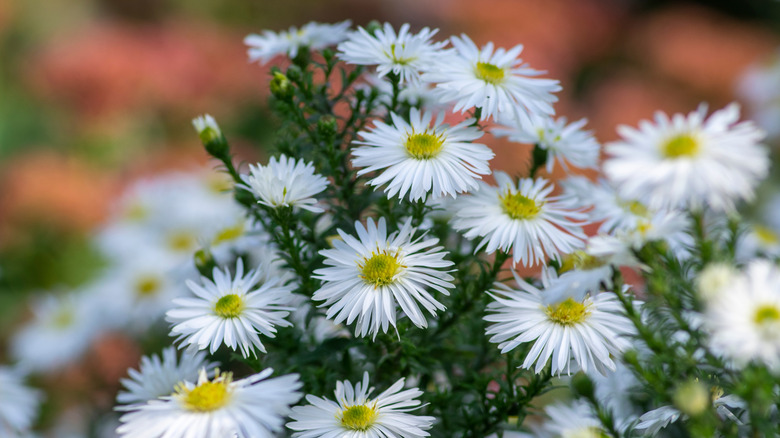
Asters have eye-catching daisy-like flowers in a range of colors, from pink to blue to white. The hue of an aster's blooms, as well as its height, depends on the species or cultivar you choose. The flowers lure in butterflies, bees, and other bugs, which insectivorous birds enjoy eating, before turning into seed heads favored by seed-eating birds like cardinals and chickadees. The best part? They're easy to grow with little maintenance, whether you choose to plant them in the ground or in a container beside your birdbath.
How to grow asters near a birdbath to aid avian visitors
Asters are perennials, which means they come back year after year. This is actually one of the top reasons why they are such a no-fuss flower. You don't need to worry about resowing or planting out seedlings again and again to enjoy the bird-friendly blooms each year. However, if you want to grow asters as perennials, you'll need to live in an area where they can survive the winter. Asters are winter hardy in Zones 3 through 8. Outside of these zones, you may be limited to growing them around your birdbath as an annual.
Asters will grow in full sun or light shade, making them perfect for a birdbath border. You don't want to situate a birdbath in full sun, especially in summer, because the water may warm up too much. Keep in mind, however, that asters produce the most flowers in full sun. To combat this, you could choose a spot in your garden where you can plant the asters in the sun, yet there's cover for your birdbath, such as an overhanging tree.
If that's not possible, there are other ways to encourage more aster blooms, even in partial shade. Deadheading isn't a must in the garden, but it's one of the best ways to promote continuous, abundant blooming in asters during the flowering season. If you're worried that pruning will transform this flowering perennial from fuss-free to high-maintenance, don't be. Deadheading can take some time when your asters are in full bloom. But overall, it's an easy task that requires one tool — a pair of sharp, sterile pruning shears — and only needs to be completed as each flower declines.