

How To Repot An Easter Lily To Keep It As A Houseplant For Years To Come
We may receive a commission on purchases made from links.
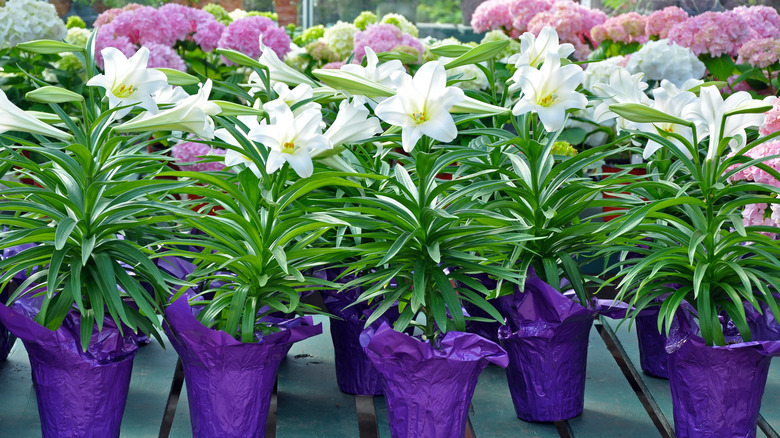
Easter lilies (Lilium longiflorum) are known for blooming just in time for the spring observance, hence the name. But Easter doesn't have to be the end for these lovely plants. In fact, Easter isn't even their normal blooming time. They are actually forced to bloom out of season by nurseries and indoor gardeners in the know. Naturally, they flower in the summer and fall. There are plenty of ways to ensure thriving Easter lilies long after the holiday. Some gardeners will replant their Easter lilies in the ground outdoors, but you can keep them indoors as houseplants for years to come by repotting them into a more permanent home with conditions that support long-term growth.
Start by gathering your equipment. The repotting process for Easter lilies is relatively simple, which means the tools and supplies you need are pretty straightforward. You need a pot that is large enough to maintain your Easter lily until its next upgrade. Choose something a few inches bigger than the original pot. You'll also want some gardening gloves, a small trowel, and a pair of houseplant shears. Easter lilies are bulbs, so a trowel is perfect for loosening and dusting off old soil and adding new soil to the pot. Gloves keep your plant protected from contaminants as much as they keep your hands — and you — healthy. Sharp houseplant shears trim damaged leaves and old flowers without damaging the plant. You can purchase an Anvil Carbon Steel Three-Piece Garden Set for about $13 from Home Depot and some Houseplant Resource Center Premium Scissors for about $30 online.
Repotting an Easter lily houseplant is surprisingly easy
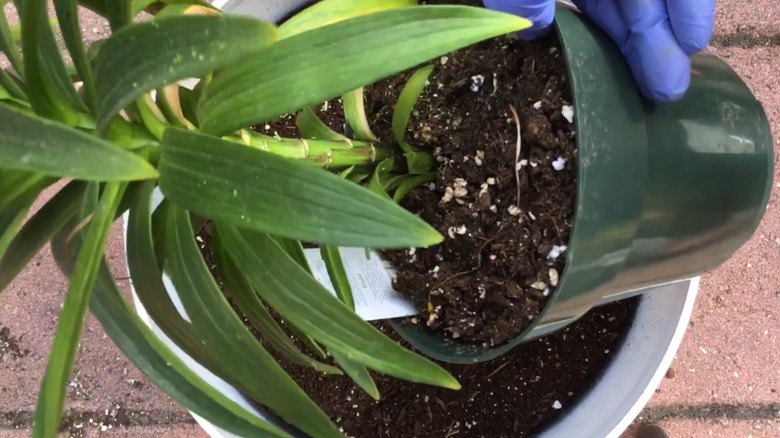
Though the actual repotting process is fairly simple, repotting is a shocking experience for most houseplants. By following top tips for easily repotting your favorite plants, you'll avoid damaging your Easter lily — or worse, killing it. First, sanitize your tools and supplies, especially if they've been used on other plants recently. Never reuse a flower pot from a previous plant before cleaning it with soap and water. The same goes for trowels and shears. Likewise, old potting soil may have contaminants from the previous plants such as fungal diseases or pest eggs. Discard it and start fresh with a soil specifically designed for indoor plants, like Grow Queen Craft Organic Houseplant Potting Mix.
Store-bought Easter lilies sold as temporary houseplants are usually wrapped in decorative material, which can trap moisture in the bottom of the planter, leading to root rot. You should repot a newly acquired Easter lily as soon as the flowers have faded and the leaves are starting to yellow. A lily you've had for a while should be repotted every one to two years when the plant is dormant. Gather your clean, sterile pot and some fresh potting mix, both of which are necessary for healthy indoor growth. Remove the your Easter lily from its current pot and gently dust off any soil clinging to the root ball with a gloved hand and your trowel. Carefully place the root ball into the new pot at roughly the same depth as the old planter, and completely cover it with fresh potting soil. You can add a light layer of bark mulch if you have it, and then water the soil thoroughly.
Common Easter lily repotting mistakes to avoid
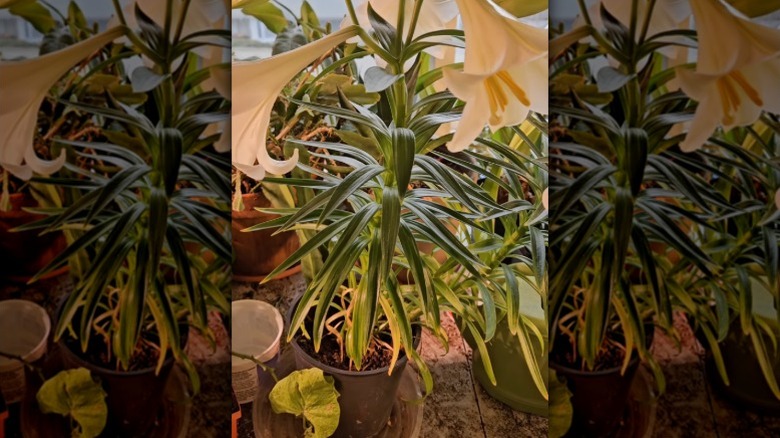
Unfortunately, Easter lilies are considered a high-maintenance houseplant to avoid if you have a busy life. But that doesn't mean that growing them is impossible — you just need to know what mistakes to avoid. First and foremost, when repotting, you will want to handle the plant with care to avoid breaking the stem. If you damage the plant during repotting, it may not survive to see another flowering season. Overwatering is another issue. While it is true you want to water the plant well after transplant, you need to make sure the pot supports good drainage and airflow to avoid root rot. When trimming the plant, only cut away dead material, leaving green stalks and leaves intact. Use clean, sterile tools — maintaining your tools is just as important as selecting the right tools for the job.
Easter lilies are at risk of developing fungal or other diseases when grown in cramped conditions indoors. During transplantation, make sure your planter has enough room for the plant's roots. The roots shouldn't be sitting in water or pressing up against the sides of the container. As the plant grows taller, it will need ever-larger pots. If you have multiple Easter lilies or other houseplants in the same space, position them so that their leaves don't overlap. This gives the flowers enough room to develop properly, prevents leaf drop, and enhances airflow. Finally, place your freshly repotted Easter lily in a room with an east-facing window. These pretty plants prefer bright, indirect light and daytime temperatures between 65 and 70 degrees.