

The Eco-Friendly Driveway Material That Looks Good & Can Prevent Runoff

Homeowners usually face a conundrum while choosing the best materials to use on a driveway that go beyond concrete. While normal concrete provides strength and durability, alongside polished aesthetics, its impermeable nature creates problems of rainwater runoff and does not quite meet sustainability standards. Thankfully, for fans of concrete, there is an option that provides them with similar aesthetics and durability (for driveways) but with more permeability and sustainability points: pervious concrete. Using pervious concrete for your driveway is a sustainable move that can make your home more eco-friendly.
Pervious concrete differs from the usual impermeable concrete in its composition. Pervious concrete contains very little sand. Usually, sand is used to fill out the voids present between larger materials in the concrete mixture. In pervious concrete, though, a paste of cement and water coats the aggregate particles present in the mixture (like rounded gravel or crushed stone), while allowing a large number of interconnected voids to exist between them (as much as 15% to 25% of the total volume). Therefore, it is the lack (or absence) of sand that gives pervious concrete its porous nature. Consequently, pervious concrete can absorb stormwater at a faster rate, up to 3 to 5 gallons per square foot per minute. This makes the driveway material capable of preventing runoff even after a heavy downpour.
Pervious concrete can improve the quality of groundwater reserves
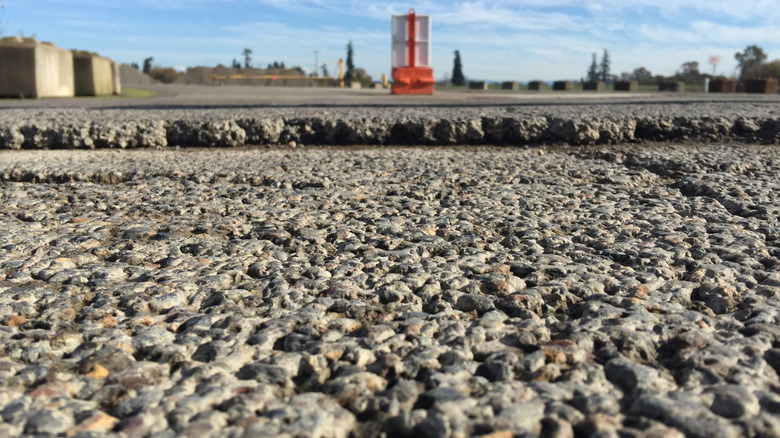
Pervious concrete can contribute towards a healthier groundwater reserve by filtering out pollutants from rainwater. In fact, the ability of pervious concrete to filter stormwater makes it a better alternative to retention ponds and sewers, which are also designed to collect runoff. But the latter options allow pollutants to stay alongside the water. On the other hand, pervious concrete stops chemicals or automobile pollutants from passing through. Alongside this fresh water supply, pervious concrete also allows air to pass though to the soil underneath via the gaps present in the concrete. Both air and water help provide nutrients to the surrounding flora in the region. According to the National Library of Medicine, a lack of sealers, as seen in pervious concrete, also contributes towards reducing the amount of contaminants in runoff. These sealers contain coal tar pitch, which can be harmful to aquatic organisms if they reach water bodies, like city lakes.
Pervious concrete is also eco-friendly in the sense that it allows for more efficient land use. By installing a pervious concrete driveway, you can lessen the need of civic bodies to work on other stormwater management tools and drainage works, such as swales. This reduces the cost of construction for municipalities. In fact, this feature is what makes pervious concrete highly recommended by regulatory bodies, such the U.S. Environmental Protection Agency, which includes the use of this material among its Best Management Practices (BMPs).
Pervious concrete driveways can help mitigate urban heat island effect (and look good doing it)
Urban heat island effect is a major environmental concern that haunts urban landscapes. Heat islands get formed when large structures like buildings and roads get concentrated with little space for natural landscapes like trees or water bodies. These structures start absorbing and re-emitting heat at a faster pace compared to greener regions, and, consequently, spike the average temperature of the area to abnormal levels. Conventional pavement methods, such as impermeable concrete, add to this phenomenon by reducing the exchange of heat and water between its sub-layers.
While you may want to ditch solid concrete in favor of something more eco-friendly and recyclable like crushed concrete, installing pervious concrete can directly tackle this phenomenon. Pervious concrete displays a number of characteristics that help mitigate heat island effect. It is porous and allows cooling of the surface with evaporation of water. Alongside these features, pervious concrete is also less reflective of the sun than permeable concrete. All these factors help lower the surface temperature of a pervious concrete driveway by substantial levels.
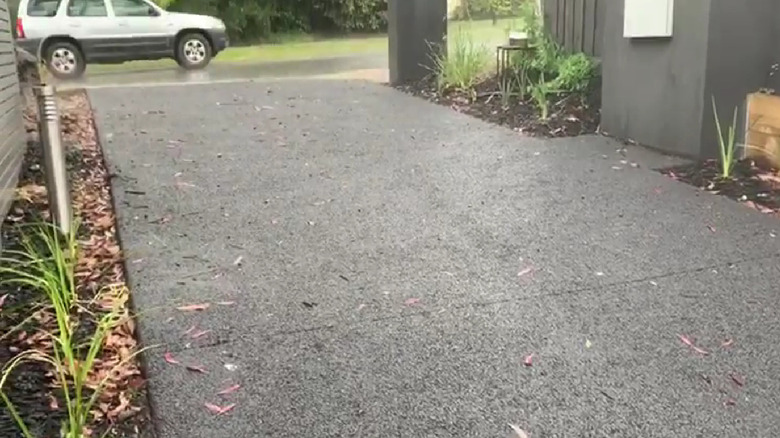
Moreover, if you're wondering if all the good that pervious concrete offers comes at the cost of aesthetics, don't worry. Not only is pervious concrete eco-friendly but it can also look quite pleasing. Far from seeing the same old monotonous gray, you can also have your pervious concrete tinted in the color of your preference. With some manufacturers, you can also opt for a smaller size of aggregate particles to achieve a more refined look.