

Turn Your Garden Into A Pollinator Haven With A Marigold Companion Flower
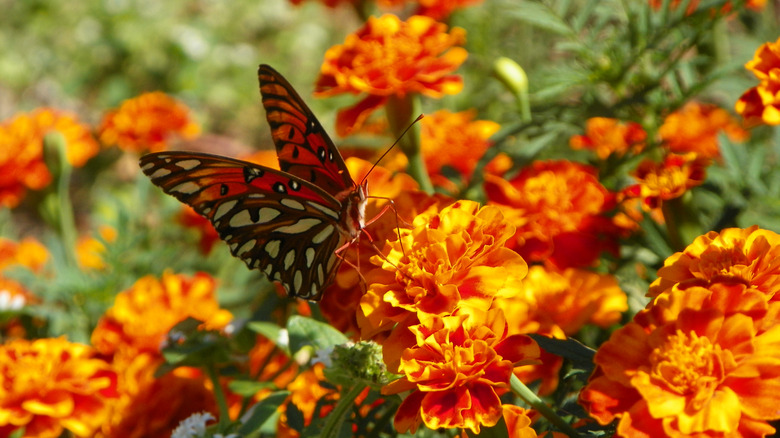
There's a reason marigolds (Tagetes spp.) are prized as all-around companion plants. Not only are these colorful mopheads ornamental in their own right, but they serve double-duty as useful companion flowers. Marigolds emit a scent that keeps pests like deer and rabbits away from garden beds in which they are planted. Underground, marigolds repel garden pests that live in the soil and attack plant roots, in part by masking the alluring odors of vulnerable plants like tomatoes and squash. That's a boon for gardeners hoping to keep both their veggies and their more fragile flowering plants from being chomped on or uprooted.
But marigolds have another superpower. The flowers attract beneficial pollinators, particularly when paired with another pollinator favorite, sweet alyssum (Lobularia maritima). With climate change and pesticides posing a challenge for farmers and home gardeners alike when it comes to attracting pollinating insects, using flowers such as marigolds is more important than ever. Many plants, including fruit and vegetable species, need pollinating insects to visit them in order to thrive.
The lively colors of marigolds — those vivid shades of orange, yellow, and red — are naturally attractive to bees. Bees are an important but threatened insect in the pollinator world. Marigold blooms also lure butterflies, which are also crucial pollinators. With all these benefits, marigolds are definitely worth dotting throughout your garden beds beside a companion like sweet alyssum. Plant marigolds near your tomatoes and watch them thrive! A side note: Marigolds are sometimes confused with pot marigolds or calendula (Calendula officinalis.) While calendula has its own uses and charm, they are a different species altogether.
Give this pollinator companion a companion flower of its own
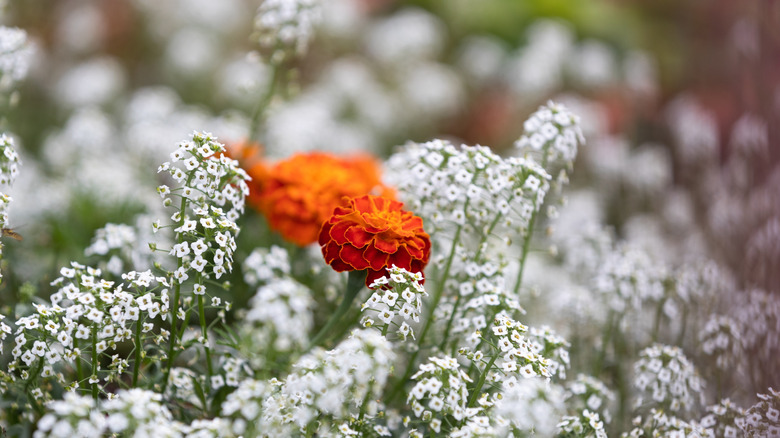
No one flower can attract all of the good guys to your garden. That's why it's helpful to pair marigolds with other flowers to add to the types of beneficial insects visiting your garden. Sweet alyssum (Lobularia maritima), for example, draws in ladybugs and hoverflies. Both eat problematic insects such as aphids, while the latter is also an important pollinator, especially for wildflowers.
If you're intimidated about how to start a pollinator garden, you needn't be! With their colorful blooms and compact shapes, marigolds are easy to place among the plants to which you want to draw pollinators. Because of their low height, the best spot in your garden to plant sweet alyssum is usually between the path and the garden bed. Make a border of marigolds and sweet alyssum or interplant them freely among veggies, fruiting bushes, and flowering shrubs. You might also want to add a third pollinator, the nasturtium flower (Tropaeolum majus), which draws honeybees and hummingbirds.
Marigolds are among the easiest plants to grow for beginner gardeners. There are several varieties to choose from, including compact French marigolds (Tagetes patula), medium-sized Signet marigolds (Tagetes tenuifolia), and the taller African marigolds (Tagetes erecta), which are sometimes known as Mexican marigolds. As a species, marigolds prefer full sun and well-drained soils, but are not overly fussy about their condition. Sweet alyssum prefers the exact same conditions, making them the perfect pairing.