

What To Do If You Find Old Scrap Metal In Your Yard
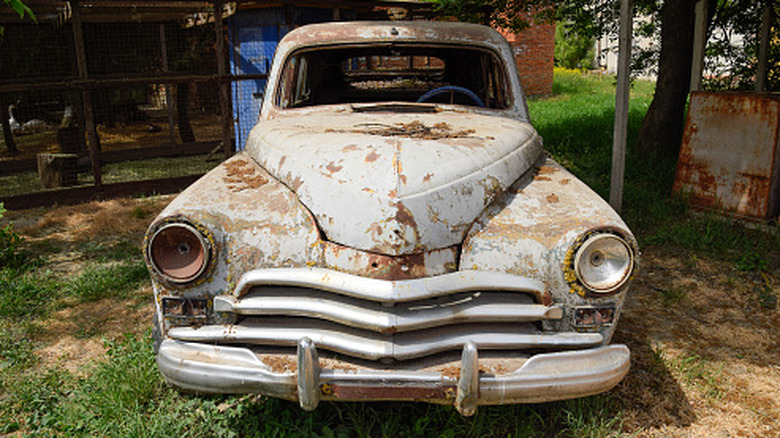
The word "scrap" usually makes us think of things that need to be thrown out with the trash, but it's not always the case. Many kitchen scraps can be fed to the birds, and there are plenty of DIYs to turn scrap wood into useful garden pieces. However, when it comes to old scrap metal, there can be serious hazards to consider. So while some people turn rusty odds and ends into garden artworks, if you find some in your yard, the safest approach is to get rid of it. Let's look at why and how you would do that.
Rust on its own is harmless, and getting it on your skin shouldn't be a problem. However, it can harbor the bacteria that cause tetanus (also called lockjaw), and cuts that get infected can be fatal if not treated. The other common concern is that old scrap metal might contain lead. Again, it's unlikely you'll be poisoned by touching it, but accidentally breathing in or swallowing small particles is dangerous. Exposure can come from flaking paint on scrap metal.
That's not all. Electroplated surfaces like chrome and tin might contain arsenic and cadmium. Old steel drums might have held pesticides or other toxic chemicals. So never let kids play around old scrap metal, and if you're going to move it yourself, be sure to wear strong gloves. It might be one of those times you should hire a professional to clear up your yard.
Some scrap metal is just junk, but some may be valuable
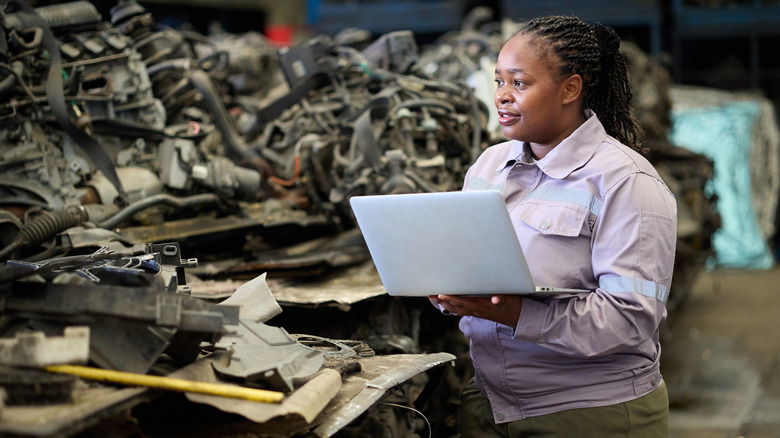
There are popular TV shows where an abandoned clunker turns out to be worth thousands for restoration, but most old steel is just scrap. If you have small amounts, throwing them in the trash will mean they end up in landfill, and any toxins could eventually leach into groundwater. Instead, look for a local recycling center or find out if your municipal authority can deal with it. If you have a large amount and can get it to a scrap yard, they may offer you a few bucks. If they have to collect it, they will probably charge you.
Non-ferrous scrap metals like aluminum, brass, and copper can be quite valuable, but if you don't know what you've got, how can you tell? A magnet sticks to metals that contain iron (ferrous) but not to non-ferrous metals, so it's a good start. However, aluminum comes in a variety of colors, and brass contains copper, so it's hard to be sure exactly what it is. If you have significant amounts, talking to a licensed scrap dealer is probably your best bet. If there are two in your area, talk to both to get the best deal.
Finally, you may want to find out if anything hazardous from the old scrap metal has leached into the dirt in your yard. Especially if you intend to grow vegetables. There are concerns whether home-based soil test kits are accurate, but many state universities offer precise and affordable analysis.