

Keep The Extension Cord Out Of Your Garage If You Plan On Using It For This Task
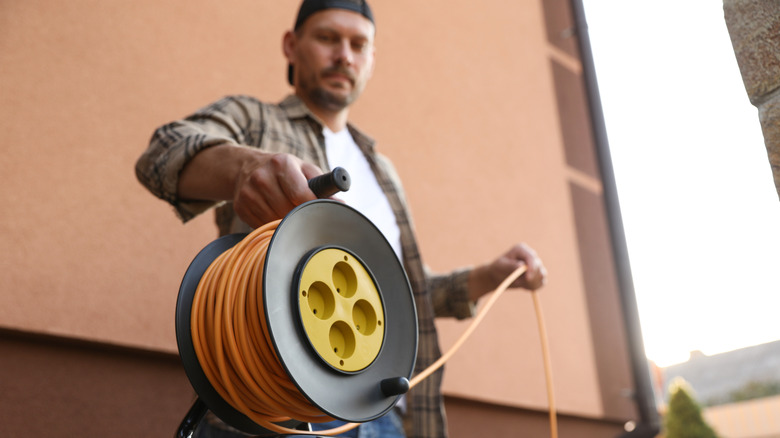
You may already know that the safest and best place to store power tool batteries is indoors in a climate-controlled environment where you can avoid extreme temperatures, including a garage. However, even when charging certain batteries in a safe, climate-controlled garage environment, there's another thing to keep in mind. If you own electric bikes or scooters, avoid using an extension cord when charging their batteries, as it might not deliver the necessary power for the batteries. Because of the added stress in trying to generate the necessary power, the cords could overheat and cause a fire.
Electric bike and scooter manufacturers include many warnings about charging their batteries, and you should follow the instructions for your specific model to reduce the risk of a fire. In their user manuals, some e-bike or e-scooter manufacturers specifically say you should not use an extension cord when charging their products. Even if they don't say so explicitly, using extension cords is too risky for charging these devices. If the cord overheats when you're charging your e-bike or e-scooter battery, the plastic may start to melt, the interior insulation might break down, and the cord might become too hot to handle. Any of these problems may start a fire.
Why extension cords are dangerous for charging bike batteries
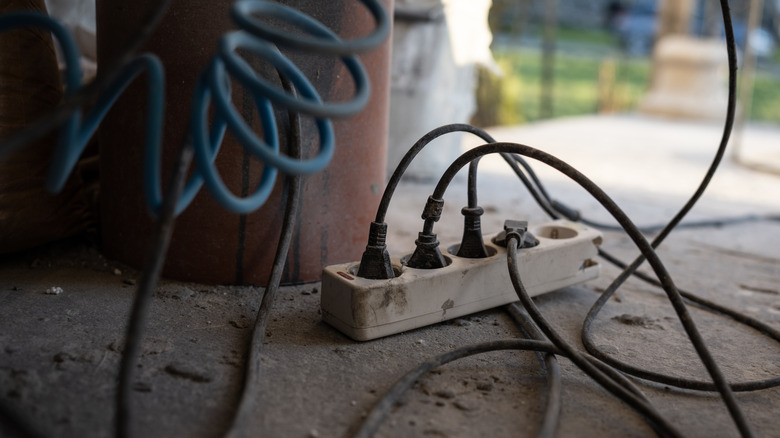
Extension cords are handy pieces of equipment, helping you use outdoor power tools or other pieces of electronic gear when you don't have an outlet nearby. Generally, as long as you use them for a temporary purpose and as intended, they're safe. However, plugging certain appliances into an extension cord is a major fire hazard, and e-bike and e-scooters fit in that category.
Why can using an extension cord increase the possibility of starting a fire? The electrical current experiences resistance as it passes through the wiring. A longer cord creates more resistance than a shorter one. And increased resistance reduces the amount of voltage that reaches the appliance or battery that's plugged in, a process called voltage drop, which manifests as heat. When running a large amount of electrical current through long extension cords, the heat generation can be significant. It can appear where the extension cord plugs into the socket, where the device plugs into the extension cord, or anywhere along its length. This extension cord mistake could cause a fire if the heated section is near a flammable object, like rags in a garage or underneath rugs.
When an extension cord is used with an e-bike or e-scooter, the voltage drop may leave the charger unable to properly charge the battery, as it must draw a significant amount of power during the charging process. Only high-quality extension cords can deliver enough power, but even they struggle over a long distance, increasing the risk of overheating problems.
Why plugging the charger directly into the wall is safe

Most e-bike and e-scooter manufacturers recommend plugging the charger directly into a wall outlet and avoiding using an extension cord or even a power strip. The wall outlet should be properly grounded if you're using it to charge the battery. The charger that was shipped with your e-bike or e-scooter manages the voltage and polarity of the electrical current to protect the battery and avoid the risk of overheating. Using an extension cord negates the protections built into the charger and can potentially cause an early battery failure.
Manufacturers also recommend that you never overcharge the battery by leaving it plugged into the outlet for long periods of time. Leaving it plugged in to the wall outlet can cause overheating issues for the battery, which could become more severe if you're using an extension cord. If your e-scooter or e-bike battery has LED indicators that measure charge, use them to determine when to unplug the charger. Additionally, you should never leave the house during charging or allow the battery to charge unattended overnight. Instead, regularly check on it to watch for potential overheating issues, even when you aren't using an extension cord.