

The Old-Fashioned Herb With Pretty Yellow Flowers That Flourishes In Poor Soil
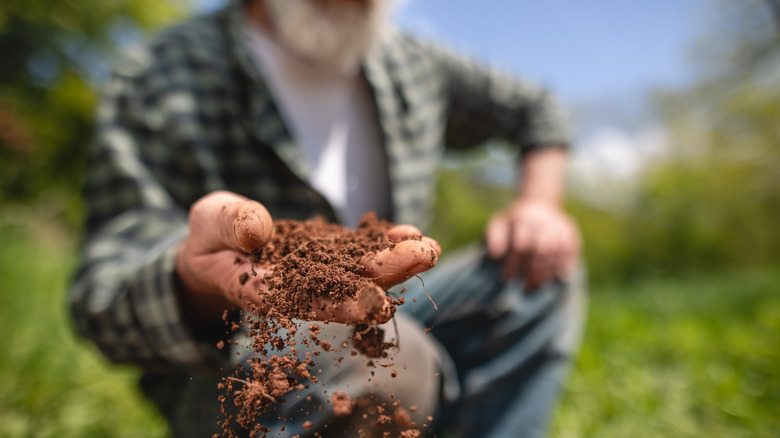
Poor soil can often feel like a dead end for gardeners. It slows growth in some plants and prevents flowering and fruiting in others. Sure, soil tests and fertilizer can help. Or, you could simply choose to grow plants that thrive in poor soil. Luckily, many plants do, including some herbs like costmary (Tanacetum balsamita), also known as bible leaf or sweet Mary.
You might not have seen or heard of this herb, but it was once a staple. In fact, it was really popular during Victorian times and was a personal favorite of Queen Elizabeth. You might also find this old-fashioned herb growing in herb gardens or estate grounds. It has a unique eucalyptus-minty aroma. Plus, it produces yellow daisy-like flowers that not only attract pollinators but also release a soft, balsamic fragrance in the garden.
The real appeal of costmary, though, comes from its ability to grow in poor soil. It needs very few nutrients and thrives in almost any soil, whether it be clay or sandy. One of its only limitations is that it is only in USDA plant hardiness zones 5 through 7. This means that in colder regions, it will die during the winter. However, you can also grow it in containers and take it inside when the temperatures gets too low. In fact, you should probably grow it in containers or pots even if you are not planning to move it inside. That is because costmary is an aggressive herb that can take over your garden if you aren't careful.
Growing and harvesting costmary in poor garden soils
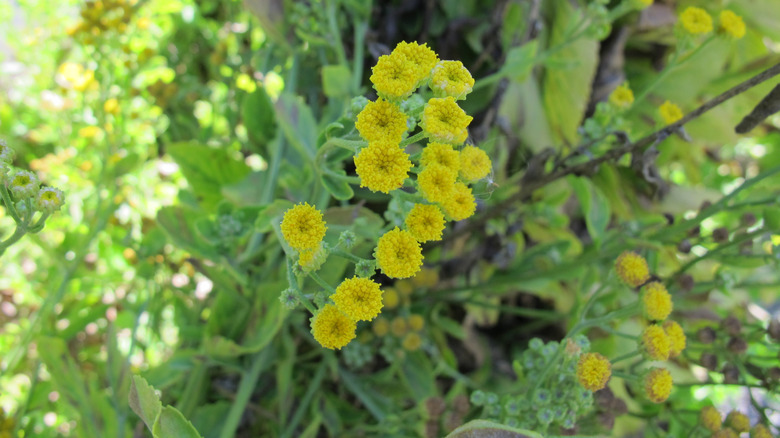
Even though costmary grows well in poor soil, it still needs some basic care. For instance, while it grows in poor soils of any type, the soil should still be well-drained and have a pH of around 5 to 7.6. Luckily, there are many home-based soil testing kits available in the market that you can use to test the pH of your garden soil. When growing a costmary you will also want to make sure the place where you grow it gets full or partial sun. Costmary does not mind shade. However, if grown in shade, it will not flower.
You can start growing costmary with both seeds and cuttings from existing plants. Just make sure that you do it in fall or early spring and plan a spacing of about 1 to 2 feet between plants. If, however, you want to grow costmary in containers, choose something that is at least 12 inches deep and wide. Anything less might work too, as it has a shallow-root system. Once planted, try to keep the soil moist or occasionally dry. Don't worry about fertilizing, as it does not need many nutrients. However, if you still want to play it safe, grow it in humus-rich soil.
Also, keep in mind that costmary grows quite rapidly, and you will need to prune it to keep it from becoming leggy. Pruning can help make it leafier, too. Just remember the three D rule to properly prune your plants. As for harvesting costmary, you can take the leaves as needed. However, if you want to make the best of them, harvest them right before the plants are about to flower. That is when their essential oils are at their peak.