

The Low-Maintenance Tree That Makes A Great Privacy Hedge For Your Yard
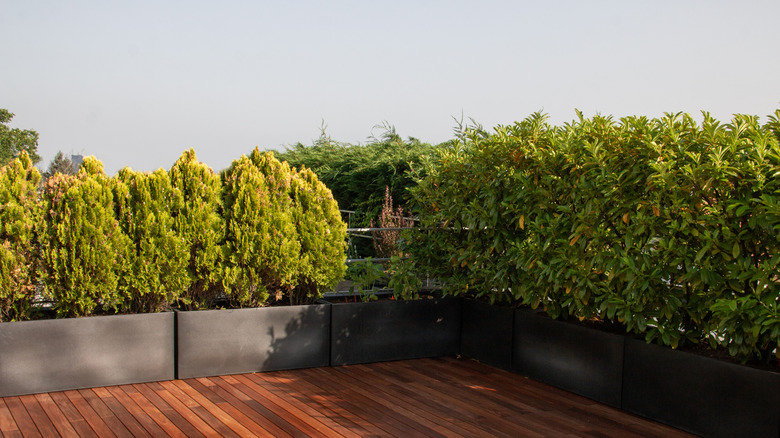
Let's be honest — no one enjoys sitting in a backyard where neighbors can just casually peek in. A solid privacy hedge fixes that quickly. The tricky part? Choosing the right plant. Not every tree is cut out for hedge life, after all. However, if you want something reliable and low-maintenance, green buttonwood (Conocarpus erectus) is definitely worth a look. It is a low-branching, multi-trunked evergreen tree with textured, dark brown bark and a naturally bushy, spreading crown, which makes it an excellent choice for making a privacy hedge around the yard. Left alone, it can rise to heights of about 40 feet. But don't let its large size intimidate you. Green buttonwood responds well to heavy trimming or pruning, can be easily shaped, and maintained as a hedge at around 5 to 6 feet.
However, despite all of its strengths, there is one catch. The green buttonwood is only hardy from USDA plant hardiness zone 10b to 11. If you live outside these zones in an area with frost, you might have to look into other trees for a natural privacy screen in your yard. On the plus side, though, the green buttonwood is quite a low-maintenance tree. It requires little care once established, tolerates salty soils and drought well, and grows in a variety of well-drained soils. On top of that, it does not have any serious pests or disease issues.
Growing button greenwood for a privacy hedge for a yard
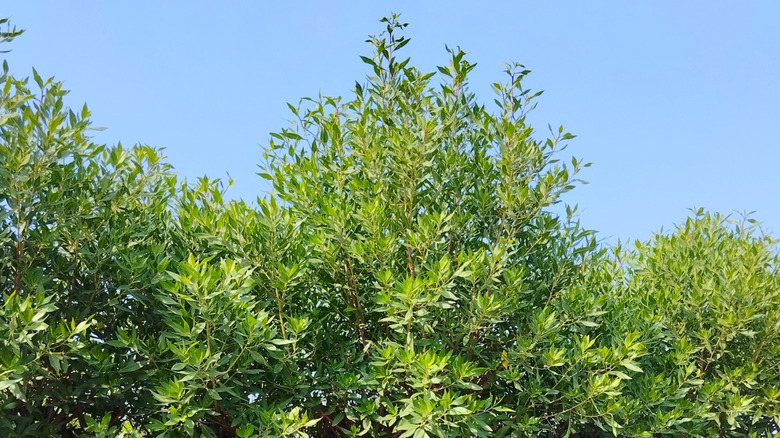
If you are planning to grow green buttonwood in your yard, make sure that the area gets full sun. It needs around 4 to 6 hours of sun to grow its characteristically thick foliage. If you grow it in shade, it will grow slowly and also thin out, which will reduce its effectiveness as a privacy hedge for the yard. Although green buttonwood is demanding when it comes to sun, it makes up for it by growing in a wide range of soils.
Sand, loam, clay, wet, and salty soils — it tolerates them all. And if that was not enough, it also thrives in a range of soil pH, although for best results, you should grow it in slightly acidic soil with a pH between 6 and 7. You can use any of the commercially available home-based soil testing kits to measure the soil pH in your yard. Once the site is selected and ready, you can go ahead and plant the trees.
To build a privacy screen from green buttonwood trees, plant them around 5 feet apart. Don't plant the trees too close as they can block sunlight from reaching the base of plants – green buttonwoods are often prone to losing density near the bottom due to the lack of sunlight. Also, if you can, look for a compact growing cultivar like 'Momba'. It is naturally smaller, which means you won't have to trim as much to maintain the privacy hedge around your yard.
Caring for a green buttonwood privacy hedge
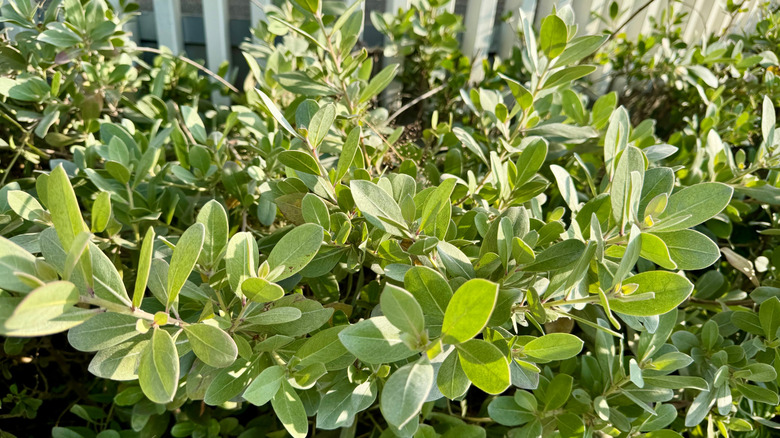
Once you have planted your green buttonwood trees, make sure you water and fertilize them on time to help them stay lush and full. You will need to water daily for the first two weeks after planting. After two weeks, water only twice a week for two months, and then only once a week for the next three months. But once established, the green buttonwood is fairly drought-tolerant. Still, though, if you want the best growth and to keep your plants lush, keep the soil consistently moist.
As for fertilization, avoid applying any fertilizer for the first six months after planting. After that period, use a general-purpose fertilizer every one to two months. Then, once it is established, reduce feeding to just three times a year. Avoid fertilizing in fall and winter, as the tree's growth slows during that time. Also, if you have been watering your green buttonwood regularly, you can cut down on watering during slow growth periods.
Keep in mind that you will need to prune green buttonwood regularly during the growing season to maintain it as a hedge. The best time to trim your trees is when the new growth is still green. When trimming, keep the base slightly wider than the top. This will allow the sunlight to reach the bottom, reducing the risk of thinning at the base.