

A Dwarf Spider Plant Is The Perfect Space-Saving Variety For Your Home Or Garden
We may receive a commission on purchases made from links.
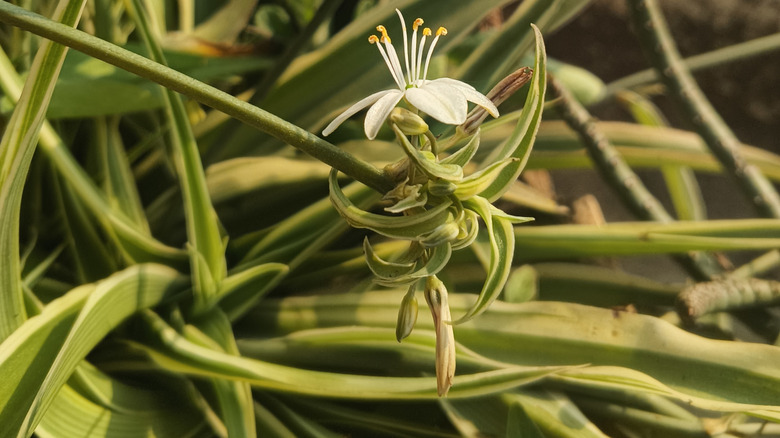
Having a home or garden that is short on space can be frustrating, because a lot of larger plants simply won't fit into the area you have available for them. Luckily, there are plant varieties that are not only stunning to look at and easy to take care of, but that are also notably compact and good for tight spaces. One such example is the dwarf spider plant (Chlorophytum comosum 'Mandaianum').
This plant is a diminutive version of other spider plant varieties, generally only growing to about 6 inches tall and around 4 inches wide. Saving on space doesn't necessarily mean you have to compromise on looks, though. This plant's long, narrow leaves feature stunning dark green and yellow stripes, which make for a nice contrast to the paler white stripes of some other spider plant types.
You can easily propagate spider plants by separating out the baby plantlets they produce, and the dwarf variety is no exception. This mini variety will create lots of additional plants that grow to the same small size. This is helpful if your home or garden has lots of small spaces that need to be filled out but not overwhelmed. But one of the most compelling bonuses of this plant, apart from its miniature stature, is that it is relatively easy to maintain. This makes it a great choice for beginners starting a smaller garden.
How to care for a dwarf spider plant
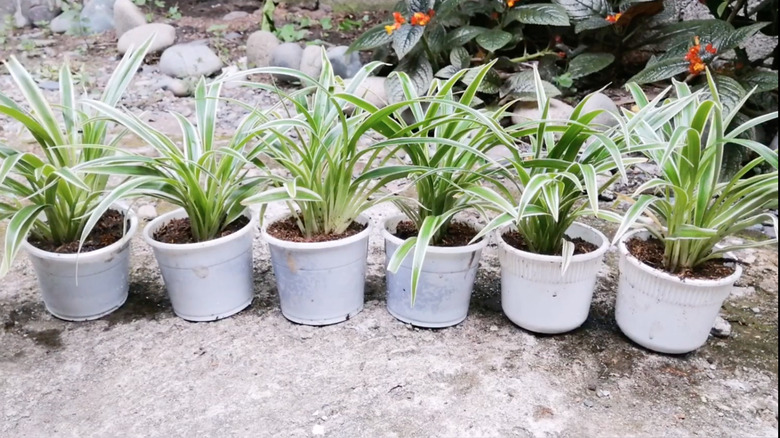
The 'Mandaianum' spider plant largely shares its care instructions with larger-sized spider plants, so it is easy to find guidance on how to care for it. If you are considering placing your mini spider plant outdoors, note that this perennial can only survive winters in USDA Hardiness Zones 9 to 11, meaning that it generally likes warm, though not overly-scorching, climates such as can be found in the southern half of mainland U.S. and much of the West Coast. If you do not live in these areas but still want to put your small spider plant outside, consider keeping it in a pot that can be brought inside during cold periods.
This plant prefers bright but indirect or dappled sunlight and can tolerate shade, so look for a spot in your garden that is partly sheltered by a tree or bush to avoid burning the leaves in direct sun. If you would like to keep your dwarf spider plant indoors, look for somewhere that gets plenty of natural light but is out of the range of direct sunlight from nearby windows. Make sure to place the plant away from drafty areas or air vents, too, as these abrupt changes in temperature can be a shock to its system, which can end up being one of the reasons your spider plant is dying.
Finally, this spider plant variety requires moist, well-draining soil. Aim to water around once a week, or even less in periods of dormancy. You may want to use a tool like this SONKIR soil meter to keep the soil slightly moist but not too wet. During the growing season, you can add a water-soluble houseplant fertilizer for best results.