

The Compact Spider Plant Alternative That Makes The Perfect Houseplant
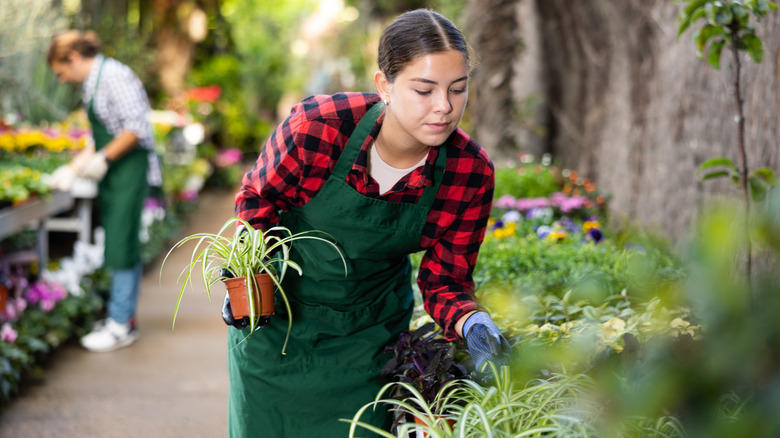
Spider plants are known as one of the easiest houseplants anyone can keep alive, making them a go-to for anyone who loves greenery but might not be the best at keeping on top of care. The common spider plant that appears dangling in hanging baskets and decorating shelves across the world is the Chlorophytum comosum, with its long trailing stems being the reason they get their name. But did you know that there are relatives of spider plants that you can also bring into your home? If you want something smaller and less sprawling, you may want to consider bichetii grass (Chlorophytum laxum).
Coming from the same Chlorophytum genus, the common spider plant and bichetii grass are both low-maintenance and tolerant of neglect. However, unlike the common spider plant, bichetii grass stays more compact. Yes, an indoor spider plant can be a big and beautiful statement piece, but sometimes, you just don't have the room for a thriving spider plant that keeps on growing and producing spiderettes. If you are looking for a tamer house plant, bichetii grass is a cute home addition that still has the classic spider plant variegation, with bright green leaves and cream margins. Reaching just 8 to 12 inches tall and around 18 to 24 inches wide, bichetii grass is a small houseplant, but its foliage is dense and thick, unlike the common spider plant that can sometimes get spindly and leggy. In the right conditions, bichetii grass will send up flowering stems that are around 11 inches long.
How to care for bichetii grass
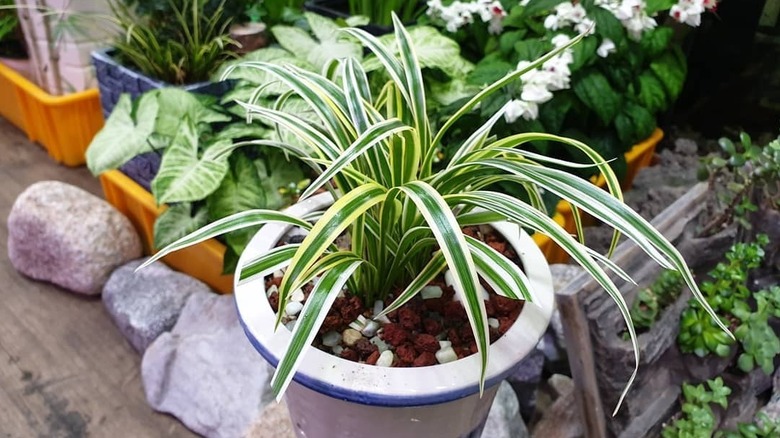
Bichetii grass is fairly tolerant of a range of environments, but it does tend to do best in low to medium light conditions. Ensure you use well-draining soil for this houseplant, opting for a general indoor plant potting mix that provides it with the nutrients and drainage it needs.
As a low-maintenance plant, you don't need to be constantly pruning and feeding your bichetii grass. However, it is helpful to keep an eye on the color of the foliage and the drainage of the soil. It is susceptible to root rot, so make sure the soil is never soggy. If the tips of its leaves are turning brown, a lack of humidity or water is usually the problem, so you may need to move it to a more humid room like a bathroom or adjust your watering habits. Pull out any dead, damaged, or withered leaves when you spot them to keep the plant looking good.
Bichetii grass looks great on show in plant pots in your home, but you could create a terrarium for it for something a bit different, as it tends to do well in these cute plant homes. Have a look for things around your home you can use to make tiny DIY terrariums and get creative with displaying your bichetii grass!