

The Beautiful Dahlia Color That Adds Rich Color To Your Landscape
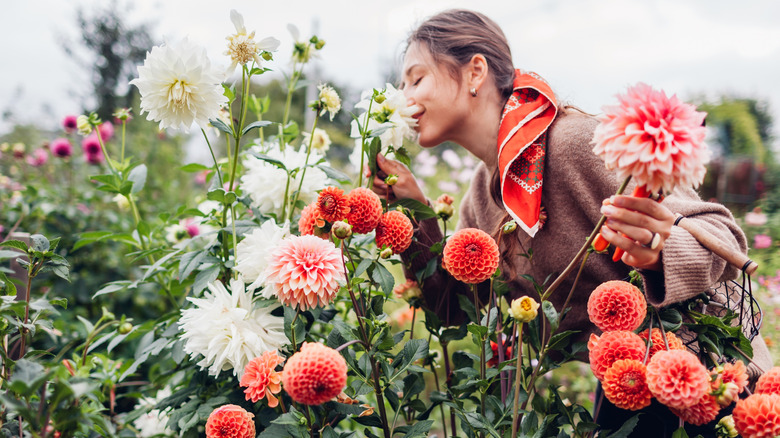
Burgundy dahlias are a top pick for anyone who wants to add some serious pop to a flower bed. While pale pinks and yellows are pretty, the deep, wine shades of burgundy provide a solid base that makes every other plant around it stand out that much more. These dark flowers catch the light in a way that makes the petals look like velvet. They stay bright and saturated even when the sun is beating down in the middle of July, which is helpful since lighter colored flowers can look faded or washed out by the heat. Because the color is so thick and dark, these plants do a great job of connecting the bright greens of summer with the warmer tones that show up in the fall. You can find this mood in specific varieties like the dark 'Hollyhill Black Widow,' the velvety 'Arabian Night,' the large and dramatic 'Rip City,' or the deep plum-toned 'Dark Spirit.'
Dahlias (Dahlia x hybrida) grow from tubers and stay in the ground year-round in USDA Hardiness Zones 7 through 10. If you live in a place where the ground freezes, the best way to protect your dahlias from the cold winter weather is to dig them up once the foliage dies back and keep them in a box of peat moss in the garage until spring. The best part about this specific color is that it goes with almost anything. You can find dinnerplate varieties that grow at least 10 inches wide or small ball dahlias that look like little round globes. This color is classic because it never goes out of style and provides a nice anchor for a variety of different garden styles, from cottage garden looks to very tidy, modern borders.
Dark burgundy dahlias stand out when planted next to lime green and silver foliage
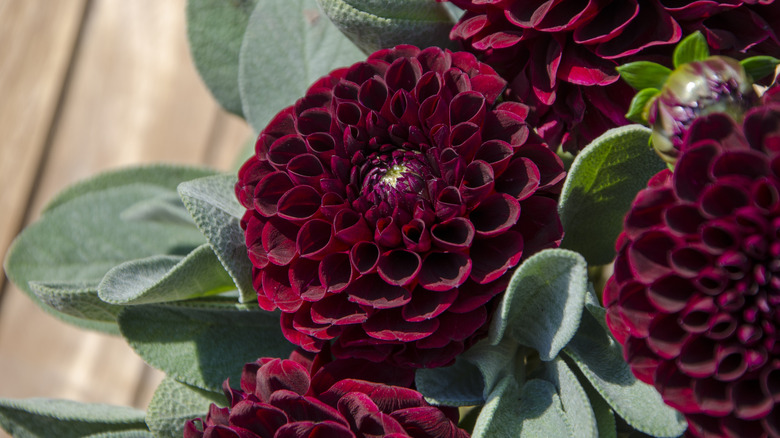
Getting a flower bed to look like a professional designed it usually comes down to how you pair your colors. When you put a burgundy dahlia next to something lime green, like a sweet potato vine or a 'Lemon Coral' sedum, the dark red color really jumps out. This is a quick way to make a small garden space look more interesting and well planned. The dark colors seem to sit in the background a bit while the bright greens move forward, which creates a sense of depth. It keeps your eyes moving around the garden so the whole area looks full instead of flat.
Silver plants are another great partner for these burgundy blooms. Plants like dusty miller or artemisia have a soft, cool look that makes the warmth of a burgundy dahlia look even richer. This combination looks especially good in the evening when the silver leaves reflect whatever light is left and the dark dahlias look almost black. The texture of the dahlia petals, which usually have a bit of a sheen, shows up well against the fuzzy or matte leaves of the silver plants. By picking these specific neighbors, you can make the whole area look put together. It's also helpful to know what not to plant near dahlias if you want big blooms, since tall plants can cause competition for sunlight and nutrients.
Good drainage and plenty of sunlight are the main requirements for healthy dahlias
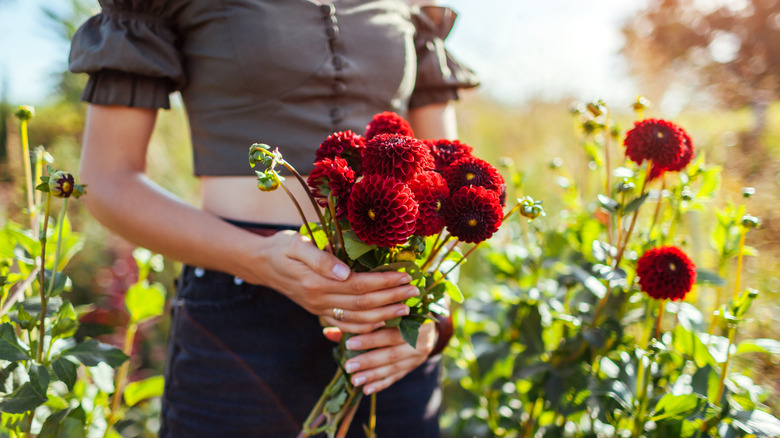
To get those deep burgundy colors to really show up, you have to give the plant the right start. The best place to plant dahlias for stunning blooms is in an area with nutrient-rich, well-draining soil. Dahlias have a big appetite, and they need a lot of water, but they will rot and die if they sit in soaking wet soil. The best way to fix this is to mix a lot of compost or bagged garden soil into the dirt before you plant. This helps the ground hold enough moisture to keep the plant growing while letting the extra water move away from the tubers. If your soil is heavy clay, the tubers will have a hard time getting bigger, and you'll end up with small plants and very few flowers.
Sunlight is the most important thing for getting that dark burgundy pigment to develop. These plants need at least 6 to 8 hours of direct sun every single day. If they're stuck in a shady spot, the stems will get tall and skinny as they try to find the light, and they usually won't be strong enough to hold up the flowers. A lack of sun can also make the flower color look a bit muddy or dull. Since dahlia stems are hollow like a straw, it's a smart move to put a wooden stake in the ground when you first plant the tuber. Staking the stems keeps the wind from snapping the plant once it gets tall and covered in heavy flowers.