

Puddles On Your Driveway Are A Warning Sign You Shouldn't Ignore
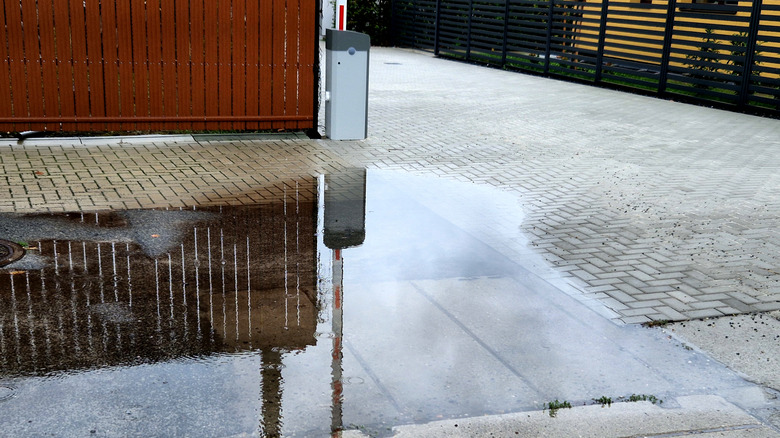
If, after every downpour, you notice that there is water pooling on your driveway, it's time to take the problem seriously. It isn't only water damage on wood floors inside your home that you should be mindful of; outdoor surfaces are just as susceptible to long-term moisture damage. Incorrectly graded driveways and natural shifts in the ground can result in depressions or patches of pooling. As with most landscaping problems, the solution depends on the cause. You may need to regrade or resurface your driveway, repair past damage, or install some sort of new drainage system.
If water is pooling on your driveway, there are most likely issues with the slope that need to be assessed. A clever driveway layout that is sure to boost curb appeal isn't always the most weatherproof option. More vital than smart-looking aesthetics is a gradient that guides water away from your home and into municipal storm drains. But even a driveway with a good slope can be affected if the ground shifts or the surfacing material depresses in ways that hinder drainage.
Whether your driveway is paved, filled with gravel, or made of concrete or asphalt, standing water that sits on the surface for too long can lead to cracks and erosion that wear down the material much faster than you might think. If water seeps into small crevices and freezes, it can expand, making cracks larger and more noticeable. Aside from property damage, standing water can create slippery, unsafe walking conditions through algae build-up.
Regrading, installing drainage, or fixing depressions can prevent water pooling on driveways
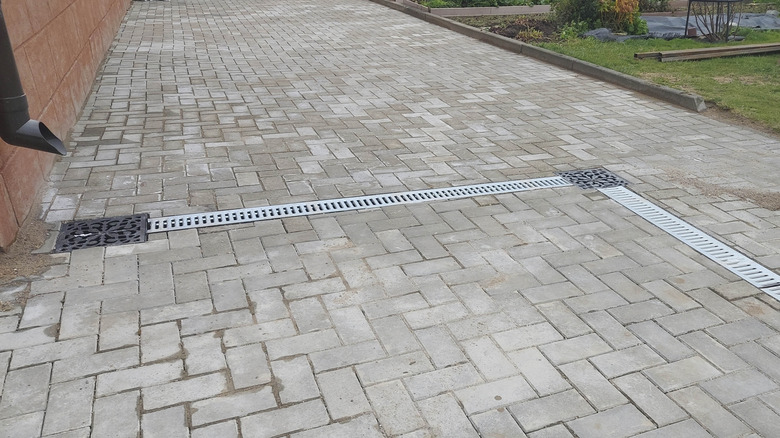
Very often, homeowners will need to regrade their driveway to make sure rainfall or hose water flows in the right direction. If adjusting the slope doesn't solve the problem, it could be a drainage concern. There are a few different drain options to choose from for driveways, though trench drains and French drains are the most common. Trench drains work by catching above-ground water before it has the chance to pool on a driveway, directing it away from the surface and into nearby street gutters. French drains work in a completely different way. They are installed below the driveway and carry underground water away from the surface through perforated pipes.
Your choice largely comes down to personal preference, as both options will improve drainage, though your budget may influence the decision. French drains are typically cheaper to install than trench drains, while trench drains tend to have fewer maintenance issues than French drains. The degree of slope in your driveway is only an important factor in the size of the system — the sharper the slope, the larger the drainage system you need.
Finally, there could be hidden depressions in your driveway where water pools following heavy rain. Everything from improper installation to general wear and tear to soil instability could be the cause. If you have an old driveway with a lot of uneven spots, you may need to level and resurface the entire driveway with fresh concrete, asphalt, gravel, or pavers to solve the issue. No matter what's causing all those puddles, addressing it early is key; it's likely the reason why driveway cracks keep coming back, even after you repair them.