

The Low-Maintenance Spider Plant Variety That Makes A Great Hanging Plant
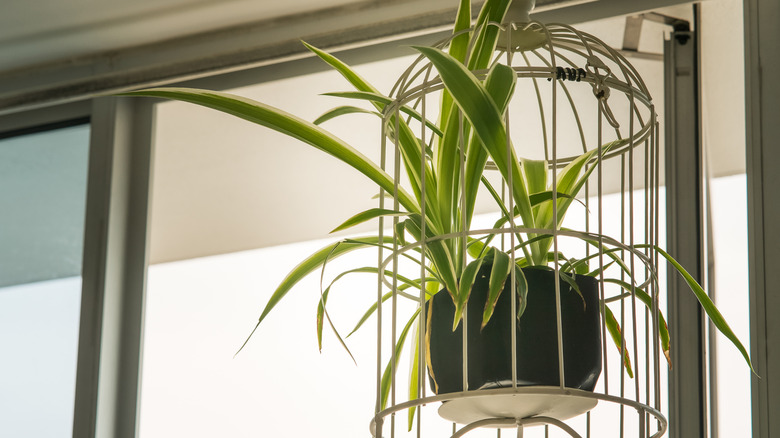
Spider plants are a staple of houseplant collections. And honestly, it makes sense. They look good, they thrive in pots, and they don't demand much. Also, they come in several varieties, so you can easily find one that fits your style and needs. Take the reverse spider plant (Chlorophytum comosum 'Variegatum'), for instance. Unlike the regular variegated spider plant that has green leaves with white stripes down the center, the reverse spider plant boasts white edges instead. It's an excellent choice for anyone who wants a little twist on a familiar favorite. However, it's still easy to grow and care for. In fact, it is incredibly adaptable. It will thrive in a range of conditions and has very few problems. Even better? You can grow it both indoors and outdoors.
It is an elegant addition to any space, be it a patio or a container on a windowsill. But probably the best spot to grow it is in a hanging basket indoors. There, the cascading stems of the reverse spider plant will bring a lush, vibrant splash of greenery that brightens the whole space. Oh, and don't worry if you don't have any hanging baskets. If you're willing to put in a bit of time, you can easily turn your old plastic containers into beautiful hanging planters for your reverse spider plants. It's really easy! Just keep in mind that if you are planting it outdoors, put it in shade and keep it away from direct sunlight. Direct sun can scorch its leaves. Plus, outdoors, it only thrives as an annual. You will either have to bring it indoors for winter or plant it again the next year.
Helping your reverse spider plant thrive in hanging baskets
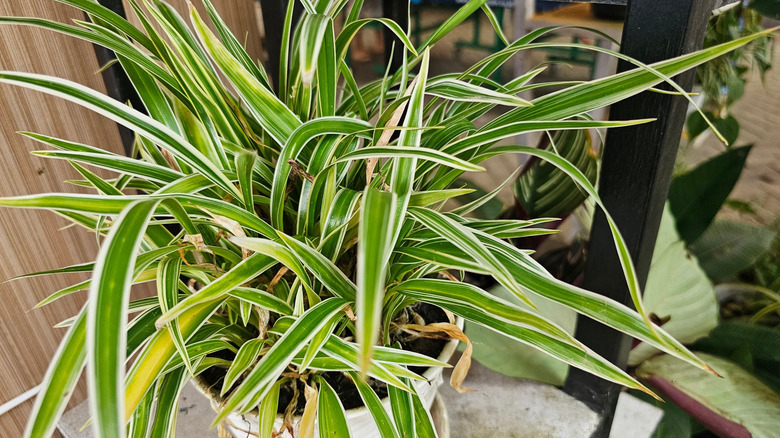
When growing a reverse spider plant in a hanging basket, the basket's size will directly influence how well and how large it grows. For instance, in 6-inch pots, their trailing stems only grow to a size of about 12 to 18 inches. This is perfect for spaces where you might already have other plants. However, if you have plenty of space and want to really show off the unique leaves of your reverse spider plant, put it in a larger container. Anywhere from 8 to 12 inches will do. This will allow their leaves to grow much longer, nearly 20 to 28 inches, creating a beautiful cascading show.
Also, make sure to fill the hanging baskets with well-draining, sandy, and silty soil. If you don't know how to tell different soil types apart, don't worry. It is easy. In fact, you can figure out the soil type by using just your hand. As for watering, keep the soil moist but don't let it get waterlogged, as it can cause root rot in reverse spider plants. So, water regularly, and don't let it sit in the dry. Too little water or moisture can cause brown leaf tips in reverse spider plants.
In addition, fertilize with a time-release or slow-release fertilizer during the growing season. Don't overfertilize unless you want to be guilty of holding your spider plants back. Reverse spider plants are not heavy feeders. And lastly, prune your hanging basket plants to keep them tidy. If you prune correctly, it can actually help your reverse spider plants branch out more, making your hanging basket or planter look fuller and prettier.