

Turn Scrap Roofing Metal Into A Raised Garden Bed That Boosts Curb Appeal
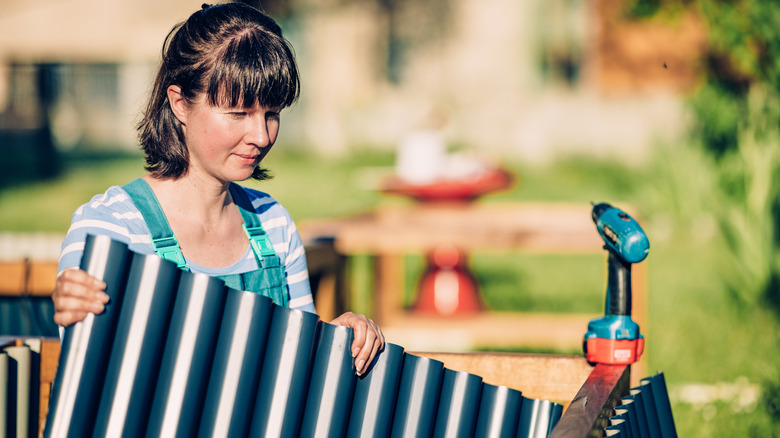
If you've just installed a metal roof, don't let any scrap material go to waste — you paid for it! Corrugated roofing metal can cost between $1 and $5 per square foot for the material alone. This may not sound like much, but it certainly adds up when you're covering a house that's hundreds or thousands of square feet. Even if you haven't remodeled your roof, scrap metal can be a valuable and versatile secondhand find. With a few tools and a little determination, you can turn that waste material into an attractive, flourishing raised garden bed without spending a dime. Of course, there's more than one way to build a garden bed. But if you're looking for a simple, sleek-looking raised bed that boosts your curb appeal while requiring few materials, this basic rectangular design is perfect!
To build a basic garden bed, you'll need your sheet metal panels and a means of cutting them to size, such as a grinder, tin snips, or a utility knife for the score-and-snap method. You'll also need screws or bolts and a drill, and it may help to have other scrap materials, like wood or rubber hosing. When working on this project, it's important to be cautious. Sheet metal can be extremely sharp, so wear gloves to protect your hands and avoid sliding along the edges.
Start by calculating the amount of scrap metal you have and sketching your garden bed design. The easiest approach will be to build a rectangle or a square, but you can attempt more interesting shapes like a triangle, hexagon, or horseshoe if desired. Keep in mind that the ideal size for a raised garden bed is generally no more than 4 feet wide, which makes it easy to reach the center from all sides.
A rectangular raised garden bed is easy to make with scrap metal
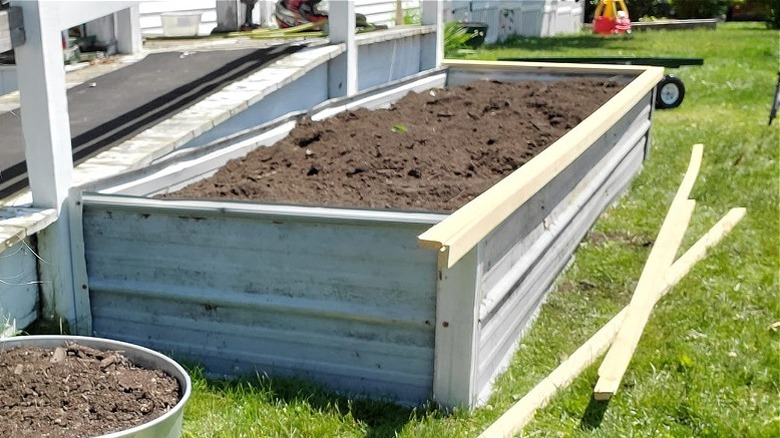
Start by grinding, cutting, or scoring and snapping all your sheet metal to size, depending on how tall and wide you'd like the garden bed to be. Cut corner braces to the height of your garden bed. You can also make your own corner braces by bending strips of scrap metal lengthwise at 90 degrees, with about an inch on either side of the bend. Drill holes and use bolts to attach one corner brace to the edge of the first panel. Bolt the other side of the corner brace to the next panel and continue working around all four sides until you've completed your basic box. At this point, you can use whatever scrap metal or other materials are left over to cover the corners of your planter box, which may be sharp. Rubber tubing, a slit garden hose, or wood scraps will fit over the top edge of each side to cover those too, if needed.
You might need to troubleshoot and adapt your project a bit depending on its design and the materials, skills, and tools you have on hand. If the garden bed is rectangular, the long sides may bow out when it's filled with soil. To improve stability, span a metal strap across the bottom of the bed and attach it at the center of the two long sides. You can also construct a wood frame or cut corner posts, then screw the metal directly to the posts. Once you're happy with the results, you're ready to fill it with soil and add plants that work well in raised garden beds.
Ensure your metal garden bed is safe and long-lasting
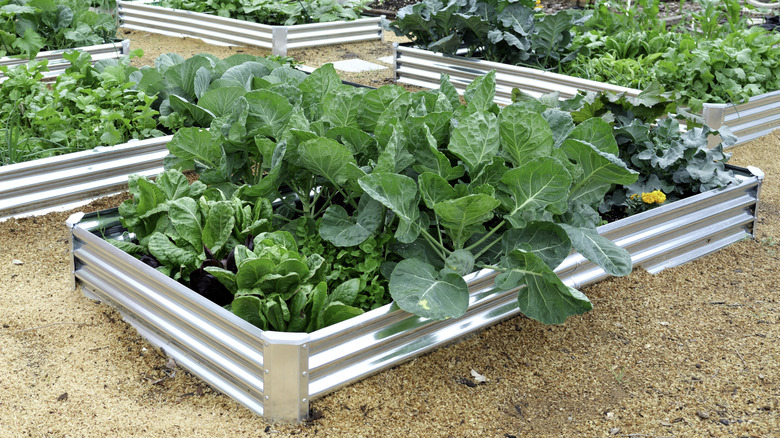
Not all metal roofing materials are suitable for a garden bed. Before getting started, determine if your roofing scraps are made from steel, painted aluminum, tin, zinc, or copper. Practically every type of metal will corrode over time, but the consequences of this may vary. Zinc and copper can leach into soil, especially if it's acidic. In small amounts, copper and zinc don't usually pose a risk to people or plants and may even benefit your garden. Aluminum and galvanized steel are generally safe, although steel will rust eventually, especially in the humid conditions a garden bed creates.
Don't use roofing metal that is already rusted or corroded. It won't look attractive, and the rough edges created by degraded spots could cut you, putting you at risk for infection from soil-dwelling bacteria like Clostridium tetani (although it's a common misconception that rust itself causes tetanus). Old roofing materials may also contain traces of lead or cadmium, two toxic heavy metals that should never come near your fresh vegetables.
If you decide to paint your raised garden bed, only paint the outside to avoid contaminating the soil. You can also use plastic sheeting or landscaping fabric to line the inside of your garden bed to prevent the metal from leaching or corroding, although this can take years to occur anyway. All this aside, if you've never built a metal garden bed before, you might wonder, will metal raised beds overheat your plants?