

What To Do If You Find A Snake's Shed Skin In Your Yard
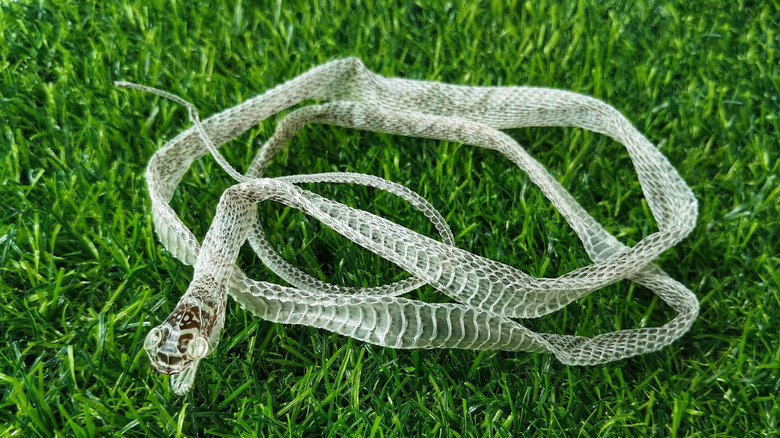
While seeing evidence of a snake on your property might send a chill down your spine, the good news is that most snakes aren't a safety concern. Out of over 3,000 snake species worldwide, only 7% are venomous enough to harm humans, and most are not aggressive. If you find a snake's shed skin in your yard, you shouldn't panic, but it makes sense to be on the alert. Although this scary garden pest is often good to have around for rodent control, there are likely areas you'll consider off-limits to these reptiles.
Avoid picking up the skin with your bare hands, but do consider trying to identify the snake based on its shed layer. This can be a challenge, given that a snake skin doesn't have the telltale colors that its owner possessed. However, although you can rarely determine characteristics like head shape based on the skin, you may be able to tell what kind of scales the snake has. Toward the tail-end of the skin's underside, a single row of scales points to a venomous snake, while a double row indicates a non-venomous one.
If the snake is non-venomous, the skin is nothing to worry about. However, if you're concerned that a venomous snake might have made its way into your home, outbuilding, or play area, removal is an obvious priority. Contact a wildlife services specialist if you can't find the snake or are worried about danger. If you're unable to find that kind of service locally, your state's cooperative extension agency or Game and Fish agency can direct you to the professional advice you need. In the meantime, work to protect your home and outdoor areas.
Take simple steps to snake-proof your home and yard
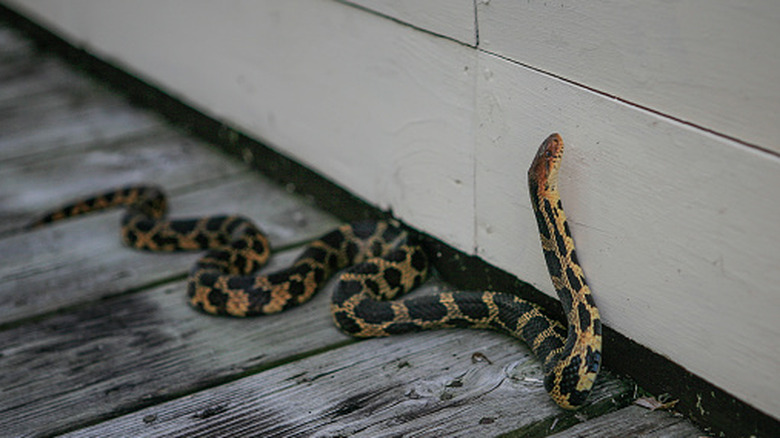
Taking action based on finding a shed snake skin depends on how concerning that type of snake is. In the U.S., only four types of snake are venomous to humans: cottonmouths, rattlesnakes, copperheads, and coral snakes. Some states, like Maine and Rhode Island, have no venomous snakes at all. However, if you're in a higher risk area like the southeastern or southwestern U.S., it may be wise to identify the snake skin and ensure it's no longer on your property. Although snakes can be allies when it comes to controlling rodents and insects, it's understandable if you want to reduce their access to your yard.
There are several simple but effective ways to deter snakes from your yard and home. To make outdoor play and recreation areas safer, clear out potential hiding places, including log and brush piles. It's also helpful to keep lawns mowed, remove weedy areas, and regularly cultivate garden beds. Consider installing a snake-proof fence. It should be at least 3 feet in height with a mesh no larger than ¼-inch. For maximum protection, dig the bottom of the fence into the ground and angle it at an outward slant, with extra fencing material folded downward to prevent snakes from climbing up and over.
Keeping your home and outbuildings snake-free is a matter of tightly sealing the exteriors. This step discourages both snakes and their potential prey, such as rodents. Use a caulk gun or mortar on any exterior cracks you find. Replace any missing siding, sills, or broken screens and weather-stripping. This will help prevent snakes from entering sneaky spots where they could hide in your home.