

The Evergreen Shrub That Adds Curb Appeal While Attracting Pollinators

We may receive a commission on purchases made from links.
As a start to a pollinator garden, there's one sweetly named shrub that you can't go wrong with. It boasts fragrant flowers that attract butterflies, bees, and hummingbirds. In addition, the small, glossy foliage provides year-round interest. New leaves emerge with green centers and yellow borders that turn to ivory edges. The foliage gains splashes of rust and purple in the fall. Plus, the plant has reddish stems that add some color to a winter landscape. The plant in question is the Miss Lemon abelia (Abelia × grandiflora 'Hopleys' Miss Lemon).
When it comes to shrubs that tick all of the boxes, it's hard to go wrong with a Miss Lemon abelia. Grow this pollinator-friendly shrub to add extra privacy to your yard or ramp up your curb appeal. 'Miss Lemon' not only boasts year-round ornamental beauty at the warmer end of its USDA Hardiness Zones 6 to 9, but during the summer and fall, it has trumpet-shaped, pink and lavender flowers that pollinators love.
This abelia is fairly compact in moderate climates, growing up to 4 feet tall and wide. That makes it useful for lining driveways and garden borders in groups. It's even small enough to serve as a front-porch container plant if regularly pruned. In warmer climates, however, Miss Lemon may grow into a 6-foot-tall specimen plant. Between its fragrant blush and lilac blooms, its showy evergreen foliage, and its ability to attract pollinators, Miss Lemon is a standout in any garden. It's no wonder the shrub's parent plant, Abelia x grandiflora 'Hopleys' or glossy abelia, received an Award of Garden Merit from the Royal Horticulture Society.
Planting and caring for your Miss Lemon abelia is fairly stress-free
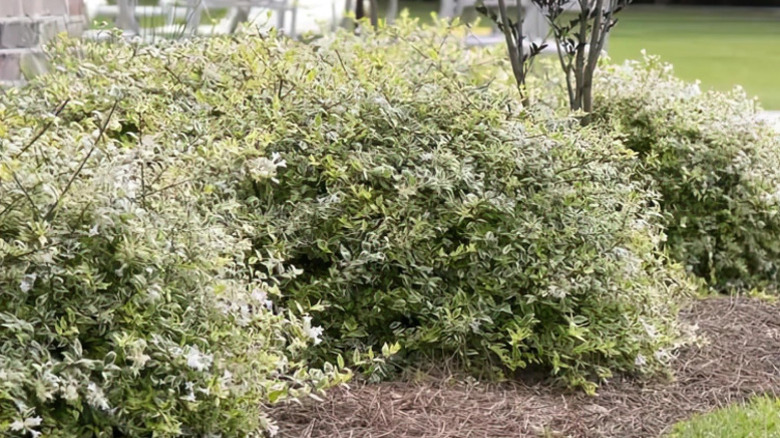
When you're learning how to start a pollinator garden, shrubs such as Miss Lemon are ideal additions. Choose a spot where this abelia will get either full sun or a bit of shade. Because Miss Lemon is deer-resistant, it's safe to place the shrub in a front yard for the most aesthetically-pleasing look without fearing reprisals from the local wildlife. In fact, even insects and diseases are rarely an issue with this variegated gem.
While curb appeal is a great reason to plant these abelias in your front yard, they're also helpful for erosion control on slopes. Miss Lemon isn't too fussy about soil conditions, but a slightly moist, acidic garden bed is ideal. After planting the shrub, water it regularly during its first year to give it the best chance of developing a strong root system. After that, Miss Lemon tolerates drought conditions fairly well. Of course, in times of low rainfall, it will appreciate supplemental water. Mulching is always a good idea in order to thwart weeds and preserve soil moisture. Add up to 3 inches of mulch around the base of the shrub, making sure not to let it touch the trunk.
Give your new shrub a slow-release fertilizer that's made for flowering plants, like Miracle-Gro Shake 'N Feed Flowering Trees and Shrubs Plant Food, in late winter and early spring. Once the flowers have dropped, prune lightly to remove any stragglers. If you want to keep the graceful shape of the shrub, try not to overprune its naturally arching branches.