

The Eco-Friendly Pool Style That's Trending In Europe & Is Surprisingly Affordable
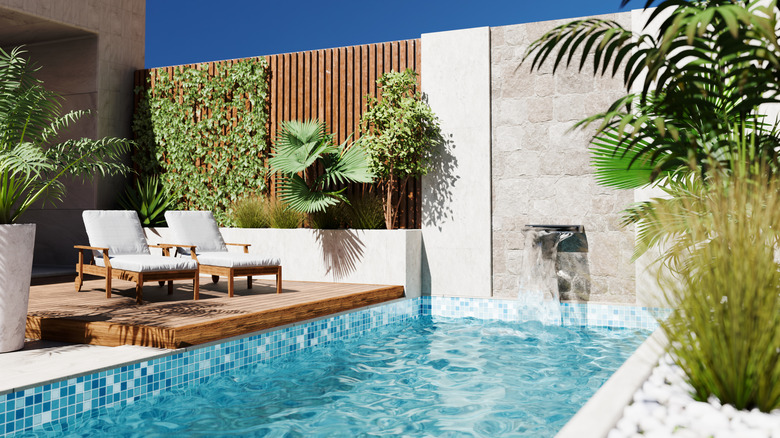
As more and more people shift towards sustainable lifestyle practices, our home and garden design is trending towards eco-friendly styles as well. We're seeing an increase in "bio-pools" popping up around Europe. This natural take on a private pool aims to turn your backyard into a dreamy oasis all while centering the planet. Instead of chlorine, these pools use living organisms to keep the water clean and sanitized. While this trend hasn't quite caught on in the United States yet, there seems to be growing interest in these unique pools.
"There is a very specific demographic which seems to be drawn to the idea of bio-pools, or 'natural pools' as they're sometimes called," Brad Holley, owner of The UnDesign, shared with House Digest in an exclusive interview, "It's the kind of person who has a healthy level of skepticism toward the overwhelming amount of chemicals injected into our lives and a growing resistance to the way we seem to over-manufacture everything."
If you're plotting out your own oasis and want to make your backyard pool more sustainable, bio-pools are a beautiful and shockingly affordable option to consider. However, there's a lot that goes into cultivating and maintaining one of these unique backyard features. Holley expressed that while they do offer an alternative to harsh chemicals, there are "inherent drawbacks" and "complexities" to keeping a bio-pool. There are a lot of considerations to keep in mind before you decide to install one of these pools in your backyard.
Is a bio-pool right for you?
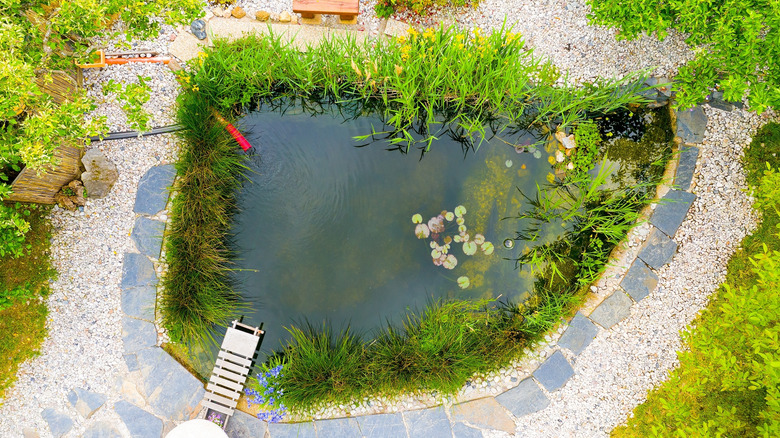
Bio-pools are a highly specialized backyard feature that won't be right for everyone. "You're basically creating and sustaining a small, living ecosystem, and that is not a small or passive task. If the idea of regularly caring for plants and giving them an environment to thrive in doesn't get you excited, then a bio-pool isn't going to be for you," Holley explained in an exclusive interview with House Digest.
Typical pools use a system of pumps, cartridge filters, and skimmers to catch loose sediment while chlorine sanitizes. Hoelly emphasized that even salt pools use a different type of chlorine. Bio-pools, on the other hand, essentially cultivate a mini ecosystem to keep your pool water clean. They utilize aquatic plants such as water lilies, water lettuce, and hornwort to filter out excess nutrients, bacteria, and toxins, which helps to keep water clear and algae-free. Holley compared it to the example of a farmer keeping cats around to control the rodent population rather than relying on chemicals and traps. However, plants can only eat so much. This can be trickier when high temperatures prompt faster bacteria and algae growth.
Holley does not recommend bio-pools for warm climates, stating explicitly that "there's basically no amount of plants that you can reasonably buy and install which will match the amount of algae" when temperatures rise. "Said another way: bio-pools are going to be seasonally unsustainable in consistently warm climates. And unlike traditional chlorinated pools, if an algae bloom occurs in a bio-pool, you're not going to be able to perform a quick, convenient, emergency treatment to fight it without putting your plants at risk," he emphasized.
What does it take to install a bio-pool in your backyard?
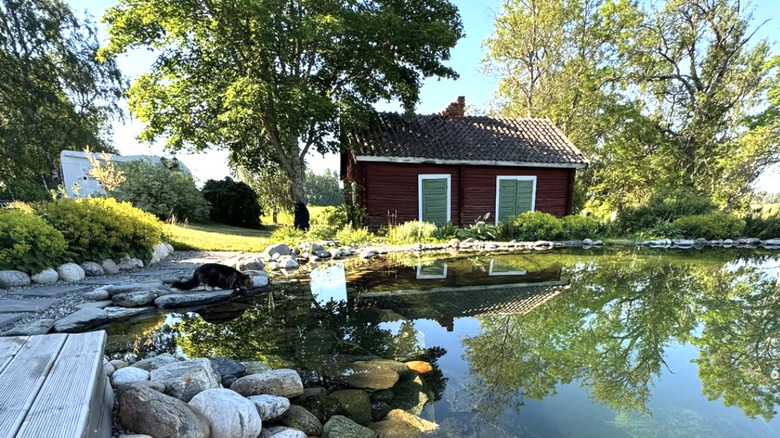
"The lovely and idyllic pictures you're seeing of people splashing around in their own personalized, naturally-harmonious pond are almost certainly taken in regions where the Summer season and warm weather is brief, and where temperatures stay consistently lower," Holley shared with us in an exclusive interview. If you live in a region with hot summers, you may want to stick with a traditional pool. While it's not impossible to maintain a natural pool in warmer climates, it's a lot more maintenance.
Once you determine whether you're in the right climate for a bio-pool, plot out a good space for your oasis. Luckily, this amazing swimming pool design just requires the same amount of space as a traditional pool. However, Holley shared that smaller eco-pools tend to be more optimal for filtering and sanitation. Select a partially shaded spot to maintain algae control. Your pool will require a "regeneration zone" for filtering plants and a separate swimming zone. The sides of the pool should be sloped to prevent the soil from caving in. The whole process is a lot more cost effective than a traditional pool.
"That simplicity alone lends itself to building a bio-pool for as little as a few thousand dollars, all the way up to the tens-of-thousands of dollars. And that's a striking difference when you consider that the current national average price of having a traditional concrete swimming pool built is somewhere between $80,000 to $120,000," Holley shared.