

What To Do If You Find A Baby Squirrel Lying In Your Yard
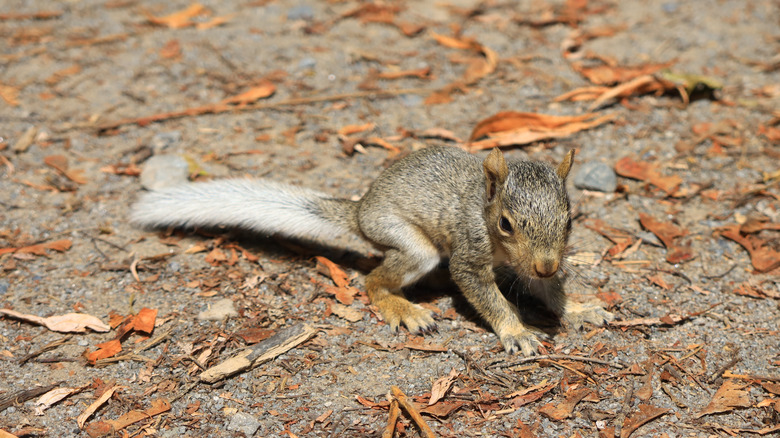
There are many things you expect to see in your backyard on a fresh spring morning: spring-blooming perennials, dew on the grass, or a bird's nest in a tree. But you may be surprised to find a baby squirrel lying in your grass. Squirrels, of course, are common in backyards, and most people don't bat an eye if they see them skittering up a tree or along a fence. But even though adult squirrels are expert climbers, younger squirrels aren't as adept. They are born blind and heavily dependent on their mothers. It takes them time to learn to scramble around and operate on their own, which means falls can happen. This is doubly true on a stormy day or after a tree trimming. If a hawk, raccoon, or even your cat were chasing a baby squirrel, it's easy for it to become separated from its mother. So if you see one lying in your yard, do you need to intervene? It depends.
In some circumstances, a baby squirrel's (also called a kit) mother may be away gathering food or tracking down her little one after they were separated. She may also be observing her baby from a concealed spot (like a bush). So it's important not to scoop up the baby immediately. And this is certainly not the time to get your home ready for a new pet. Instead, take time to observe the squirrel, the surroundings, and the situation before making your next move.
How to tell if a baby squirrel needs help
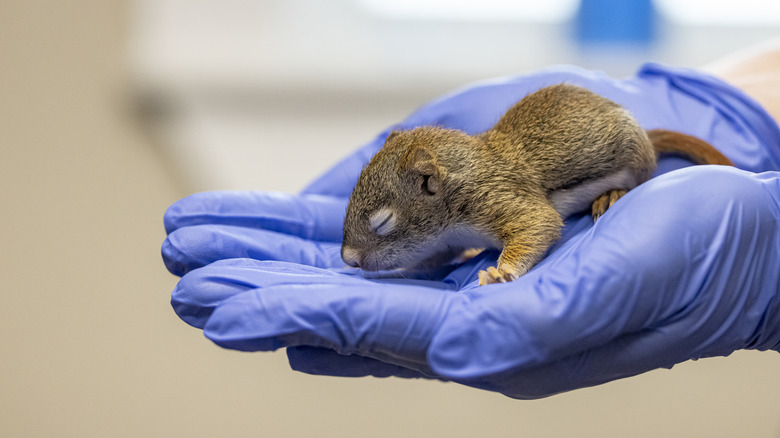
First, you'll want to assess for any visible indicators of injury or poor health, like bleeding, wounds, swelling, or an inability to get up. If you note any of these, contact a licensed wildlife rehabilitator immediately. Use Animal Help Now to find someone in your area who can assist the squirrel. These rehabilitators have the tools and training necessary to bring them back to health.
The same is true if the squirrel's behavior is strange, including prolonged crying, shaking, or not responding to sound or movement in the environment. Even if the squirrel you have found is an adult, those are signs it needs help. If the squirrel is injured or sick, it's important not to attempt to feed it or give it water. Instead, monitor the squirrel and wait for help to arrive.
What to do with abandoned baby squirrels
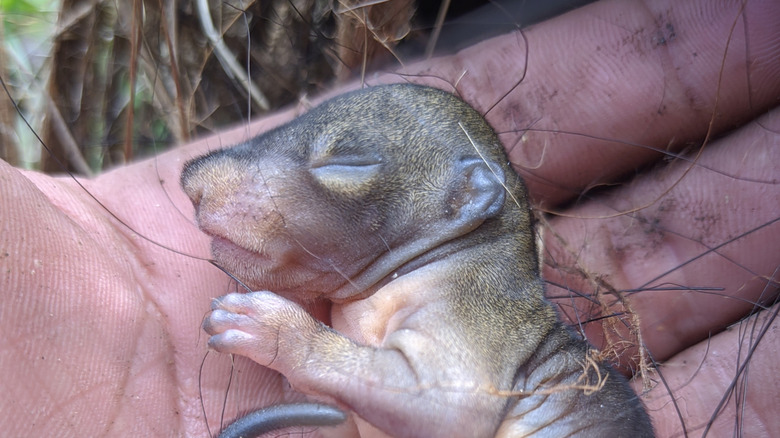
If the squirrel is extremely small with still-developing features, has limited fur, closed eyes, and limited mobility, you've likely stumbled upon an infant. If it's not injured and does not appear to be in immediate danger, observe it from afar for at least a full day of daylight — its mom may be coming back for it. When dusk comes, if the squirrel's mother hasn't claimed it, call a rehabilitator.
In either case, use gloved hands to place the squirrel in a small box, lined with a soft cloth. Place a hot water bottle or similar heat source (like a hand warmer) beneath the cloth to keep the baby warm. You can put a lid on the box — be sure to create air holes first — to help protect the squirrel from predators or the elements while you wait for help to arrive. But if you are waiting to see if the squirrel's mother will come back, forgo the lid so the baby can be found more easily. (Be sure to monitor the box vigilantly for predators.)
For any animal you find, including squirrels, the goal is always to minimize noise, lights, or other interference that may further exacerbate their stress. To prepare for other surprise visitors this spring, read about what to do if you find a baby raccoon in your yard.