

The Sunflower Variety That Makes The Perfect Daisy Alternative In Your Rain Garden
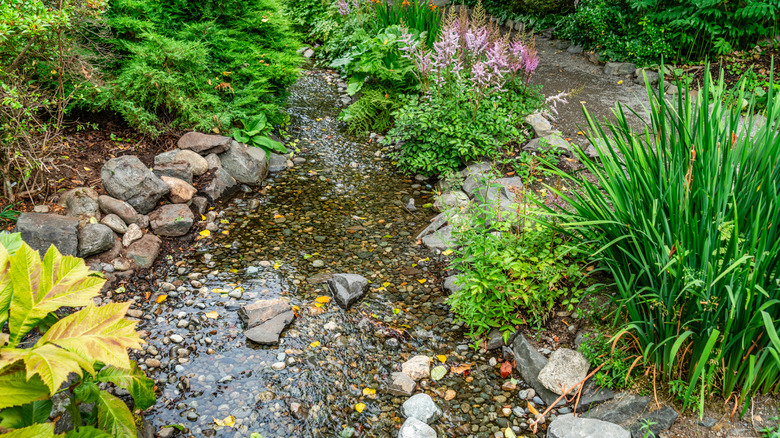
While you might think of sunflowers as those bright and happy blooms that grow in large fields to produce a commercial harvest for seed and oil production, they also make a gorgeous addition to any garden. But there's more than one type of sunflower in the Helianthus genus. In fact, it might surprise you to know that there are over 70 sunflower varieties. There are ones that have blooms in colors differing from the yellow you might be familiar with, including red, orange, and cream. Even the size of the flowers varies from one species to another. With all this diversity, their preferred growing requirements also vary slightly, and while a lot of sunflower species prefer full sun and well-drained soil, there is one that you can consider adding to your rain garden as a daisy alternative: the muck sunflower (Helianthus simulans).
The muck sunflower doesn't look a lot like the sunflower varieties you might be used to. This species has more of a daisy-like flower, with bright yellow petals, orange to deep-red centers, and long, narrow leaves that are covered in hairs. The plant is a perennial and grows as a spreading shrub with a height between 3 and 8 feet. What makes it perfect for a rain garden — which is the smart solution for excessive stormwater flooding your yard – is that it's naturally found growing in areas with wet soil, such as roadside ditches and marshes. It can easily be grown in the garden areas that experience consistently wet or moist soils and can even handle part shade, making it ideal for any type of rain garden.
How to grow muck sunflowers
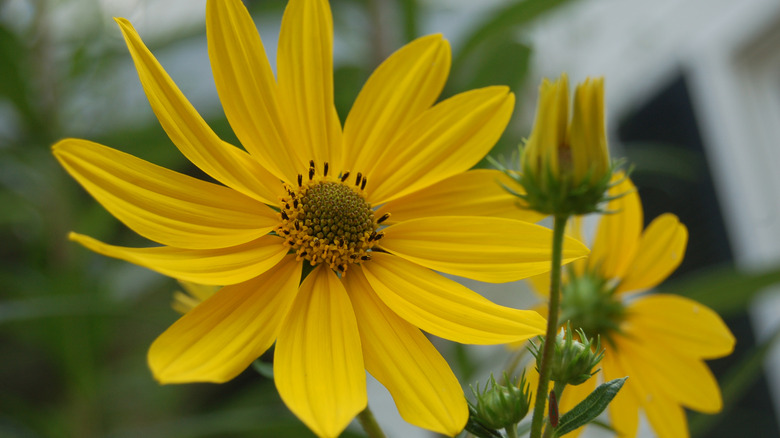
If you live in USDA Hardiness Zones 6 through 9, you can grow this species as a perennial, but in other regions, it will need to be grown as an annual. As with the swamp sunflower (Helianthus angustifolius), another water-loving plant that will thrive in a bog garden, you can either start this plant from seed or purchase one in a pot from a nursery. Once you have it growing in your yard, it can easily be divided (it spreads by underground rhizomes) if you have other spots you want it to grow. If it will grow as a perennial in your garden, the only maintenance it really needs is a trim back of the stems in early summer. Cut these back by about ⅓ to encourage bushy growth and ample flowers.
You should start to see those bright yellow blooms from late summer right through the fall. These are particularly attractive to native bees but will also lure in butterflies. Once the seed heads develop, they'll be an important food source for songbirds and small mammals during the colder months. And if you want to add even more color and diversity to your yard, you may like to explore other plants that will flood your rain garden with abundance that you can easily pair with your muck sunflowers.