

The Pretty Flowering Crabapple Tree Variety That Birds In Your Yard Will Flock To
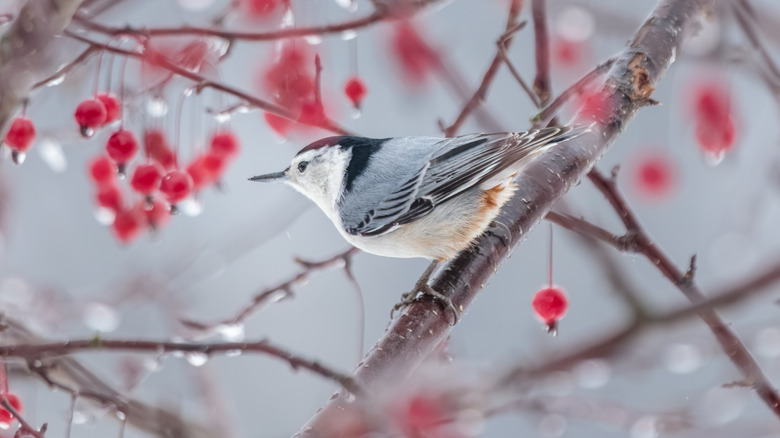
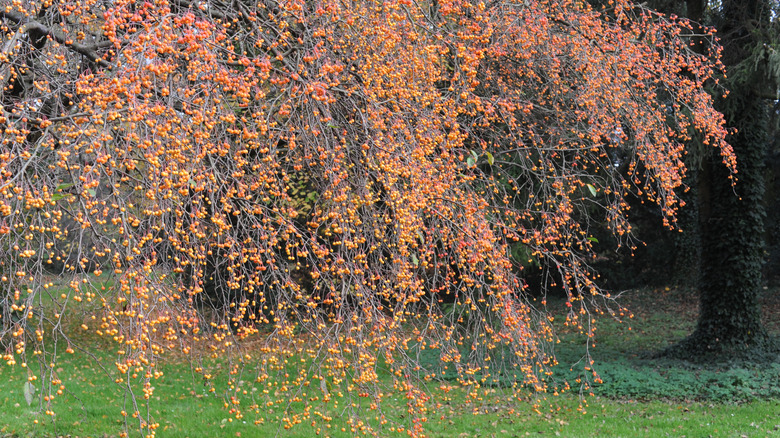
Flowering crabapple trees are one of the most beautiful trees in spring, with their colorful blossoms in shades ranging from white to rosy pink, depending on the variety. The blossoms are delightfully fragrant and attract spring pollinators. Crabapple trees also attract birds, who enjoy the shelter of the intricate branches and the tasty small fruits that appear from late summer through autumn. The 'Louisa' cultivar is a type of weeping crabapple tree (Malus 'Louisa') that has graceful cascading branches and golden yellow fruit that attracts songbirds.
This handsome tree cultivar was discovered in Martha's Vineyard in 1962. Like other apple trees discovered growing wild, it has been reproduced by grafting, so that many people can enjoy this unusually-shaped crabapple tree.
Many weeping fruit trees are ornamental only, such as weeping plum and weeping cherry, and don't produce fruit. The 'Louisa' crabapple, on the other hand, offers the best of both worlds: It is not only highly ornamental, but fruit bearing. Some flowering crabapples have very tiny fruits, while some have larger ones suitable for making jelly or preserves. The golden-yellow fruits of 'Louisa' are of medium size, ⅜ to ½ inch in diameter. Unlike larger apple varieties, crabapples tend to remain on the tree well into winter, which will also have hungry birds flocking to your garden.
Benefits of flowering crabapple trees
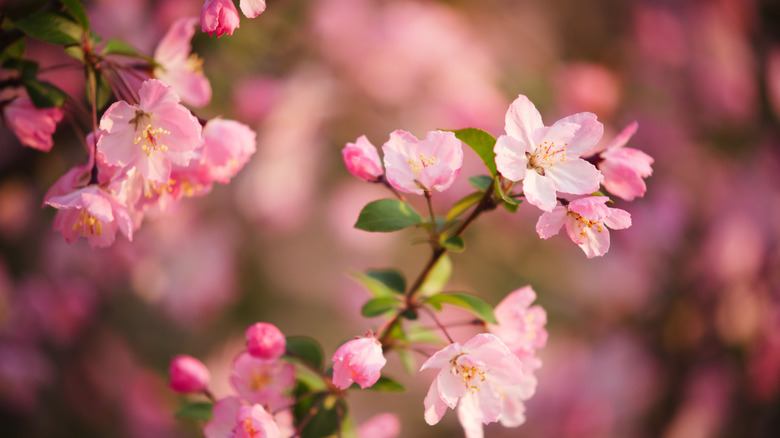
Flowering crabapple trees are one of the best choices for a landscape tree for a number of reasons. They're not too big, making them suitable for smaller properties. Most crabapples grow no more than 15 feet tall and 10 feet wide, and the 'Louisa' cultivar grows between 12 and 15 feet tall and wide. Crabapples can be susceptible to some diseases, including apple scab, but 'Louisa' has excellent resistance.
These attractive trees also have beautiful fragrant blossoms in spring, which attract pollinators for weeks, including different kinds of native bees. The 'Louisa' cultivar has gorgeous pink blossoms that add stunning color to your spring garden. Crabapples also attract plenty of wildlife, especially birds: Depending on your area, you may see American robins, Northern cardinals, grosbeaks, waxwings, bluebirds, catbirds, or tanagers snacking on your crabapples. Squirrels, chipmunks, and deer also eat crabapples; they're an important food source that helps bring biodiversity to your garden.
Weeping crabapples like 'Louisa' also have the added bird-friendly benefit of their cascading branches that provide plenty of cover and shelter in winter for birds. Birds will come in spring for the blossoms, in summer for the shady foliage cover, in the fall for delicious apples, and in winter for shelter from the wind and small fruits lingering in the branches.
Caring for the 'Louisa' flowering crabapple.
The 'Louisa' flowering crabapple needs plenty of sun and room for its canopy to spread up to 15 feet wide. Although crabapple trees can grow fine in clay or sandy soils in USDA Hardiness Zones 4 through 8, they thrive in rich, well-draining soils with plenty of organic matter. Because of this, add some compost when planting. Fallen crabapples can be a bit messy, so when choosing a location for your tree, consider planting away from a walkway or driveway. Otherwise, this downside could mean a bit of extra care is necessary.
Caring for a weeping crabapple tree is slightly different than caring for a regular crabapple tree. Because the branches have a weeping habit, they curve downwards instead of growing upright, meaning the branches may drag on the ground. The 'Louisa' crabapple also forms many small branches each season. These can be lightly pruned at the tips to shape them, but be sure to prune each branch individually, as shearing them can damage buds and cause uneven growth.
The apples on a weeping crabapple grow closer to the ground, so they're much easier to harvest. They're also reachable for ground feeding birds and small wildlife creatures like squirrels and chipmunks. If your crabapples fall due to high winds or heavy rain, you can rake them up and disperse them to another spot where wildlife can still enjoy them.