

What To Do If You Find Little Strawberries In Your Yard
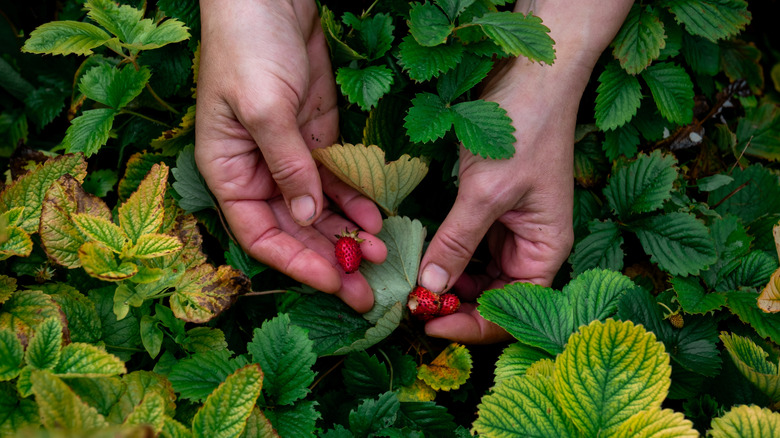
At first, the appearance of tiny strawberries in your yard can seem like an unexpected gift. After all, those little wild fruits require no work on your part, and some of them are even tasty! But you may decide that the broad-leaved weeds are more trouble than they're worth — especially when either wild strawberries (Fragaria virginiana) or mock strawberries (Potentilla indica) start choking out your lawn. While treating all unwelcome weedy strawberry species requires the same methods, it's helpful to learn the difference between wild vs. false strawberries.
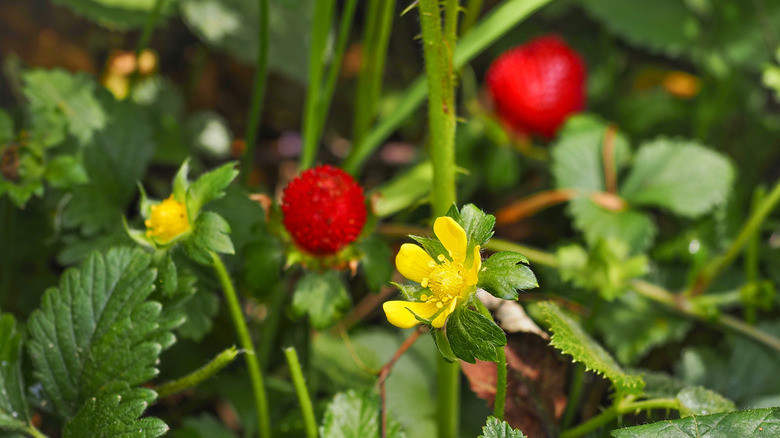
For many people, mock strawberries hold fewer charms than native wild strawberries do. You can recognize these invaders by their five-petaled yellow flowers and the tasteless, non-scented fruits. Also known as Indian strawberry, this weedy plant bears sharp rather than rounded leaves. Its fruit points upwards, in contrast with wild strawberry's downward-facing fruits. Like wild strawberries, mock strawberries are also low-growing, and spread underground by runners. In addition, this non-native species is considered invasive.
Of the two types of uncultivated strawberries, wild strawberries are more prized by some wild plant enthusiasts. They'll grow in areas that lawns have trouble asserting themselves, and they draw foraging wildlife. The fruit is sweet and perfumes the yard, and they boast dainty white blooms, which draw pollinating creatures to gardens. In fact, it's possible to have the best of both worlds by letting these round-leaved, native plants scramble down slopes. Alternatively, let them nestle at a lawn's edges as an easy pollinator garden addition.
Deal with unwelcome strawberry plants by boosting lawn health and eradicating weedy growth
Even if you decide to let the tastier varieties of wild strawberries border your lawn, chances are you don't want the weedy runners infringing on the grassy expanse itself. You'll need a multi-pronged approach to deal with these insistent wild plants. Start with spot eradication of individual plants and small groups. More importantly, do what you can to grow a healthy lawn in order to muscle out its wild competitors.
If groups of strawberry weeds are outpacing the lawn at an alarming rate, a bit of spot treatment may be needed. Use a broadleaf weed killer sparingly. Make sure not to get the product on the roots of nearby shrubs, trees, or surrounding grass. If you prefer to use non-chemical treatments, be as vigilant as possible with removing individual plants. When the soil is damp after a rain, use a digging tool to pull up as much of the above-ground plants and their below-ground runners as possible. You can also smother clumps of wild strawberries with cardboard or a tarp.
Keeping your lawn healthy enough to overrun strawberries and other weeds begins with a soil test. If results indicate that you need to amend the pH or nutrients of the underlying soil, take steps to add those amendments at the recommended rates. Then, make sure to keep the lawn well-watered, weeded, and fed in order to give your grass the strength to act as the "alpha plant" in your yard.