

The Biggest Downside To Budget-Friendly Chip And Seal Driveways
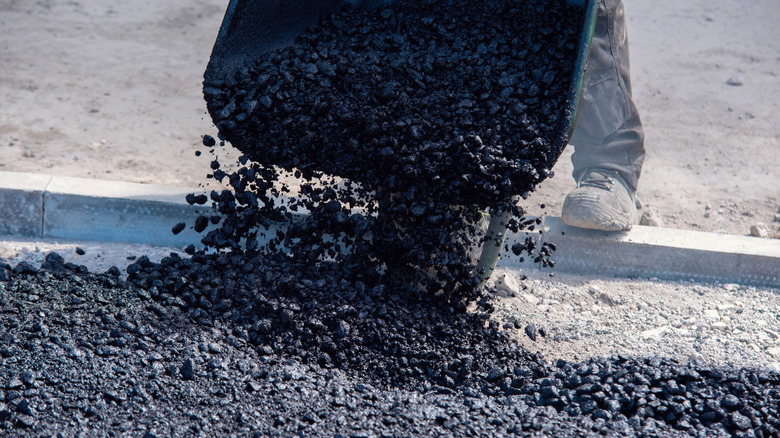
When it's time to install a new driveway or replace a failing one, you may want to use materials on your driveway that are not concrete. With concrete, you'll have higher upfront costs and a susceptibility to cracks or stains forming in the future.
A more budget-friendly option is using chip and seal materials. This type of driveway involves creating a base layer of gravel and crushed stone before having professionals add a thin layer of hot liquid asphalt over the top that holds the stone in place. Chip and seal installation costs $1 to $5 per square foot of coverage, according to Angi. This is significantly less than concrete's typical installation cost of $8 to $20 per square foot and asphalt's cost of $7 to $15 per square foot. Although such a low cost makes this design tempting, there are downsides to chip and seal driveways (also called tar and chip designs).
The biggest downside is durability. A chip and seal design may only last seven to 10 years. With proper maintenance, you can go 25 to 30 years before a concrete driveway starts to crumble and you need to fix it. Asphalt driveways can last 15 to 30 years, as long as they're properly installed and maintained. The good news is that you can just place a new layer of tar and gravel over the top of the chip and seal driveway to make it work like new, but you will have to pay the cost of installation again.
Heavy use of chip and seal driveways shortens longevity
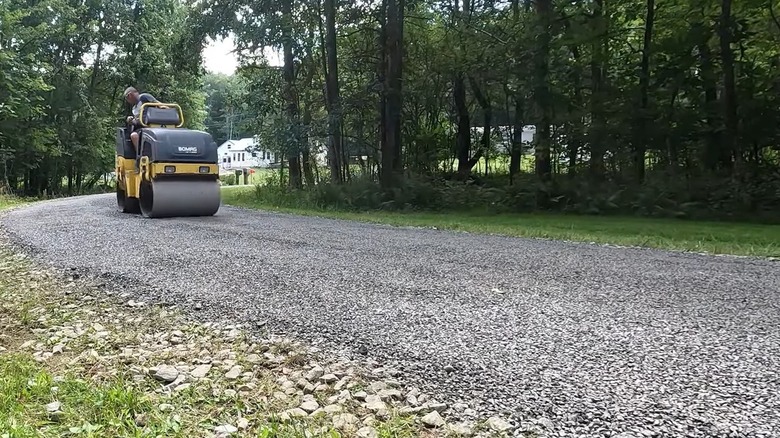
A chip and seal design is considered an eco-friendly driveway solution that's also affordable, although it does cost more than gravel alone. Chip and seal designs usually need less maintenance than gravel, though, giving them an advantage. However, when exposed to heavy traffic or areas where people frequently brake hard with their vehicles, the chip and seal materials lose some of their maintenance advantages. The stones used as the base before adding the liquid asphalt are more likely to pop loose and bounce away when more traffic is present or hard driving is occurring.
If you want to receive closer to the upper end of the lifespan from your chip and seal driveway design, you'll need to install it in a lower-than-average vehicular traffic area. Professionals typically recommend chip and seal designs for residential driveways, as they usually won't see the level of traffic that commercial driveways receive. You might receive as much as 12 years from a chip and seal driveway when traffic is low and the installation is done properly.
If you want to extend the longevity of a chip and seal installation in a high-traffic area, consider using a double or triple chip seal technique. These techniques use two or three layers of gravel and hot liquid asphalt during installation. The resulting thicker surface should last longer when more traffic is present, but these techniques will carry a higher upfront installation cost.