

The Vintage Dishware Brand To Look For At The Thrift Store For A Stunning Haul
We may receive a commission on purchases made from links.
Countless people enjoy the pleasurable pastime of browsing through thrift stores to see what treasures can be uncovered. After all, the offerings can change daily, and you never know what you're going to find. Plus there are numerous vintage kitchen dishware items you should always look for. In fact, a day spent thrifting can be exciting if you happen to spot a sought-after brand of vintage dishware that you've been on the lookout for. You might even be lucky enough to score a stunning haul of Franciscan Starburst Atomic earthenware to add to your collection.
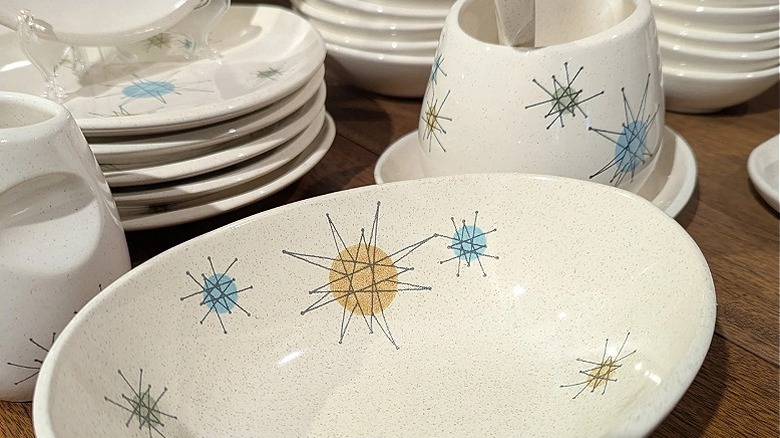
This gorgeous range of dinnerware features a cream glaze with atom-like shapes in shades of yellow, blue, and green, overlaid with black star shapes, hence the name. It's the kind of vintage design that can easily fit into a modern aesthetic without looking out of place, and it's ideal for those who have embraced the mid-century modern look. On the other hand, if you happen to be a reseller of vintage dishware, while many of the starburst pieces are not that valuable, you might be lucky and have a collector visit your listing of one of the rarer pieces, such as this stunning pitcher that sold for $89.99 or this cruet with cork stopper that sold for $139.00. Interestingly, the pieces are all hand-glazed, making each one unique, and it's the more imperfect pieces that seem to fetch the higher prices. So, while you might already be familiar with different vintage dishware brands, you should now consider adding Franciscan stoneware to that list.
Franciscan pottery has an interesting history
Franciscan pottery was first produced in 1934 by Gladding, McBean & Co in California, which actually started in 1875 by making clay-based building products. The company's tableware and pottery products are made from a material named "Malinite", which the company created and patented. This resulted in a product that can withstand high heats and is nearly flawless, as well as resistant to cracking and crazing — the term used for that web-like appearance of hairline cracks that sometimes appear in glazed pottery.
In 1954, Mary Chalmers Brown designed the Atomic Starburst pattern. and this remained in production only until 1957, even though it was quite a popular design. There are many different pieces, including complete dinner sets, casserole dishes, mugs, sugar bowls, creamers, and teapots. There are also unusual pieces like an open jam dish, divided bowls, tiered serving trays, salt and pepper shakers, gravy boats, and ladles. This means that if you're a collector, finding all the different pieces could keep you visiting thrift stores for years to come. Finally, if you're in the reseller space, remember to check out some useful tips on how to tell if thrift store dishware is valuable.